Marine Corps wants 10,000 new drones this year as it looks to expand training for off-the-shelf systems
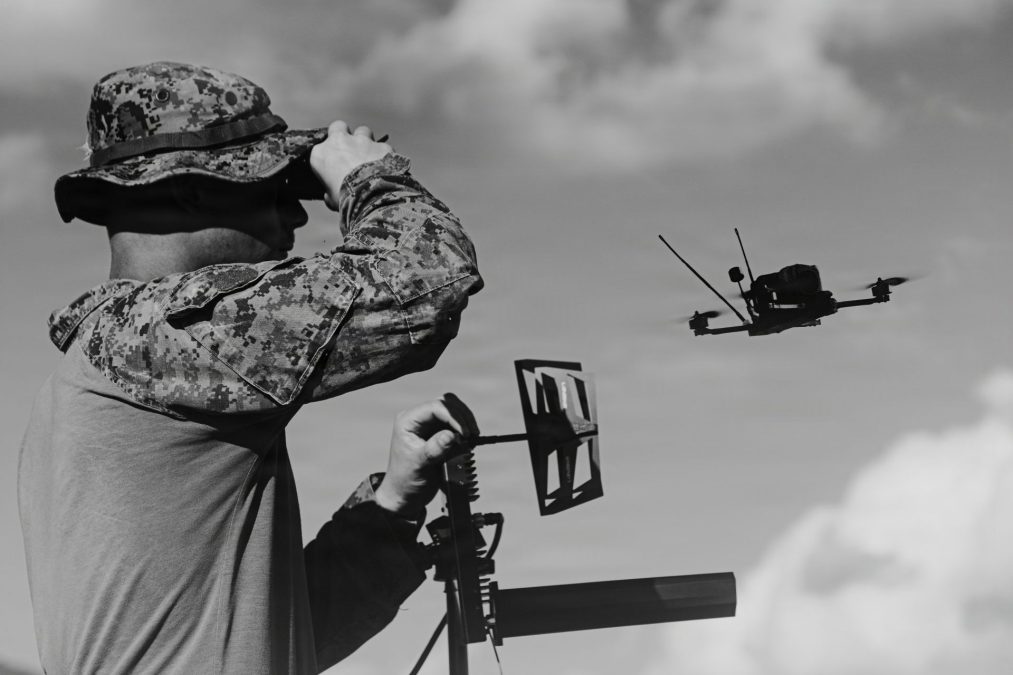
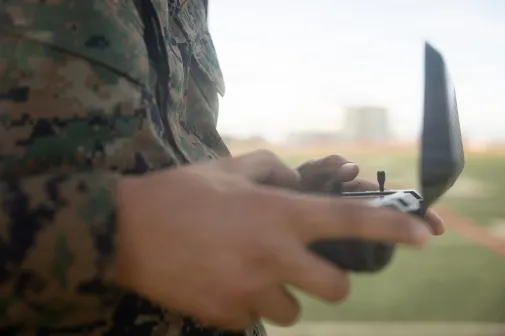
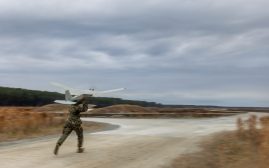
The Marine Corps is gearing up to expand its first-person view drone capabilities in the New Year by purchasing 10,000 new platforms and increasing the number of troops who are trained on them, according to government contracting documents and service officials.
Earlier this week, the Corps announced a standardized training program for small-sized unmanned aerial systems, which include several courses for attack drone operators, payload specialists and instructors. Several units, from III Marine Expeditionary Force in the Pacific to Marine Forces Special Operations Command are now authorized to immediately start these courses.
Meanwhile, the service is also asking industry to make thousands of UAS for under $4,000 per unit, according to a request for information posted in December. The intent is for Marines to be able to modify these drones with “simple” third-party munitions and repair them on their own. The RFI also inquired about autonomy and machine learning integration for these systems.
Over the next several months, the service will aim to certify hundreds of Marines to use FPV drones, according to the Pentagon, with the goal of having every infantry, reconnaissance and littoral combat team across the fleet equipped with these platforms by May.
“We are fielding these courses as pilot programs to move quickly while maintaining our commitment to quality training and safety,” Lt. Gen. Benjamin T. Watson, commanding general of Training and Education Command, said in a press release. “This allows us to validate all aspects of the training, from prerequisites and instructional methods to resourcing needs and certification standards, ensuring that we refine and perfect the curriculum before it becomes part of our long-term training framework.”
Officials said that these courses were shaped by recent certifications and the Drone Training Symposium in November, an event intended to solidify and scale training across the fleet.
DefenseScoop reported Wednesday that the Marine Corps had certified forward-deployed Marines on FPV drones for the first time in November. More than two dozen troops with the 22nd Marine Expeditionary Unit deployed to the Caribbean trained for more than a month-and-a-half to qualify on various FPV drone capabilities, a significant milestone for the force after a year of navigating untrodden ground.
Part of that effort has been through the development of the Marine Corps Attack Drone Team, a small group of experts the service started growing a year ago as it realized how far behind it was on UAS. The Corps is now expanding its new training models to other units, according to the Pentagon.
The Marine Corps is looking for 5,000 platforms by mid-year and is expecting that number to double by 2027, according to the RFI. The ability to modify and repair these systems appears to be a distinct part of the request, something that has been a key characteristic of drone warfare during the Russia-Ukraine conflict.
“There’s a broader issue for all of these small drones particularly, which is adaptation,” Mark Cancian, a retired Marine colonel and senior adviser with the Center for Strategic and International Studies Defense and Security Department, said in a recent interview with DefenseScoop.
“Ukrainians say that they change the design every couple of weeks as the Russians implement countermeasures,” Cancian said. “That is something the U.S. military is not used to,” he added, suggesting that during wartime, the connection between developer, manufacturer and the front lines needs to be extremely close.
The service is looking for industry responses to its drone request by Feb. 16.