US deploys 150-plus military aircraft, drones and other tech in raid to capture Venezuela’s Maduro
The U.S. military’s surprise, overnight operation to detain Venezuelan President Nicolás Maduro was months in-the-making and involved more than 150 aircraft and drones, integrated space and cyber effects, multiple intelligence agencies and law enforcement personnel, according to senior government officials who oversaw it.
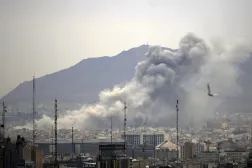
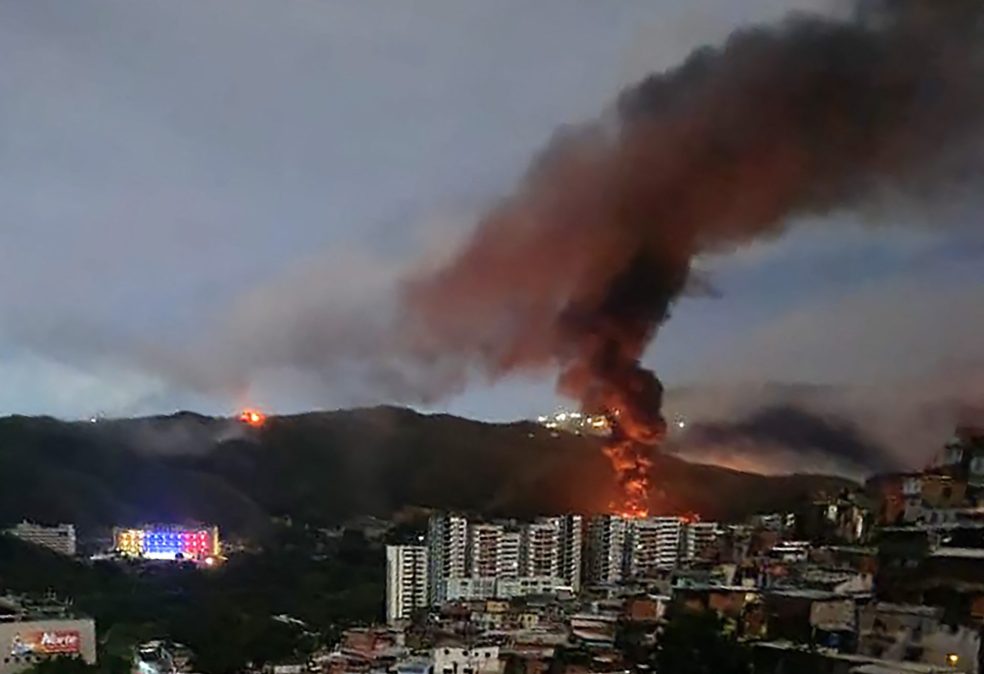
Explosions were reported in Venezuela’s capital city of Caracas early Saturday as U.S. forces launched strikes and a large-scale raid that led to the capture of Maduro and his wife, Cilia Flores. The couple are now on a U.S. Navy ship en route to the states, where they are indicted in the Southern District of New York on narco-terrorism charges.
During a press conference at his Mar-a-Lago estate Saturday morning, President Donald Trump and several of his closest advisors revealed new details about this mission, dubbed Operation Absolute Resolve.
“All Venezuelan military capacities were rendered powerless, as the men and women of our military — working with U.S. law enforcement — successfully captured Maduro in the dead of night,” Trump said. “It was dark, the lights of Caracas were largely turned off due to a certain expertise that we have.”
Tensions between the two nations have been escalating in recent months, with a large U.S. military buildup in the Caribbean late last year. The intensifying conflict has been fueled by accusations from the second Trump administration about Venezuela’s vast oil reserves and alleged drug-smuggling threats to America.
At Saturday’s press briefing, Chairman of the Joint Chiefs of Staff Gen. Dan Caine shared new information about the U.S. military’s preparation for the operation — as well as a brief play-by-play of how it was carried out.
“At 10:46pm Eastern Time last night, the president ordered the United States military to move forward with this mission,” Caine said. “Over the course of the night, aircraft began launching from 20 different bases on land and sea across the Western Hemisphere. In total, more than 150 aircraft — bombers, fighters, intelligence, reconnaissance, surveillance, rotary wing — were in the air last night. Thousands and thousands of hours of experience were airborne.”
The age range for crew members on this mission were 20 to 49 years old.
Caine said that as military forces approached Venezuelan shores, the U.S. “began layering different effects provided by [U.S. Space Command, U.S. Cyber Command] and other members of the interagency to create a pathway overhead.”
They were protected by aircraft from the Marines, Navy, Air Force, and Air National Guard.
“The force included F-22s, F-35s, F-18s, EA-18s, E-2s, B-1 bombers and other support aircraft — as well as numerous remotely piloted drones,” Caine told reporters. “As the force began to approach Caracas, the joint air component began dismantling and disabling the air defense systems in Venezuela, employing weapons to ensure the safe passage of the helicopters into the target area.”
American personnel conducting the op arrived at Maduro’s compound at 1:01am Eastern Standard Time or 2:01am Caracas local time.
Their helicopters came under fire from the Venezuelans, and one was hit but remained flyable, Caine said. As the operation unfolded at Maduro’s compound, U.S. air and ground intelligence teams provided real-time updates to the ground force, who also remained protected by overhead tactical aviation assets.
Maduro and his wife eventually surrendered and were taken into custody by officials from the U.S. Department of Justice.
“There were multiple self-defense engagements as the force began to withdraw out of Venezuela. The force successfully exfiltrated and returned to their afloat launch bases — and the force was over the water at 3:29am Eastern Standard Time, with indicted persons onboard and both Maduro and his wife were embarked aboard the USS Iwo Jima,” Caine said.
The full extent of damage to Venezuelan infrastructure or civilian casualties resulting from this operation remains unclear.
But in its wake, Venezuela’s government has declared a state of national emergency and denounced the act, calling it “extremely serious military aggression” by the U.S.
In response to questions from reporters at his Florida resort, Trump suggested that America aims to “run Venezuela” until there is a “safe, proper and judicious transition” of power.