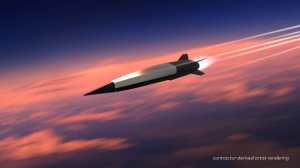
Lockheed Martin, GE Aerospace demo novel ramjet engine for hypersonic weapons
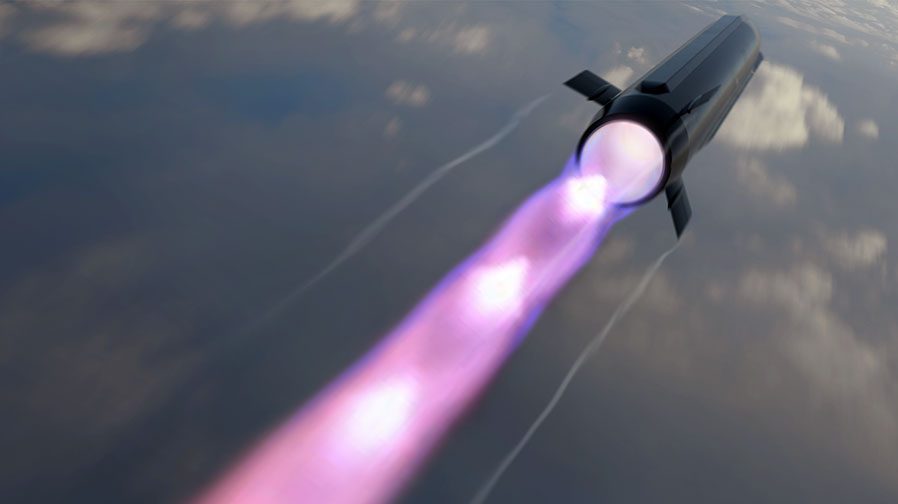
Defense giants Lockheed Martin and GE Aerospace recently completed a series of tests for an experimental engine that could reach hypersonic speeds at lower cost, the companies announced Wednesday.
Under a joint technology development effort, Lockheed and GE are developing a liquid-fueled rotating detonation ramjet system that could allow missiles to fly farther and reach speeds of at least Mach 5 — considered the threshold for hypersonic flight. Following the recent ground-based demonstrations of the technology, both firms plan to continue maturation throughout 2026, a news release stated.
The recent tests of the ramjet engine occurred at GE Aerospace’s facilities in New York, according to the companies. During the direct-connect demonstrations, engineers analyzed the system’s design during initial ignition and cruising by injecting air into the inlet, simulating supersonic flight at different speeds and altitudes.
“The testing on the rotating detonation ramjet and inlet exceeded expectations, and we are excited about this collaboration to continue maturing our advanced air-breathing hypersonic propulsion technologies,” Mark Rettig, vice president and general manager of Edison Works Advanced Programs at GE Aerospace, said in a statement.
The Pentagon for years has worked to field a hypersonic missile, which can fly at least five-times the speed of sound and maneuver through the atmosphere before hitting a target. Systems currently under development are powered by one of two types of engines: a standard rocket engine that launches the missile to high speeds or an air-breathing scramjet engine.
However, GE and Lockheed are developing a new type of ramjet technology designed to overcome the performance limitations that traditional ramjets experience at hypersonic speeds.
By leveraging GE’s rotating detonation combustion (RDC) tech and Lockheed Martin’s tactical inlet, the companies are aiming to improve ramjet engine performance as flight speed increases.
RDC engines burn fuel using continuous, supersonic detonation waves that move around a circular chamber. Unlike conventional ramjet combustion, the detonations release energy almost instantly to create a rise in pressure that offers more efficiency and thrust — especially at high speeds.
According to Lockheed and GE, their ramjet engine could enable hypersonic missiles to fly farther with greater fuel efficiency and thrust. The system’s compact design also allows for more fuel or payload and can lower overall production costs, the companies said in a news release.
“Following two years of internal investment, this demonstration is a testament to the power of collaboration, innovation and joint commitment to get affordable capability into the hands of warfighters at the speed of relevance,” Randy Crites, vice president and general manager at Lockheed Martin Advanced Programs, said in a statement. “This compact ramjet applies Lockheed Martin’s expertise in ramjet inlets and offers extended range at extreme speeds. We’re committed to delivering a propulsion system that advances America’s hypersonic capability in an intensifying threat environment.”