Pentagon’s new ‘non-kinetic effects cell’ bolsters Gen. Caine’s goal to better integrate cyber into U.S. military operations
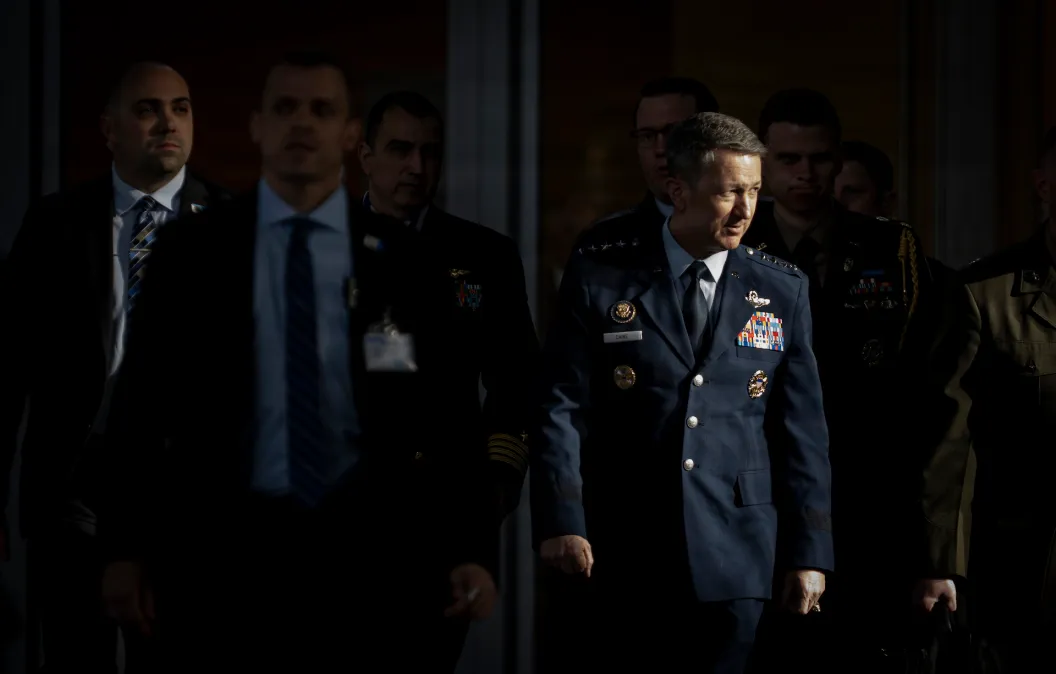
Better weaving cyber capabilities into American military operations has been a priority for Chairman of the Joint Chiefs of Staff Gen. Dan “Razin” Caine. A new team has been set up at the Pentagon to do just that.
Caine, the U.S. military’s top officer who was picked for the job by President Donald Trump, has highlighted the important role that digital tools played recently in major operations, like Operation Absolute Resolve and last year’s Operation Midnight Hammer in Venezuela and Iran, respectively.
During a Jan. 3 press briefing about the special operation to capture Venezuelan leader Nicolas Maduro, Caine noted that as commandos approached Venezuela’s shores in helicopters, the U.S. “began layering different effects” provided by U.S. Cyber Command, U.S. Space Command and other partners to “create a pathway” for them.
“The word integration does not explain the sheer complexity of such a mission, an extraction so precise it involved more than 150 aircraft launching across the Western Hemisphere in close coordination, all coming together in time and place to layer effects for a single purpose, to get an interdiction force into downtown Caracas while maintaining the element of tactical surprise. Failure of one component of this well-oiled machine would have endangered the entire mission,” Caine said.
At the same press briefing, Trump noted that “the lights of Caracas were largely turned off due to a certain expertise that we have” — seemingly referring to cyber capabilities.
The New York Times reported this week that cyber weapons were used to knock out power, radar and handheld radios during Absolute Resolve.
The Venezuela operation came up during a Senate Armed Services Subcommittee on Cybersecurity hearing Wednesday with senior Defense Department officials on the Pentagon’s new cyber force generation model.
“What I probably won’t do is go into the specifics of the Venezuela operation, but what I will tell you is … one of the things we’ve seen from Chairman Caine is his emphasis on not just traditional kinetic effects, but the role non-kinetic effects play in all of our global operations, especially cyber. So leading up to the events in Venezuela, over the last six months, we’ve been developing something new on the Joint Staff called a ‘non-kinetic effects cell.’ This is designed to integrate, coordinate and synchronize all of our non-kinetics into the planning and then, of course, the execution of any operation globally. I think it’s important to point out that one of the reasons that has been successful is the emphasis that the chairman has placed on the role of non-kinetics, and in particular cyber, and then the coordination that has continued to grow and mature with Cybercom as we work through various operations around the globe,” Air Force Brig. Gen. Ryan Messer, deputy director for global operations, J-3, on the Joint Staff, told lawmakers.
In U.S. military parlance, the term “kinetic” typically refers to hitting targets with a missile or other physical objects. So-called “non-kinetic effects” are generated by other types of capabilities, such as digital tools or electronic warfare.
“Cyber operations are critical to everything we do, whether it’s just day-to-day operations of the functionings of the Department of War or it’s actual execution in operations,” Messer said.
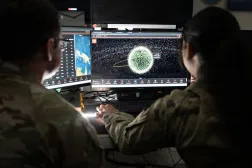
“One of the things that I’ll point out is, growing up in the Air Force, there was always a non-kinetic effects cell at an air operation center, but it usually existed back in a backroom. It was a very dark place, and usually we didn’t ask for many inputs from that team until we wanted to sprinkle what we call the ‘lightning bolts’ onto some form of operation. The reality is, is that we’ve now pulled cyber operators to the forefront. So if I were talking to a group of young people who are considering a career and joining Gen. [William] Hartman’s team over at Cybercom, I would say you’re not just going to be integral to every operation we are going to do, but you will be at the forefront of everything we do in both now and in the future,” Messer said.