U.S. Africa Command prioritizes technology as ‘an enabler of African-led security’
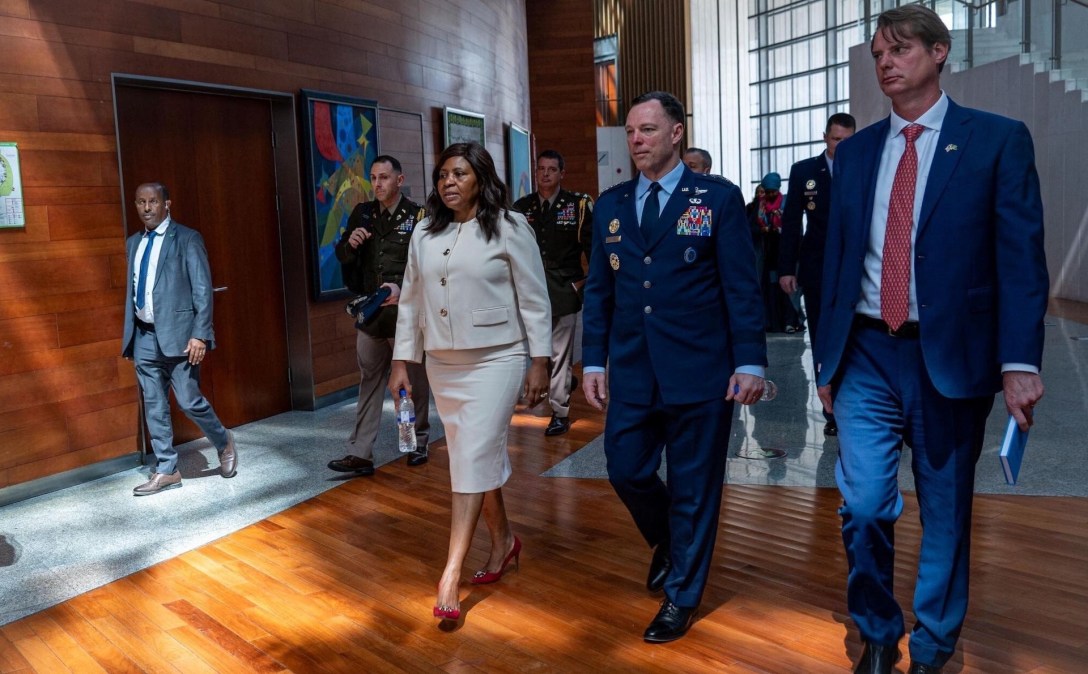
A delegation of top officials from U.S. Africa Command and the State Department traveled to Ethiopia this week to promote peace with their African counterparts and explore new opportunities for the nations to deepen their economic, diplomatic and military ties.
Africom’s new commander Air Force Gen. Dagvin Anderson participated in the events, which involved the African Union — an influential intergovernmental organization consisting of the countries on that continent.
“The African Union is an important organizing body because instead of just being bilateral, it allows for the development of multilateral solutions,” Anderson told DefenseScoop. “By looking across the entire continent, the African Union looks at regions to see where larger investments and larger security actions have regional and greater impact.”
The commander and an Africom spokesperson shared new details about those high-level engagements and shed light on the command’s near-term technology priorities, in an email exchange this week.
Anderson — a command pilot with more than 3,400 flight hours, including more than 700 in combat — served as the director for joint force development on the Joint Staff, prior to taking the helm at Africom. He has flown 16 different aircraft throughout his career and commanded at five different echelons.
Since he took charge at the combatant command in August, the spokesperson said, Anderson “has been clear that technology is not an end state, it is an enabler of African-led security and better decision-making.”
“He also emphasized cyber awareness, and data integration, because modern security cooperation depends on trusted networks, resilient systems, and the ability to operate with partners in contested information environments,” they noted.
Africom continues to evolve after becoming a fully operational combatant command in 2008.
The team is primarily responsible for overseeing and conducting U.S. military operations, exercises, and security cooperation in its area of responsibility, which covers more than 50 African states that encompass more than 800 ethnic groups.
Africom officials broadly supply America’s closest counterparts in the region that share overlapping security interests with critical information and intel assets.
“One major priority is strengthening how AFRICOM and its partners use intelligence, surveillance, and reconnaissance to improve early warning, situational awareness, and the ability to protect civilian populations. That includes improving how information is fused, shared, and acted upon, not just collecting more of it. New technologies are important, especially when considering things that allow you to sense the environment and process the data better,” Anderson told DefenseScoop. “But at the same time, innovation is truly about doing things differently using what you have to a greater effect.”
Africom is strategically integrating artificial intelligence and other advanced capabilities to overcome the U.S. military’s recent, more reduced physical presence in the region. In November, the command launched the Warfighter Innovation Council to ultimately embed innovation pursuits as a core function of the command.
Anderson noted that, “while technology is a focus, innovation is not just about the technologies — it’s about how you innovate, look at things differently, and then use the right technologies to make you more effective.”
He added: “Investing solely in technology does not lead to success. Being successful with the technology advances, stems with asking yourself — ‘how do you change your mindset to do things differently?’”
As the command hustles to modernize and innovate, numerous terrorist groups pose intensifying threats and China is deliberately expanding its social and technological influence across the world’s second-largest continent.
“African soldiers from many nations have given their life to help uphold the security of Africa,” Anderson told DefenseScoop. “We’ve seen this in conflicts such as Somalia, but in other areas on the continent.”
The newly released U.S. National Defense Strategy states that the military’s “priority in Africa is to prevent Islamic terrorists from using regional safe havens to strike the U.S. Homeland,” while also seeking “to empower allies and partners to lead efforts to degrade and destroy other terrorist organizations.”
Anderson considers engagement with the African Union as essential to Africom’s mission. The union pre-dates the command, as it was established in 2002 as a successor to the Organization of African Unity.
“The AU is not just a diplomatic body, it is a central actor in shaping continental security and economic approaches, and strong relationships at that level are critical to effective military cooperation across Africa,” the spokesperson said.
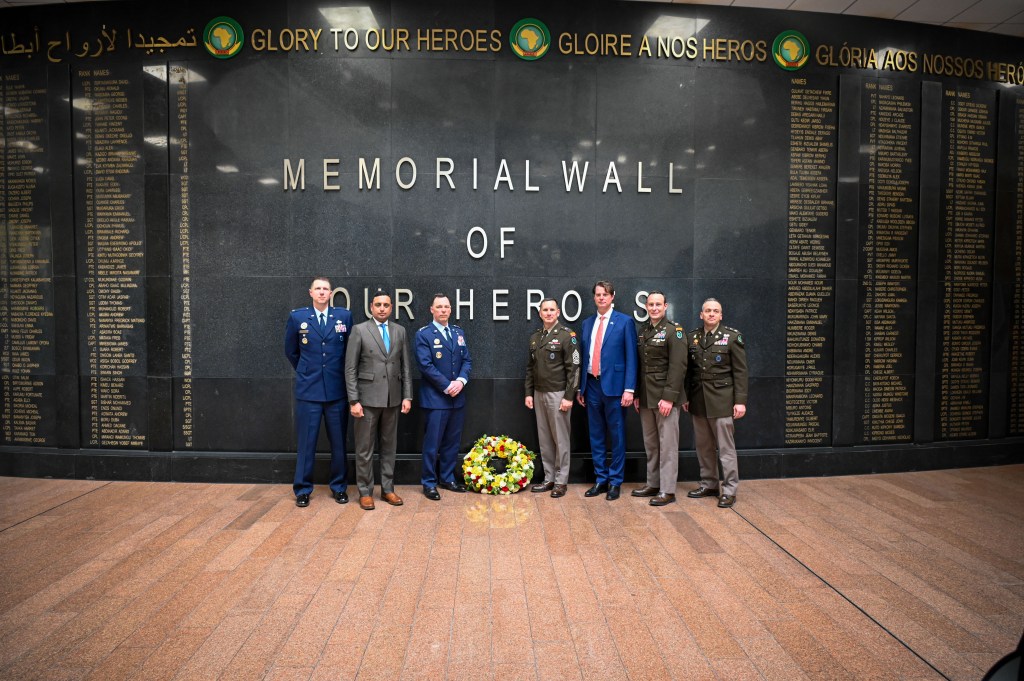
Anderson and other members of the delegation, including Africom’s senior enlisted leader Army Command Sgt. Maj. Garric Banfield, participated in a wreath-laying ceremony at the African Union Memorial Wall in Addis Ababa, Ethiopia.
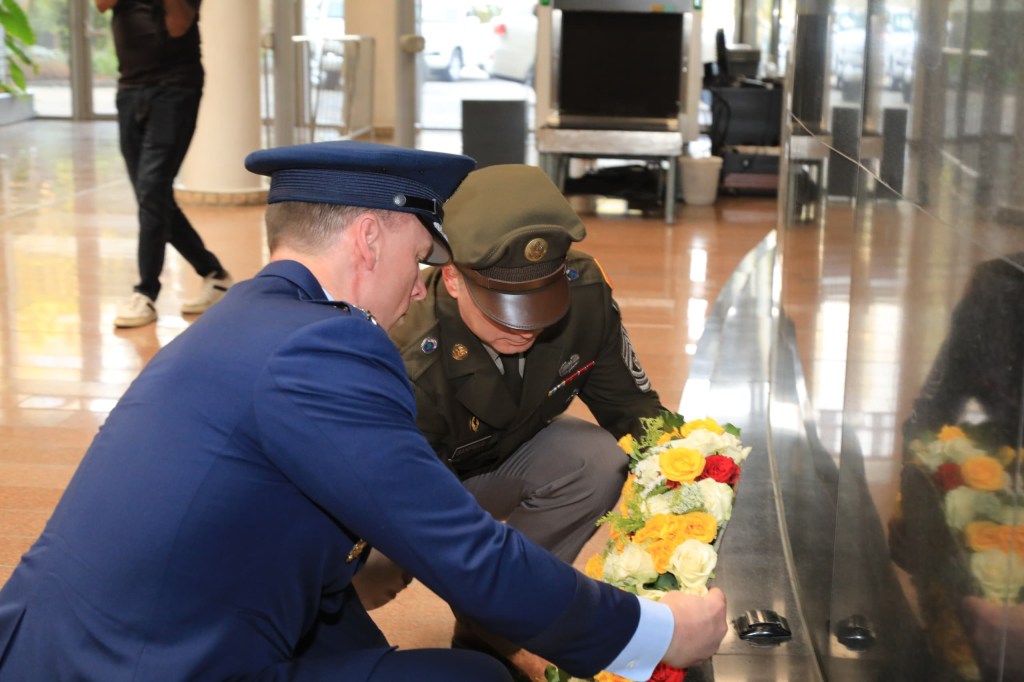
That ceremony was particularly meaningful for the Africom commander. During his career, Anderson served alongside many of the peacekeepers whose names are now engraved on the memorial wall. Some of those honorees include service members from Somalia, Mali, Uganda, and other nations.
“Many of those honored here were not only partners, but also colleagues and friends,” Anderson said at the event. “Today’s wreath laying reflects our respect for those who gave their lives and our continued commitment to stand with African nations as they lead efforts to build a more secure and prosperous future.”
Following the ceremony, the U.S. delegation joined the African Union’s chairman and senior leadership in multiple engagements that focused on shared security threats, regional stability, and strengthening long-standing international partnerships.
“Gen. Anderson came away encouraged by the depth of alignment between the African Union and the United States on how security challenges on the continent must be addressed, which is African-led, institutionally grounded, and regionally coordinated,” the spokesperson said. “He heard a consistent takeaway from the discussions, which was the African Union’s emphasis on African ownership of security solutions with the importance of building sustainable capacity rather than short-term fixes.”
Those discussions, in their view, “reinforced that AFRICOM is effective and must continue its role to support African priorities of helping partners strengthen planning, logistics, intelligence integration, professional military education, and multinational interoperability.”
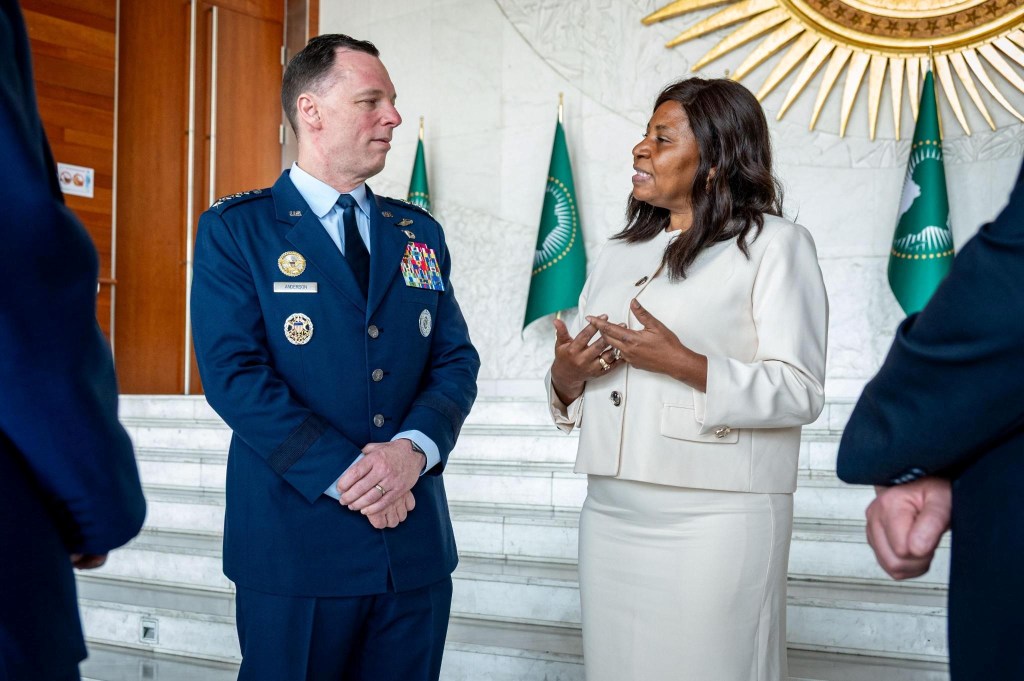
In response to questions about his major takeaways from the engagements on this trip, Anderson told DefenseScoop: “With keeping security cooperation in mind, there is synergy in how we (AFRICOM) look at opportunities, develop economic corridors that span across multiple regions and regionally focused, and work with the African Union.”
He pointed to the Libito Corridor as a key example.
That major U.S.-backed infrastructure initiative intends to link the port of Lobito on Angola’s Atlantic coast to Zambia through the mining regions of the Democratic Republic of the Congo, enabling the first open-access trade route and transcontinental rail link in Africa.
“In our meeting on security and economic development, having myself as the [AFRICOM] commander and the Deputy Secretary of State involved made for an effective discussion, since the interest from the AU was to help develop that and understand our interest in how we identify the security implications,” Anderson said.