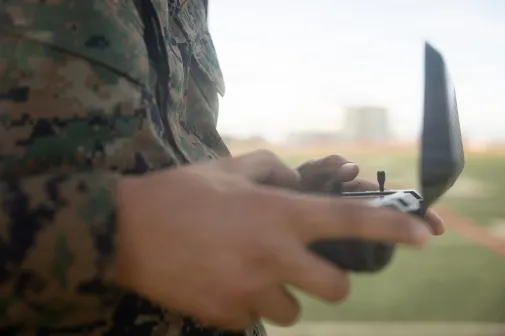
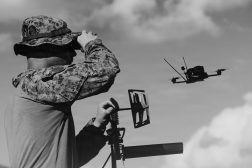
Marine Corps looking into new medium-range tactical drone as it pushes small UAS capabilities
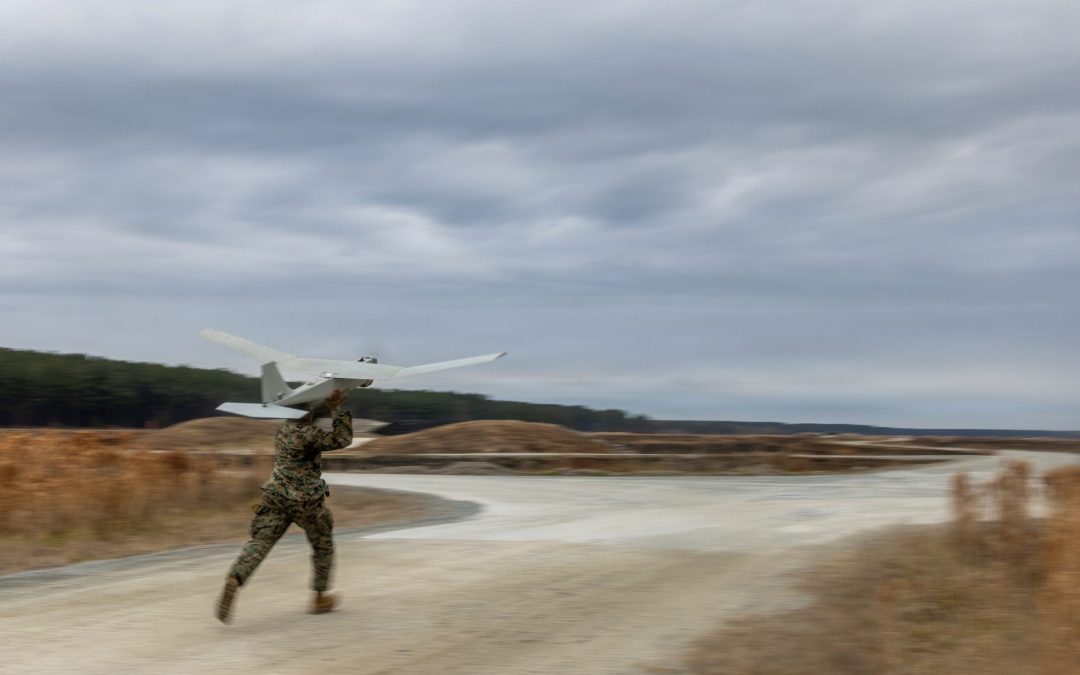
Under 20 pounds. Man-portable. Semi-autonomous. Able to launch and land vertically. These are some of the characteristics the Marine Corps is looking for in a new medium-range tactical (MRT) drone the service could equip its expeditionary forces with.
The Corps currently uses the hand-launched RQ-20B Puma for reconnaissance and surveillance, which is part of a family of drones that is nearly 20 years old. In a market research request issued last week, the service is turning to industry for information about a new unmanned aerial system that can gather real-time information for Marines deployed to austere environments.
For more than a year, the Marine Corps has been investing significant resources into its stable of drones by establishing small UAS certification programs across the fleet and experimenting with different tech as it gears up to buy 10,000 new first-person view systems this year.
Meanwhile, the service is several years into its force-wide reorganization known as Force Design, which largely prioritizes an “agile” fleet that is also capable of fighting — and surviving — in heavily contested large-scale combat operations. And in its new aviation plan released last week, the Marine Corps emphasized the “aggressive integration” of small drones for modern conflict.
“This ideal drone must be easy to launch and recover in austere environments, share data securely across networks, and seamlessly integrate with existing command and control systems,” Gregg Skinner, small UAS program manager at Naval Air Systems Command, told DefenseScoop in a statement.
As part of its market research, Skinner said the Marine Corps regularly assesses new technologies to keep up with “evolving mission requirements.” He added that the request for information for the MRT drone was part of an ongoing effort to tap industry for “advanced, modular, and multi-role platforms” for a variety of missions.
In the RFI, officials wrote that the drone should be able to launch from stationary and mobile platforms, such as amphibious ships.
Other services have also prioritized short/vertical takeoff and landing (S/VTOL) capabilities for drones they’re hoping to employ within the next few years, DefenseScoop previously reported, a move intended to limit troop dependence on stationary infrastructure likely to be first hit during large-scale combat by advanced adversaries.
The Marine Corps is also exploring autonomous or semi-autonomous solutions for the MRT drone, to include for launch and recovery of the system, according to the request for information. Pursuant of the service’s expeditionary aims, it should also be relatively light and operated by a maximum of two Marines.
According to its manufacturer AeroVironment, the RQ-20B Puma weighs around 14 pounds and can fly for more than three hours depending on the battery it is running. The Corps’ RFI listed a more than 2.5 hour endurance and an air vehicle weight of less than 20 pounds.
The request also sought information on a drone capable of carrying different sensors, including real-time full-motion video and infrared capabilities which are key for modern reconnaissance operations.
“By enhancing the ability to gather and disseminate actionable intelligence, the MRT UAS would empower Marine units to operate more effectively in contested and complex scenarios, ensuring mission success and force survivability,” Skinner said.