As the Pentagon goes full-tilt on small UAS, some services are trying to build a new generation of drone-savvy troops from the rip
The military’s aggressive drone crusade over the last year has produced flashy images of experimental systems spinning tiny rotors toward distant targets, urgent requests for cheap unmanned platforms built by the hundreds of thousands, and numerous organizational changes that are pushing the tech into fundamental parts of the force.
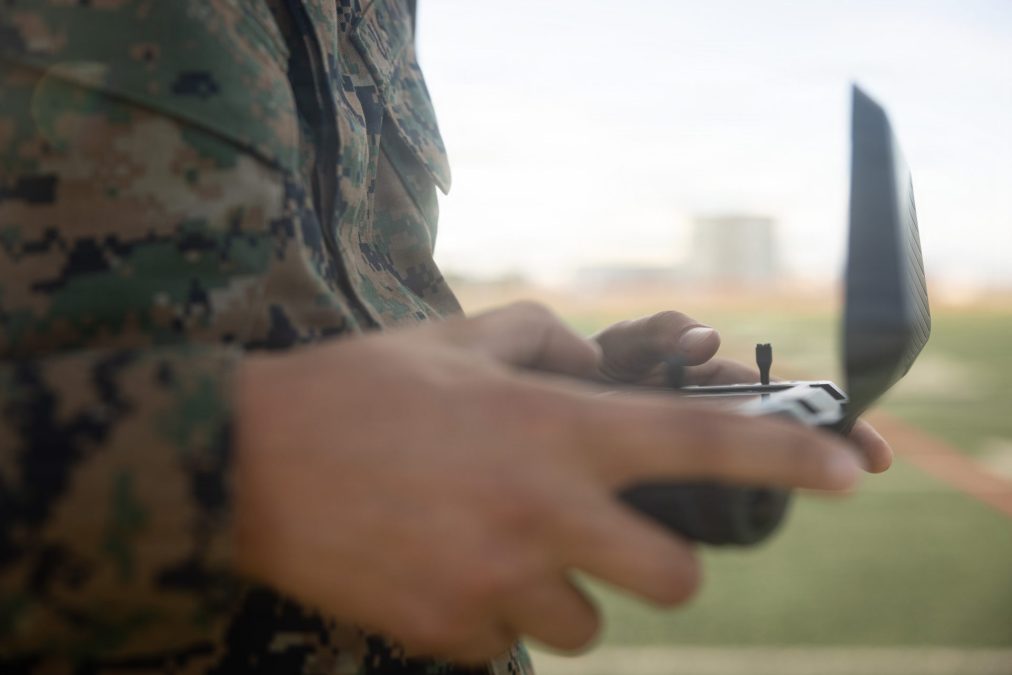
Any one of those efforts alone might signal just how institutional small drones are becoming to the U.S. military. But the gradual, often understated introduction of sUAS skills to early training for rank-and-file troops illustrates how some services are attempting to grow a new generation of drone-savvy forces from the root.
While the military boosts already-established UAS roles and inter-service job transfers, multiple services have begun to put drones into the hands or on the minds of its youngest members — ones in or fresh out of basic training who also draw from a wide range of military occupations, not just UAS jobs.
DefenseScoop reached out to the Army, Marine Corps, Navy and Air Force about whether they were integrating drone skills into early training. Responses from some services showed various levels of UAS familiarization — rooted in the different functions they serve — from basic training to more advanced, yet still developmental pipelines for new service members.
They also showed that early drone training isn’t limited to front-line combat roles as services attempt to impress the real-life consequences of the deadly tech on new troops. Some officials said the Russia-Ukraine war, which hit the fourth anniversary of the Kremlin’s renewed invasion of the country on Tuesday, demonstrated just how important it was to give an array of troops experience with the systems.
“It makes perfect sense and it shows that the military is really starting to come to grips with this new capability,” said Mark Cancian, a retired Marine colonel and senior adviser with the Center for Strategic and International Studies defense and security department. For him, the real question comes down to just how much time and experience new troops are truly getting.
“The fact we’ve started it — great,” he said. “Now let’s see how deep we get into it.”
Over the last year, the Army and Marine Corps especially have put significant resources toward its small UAS effort through planned purchases of at least a million drones combined over the next several years, experimentation, small-unit competitions, the establishment of specialized drone teams and integration of small platforms into long-established functions such as aviation.
Likewise, they have begun to train brand new Marines and soldiers on those capabilities.
DefenseScoop first reported in January that the Marine Corps began teaching new infantry officers on the use of first-person view drones at one of the service’s most foundational schools starting late last year, known as the Infantry Officer Course.
A service spokesperson, Maj. Hector Infante, told DefenseScoop last week that newly-minted Marines attending the School of Infantry, another fundamental institution, are receiving instruction on the use and limitations of small drones and are “exposed to UAS threats to test signature management and execute counter-sUAS immediate action drills.”
Marines at The Basic School, a requirement for all new officers, are being taught how to employ small drones for reconnaissance and strikes, during urban operations and in the use of counter-drone systems, Infante said.
While spokespeople at Army headquarters did not respond to DefenseScoop’s questions, public press releases and information from service training centers show much of the same. A spokesperson for the Navy acknowledged DefenseScoop’s inquiry last week, but did not reply with answers by publication Tuesday.
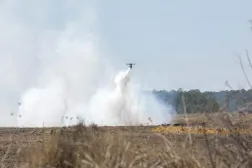
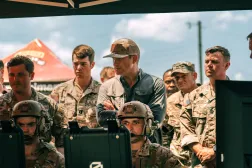
Earlier this month, the Army announced it was putting infantry and armor trainees through a 10-hour sUAS familiarization course. To overcome logistical hurdles that come with schooling mass quantities of soldiers on drones, the Army’s Maneuver Center of Excellence at Fort Benning, Georgia said it is using virtual UAS simulators to train new troops before they use enhanced optics to spot drones and simulate strikes.
“The Army’s goal is not to turn every soldier into a certified pilot, but to ensure every soldier is familiar with a combat enabler they will encounter in future formations,” according to the center.
Some of these early training experiences also create a pipeline for dedicated drone operators. For example, the Army’s UAS simulator program “also serves as a talent-scouting tool” where trainees who show high drone proficiency are considered for the service’s formal sUAS course, according to the MCoE. The center also said it was planning to publish virtual training lanes to the milGaming website so units across the force could use them.
Like the Marine Corps, the Army’s initial drone training isn’t limited to combat arms soldiers. A spokesperson for the service’s support soldier hub out of Fort Leonard Wood, Missouri told DefenseScoop recently it was giving new engineer, CBRN and military police soldiers UAS instruction, which started last summer. An initial qualification course at the center used a small quadcopter known as the RQ-28A to give those troops hands-on experience with sUAS, bolstered by classroom instruction.
Part of that effort, the spokesperson said, was informed by the Russia-Ukraine war. The conflict lit fires under American military officials to whip their own small drone capabilities into shape, although much of those efforts didn’t begin to take shape until more than a year ago, when some of the services began building sUAS programs in earnest.
Throughout that time, officials worried just how far behind American forces were, especially as foreign militaries like China pumped out cheap drones and unmanned systems caused deadly havoc in Eastern Europe.
“Lessons learned around the world prove the versatility of UAS for nearly any mission one might encounter,” said Tiffany Wood, a spokesperson for Fort Leonard Wood, who referenced the Russia-Ukraine war’s impact on what soldiers might expect on future battlefields. “UAS isn’t solely a weapon on the front lines. It can be used behind enemy lines, distributing food, ammo, or even repair parts throughout the battlefield, further demonstrating the versatility and need for training across all [military occupational specialties].”
While not tied to land operations like the Army and Marine Corps, Air Force spokesperson Capt. Paige Skinner told DefenseScoop the service introduced drone familiarization to basic training for airmen last July. Specifically, trainees are learning about air base defense against drones during a culminating exercise known as Pacer Forge.
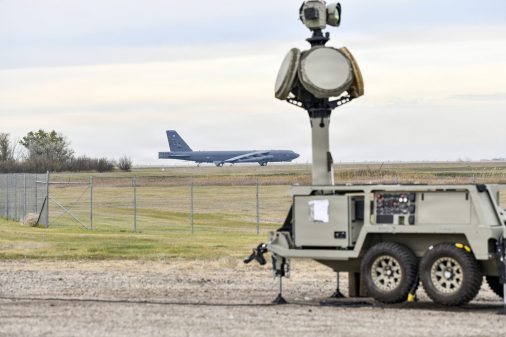
Base defense against drones has been a particularly hot topic in recent months as the military looks to bolster counter-UAS measures around stateside installations and after U.S. Customs and Border Protection’s use of a military anti-drone laser near El Paso, Texas — first reported by DefenseScoop — earlier this month revealed turmoil between several federal agencies.
“While trainees are not instructed in UAS operation, they gain awareness of the capabilities and vulnerabilities associated with these systems, as well as basic passive defense measures to protect themselves and mission assets,” Skinner said. She added the service is looking to expand its sUAS instruction at basic training “to emphasize operational awareness, air base defense, and the role of airpower in contested environments, ensuring trainees are prepared to defend, operate, generate, and sustain airpower.”