DAF fuels up for ‘Ringleader’ exercises to test all-domain sensor fusion capabilities, tactics
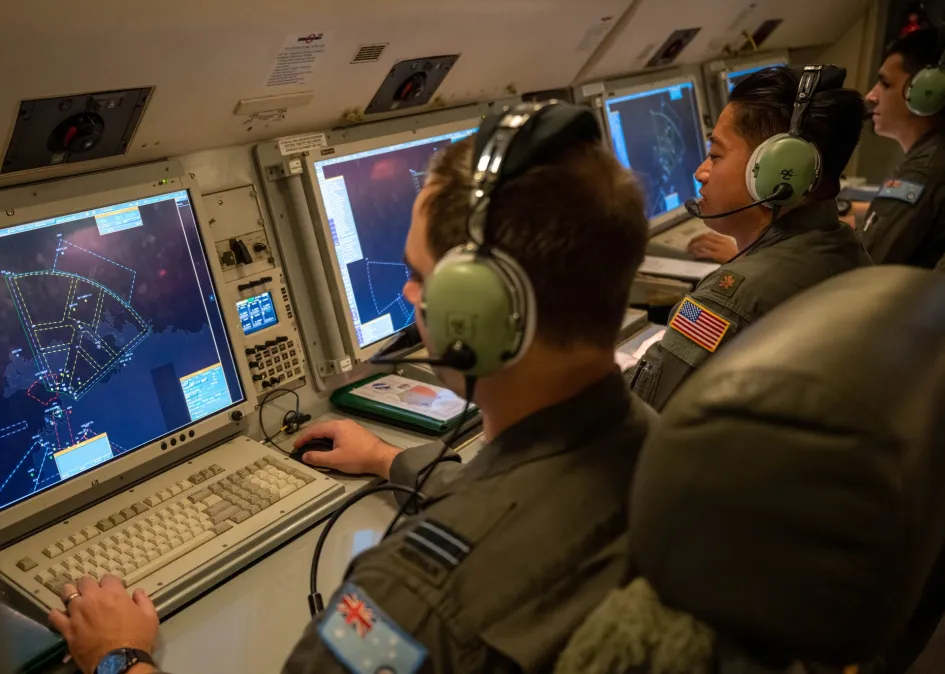
The Department of the Air Force is preparing for a new series of experiments to see how well it can integrate data collected from disparate sensors across domains and use it to better track targets.
Dubbed “Ringleader,” the upcoming exercise series will test how the department can operationalize fused data collected from various ground-, air- and proliferated space-based sensors for tracking missions. The new effort was first unveiled Monday by Secretary of the Air Force Troy Meink during his keynote address at the annual AFA Warfare Symposium in Colorado.
“A key part of our vision is to fuse sensor data across the entire Department of War to deliver tracks and targets. Over the last few years, we’ve built out the necessary software, hardware and network infrastructure — now it’s time to test it,” Meink said, using a secondary name authorized by the Trump administration to refer to the Department of Defense.
He noted that Ringleader will leverage the Department of the Air Force’s work to build out a sprawling network of sensors, processors and computers known as the DAF Battle Network, which is the department’s contribution to the Pentagon’s Combined Joint All-Domain Command and Control (CJADC2) effort.
At the same time, the Air Force’s program executive office for command, control, communications and battle management (C3BM) — which oversees the DAF Battle Network — is in charge of developing the Joint Fires Network. After taking over as executive agent in October 2025, the service now has the program’s budget and acquisition authority.
The Ringleader exercises will feature sensors operated by the Air and Space Forces — including proliferated satellite constellations — as well as others across the joint force and some owned by commercial industry, Meink said Tuesday during a roundtable with reporters at the conference. The goal is to understand the tactics needed to track multiple targets using fused data.
“We’re fielding a lot of sensors, and now we’re in the process of using the networks and the compute to handle that data,” Meink said. “How does a warfighting community utilize those and develop tools and learn how to do that at speed and scale? And that’s what Ringleader is designed to do.”
The exercises will be broader than the DAF’s ongoing work to conduct space-based ground and airborne moving target indication (GMTI/AMTI), Meink added. Notably, the Space Force is partnering with the Air Force, the National Reconnaissance Office and other organizations across the Pentagon to launch sensors on-orbit that can track moving targets both on the ground and in the air.
During a separate media roundtable, Chief of Space Operations Gen. Chance Saltzman said that Ringleader will be a collaborative effort that allows the DAF to practice battle management with fused data in a simulated environment.
“The concept is basically, let’s practice. Let’s figure out how we take all the data that’s collected associated with targeting, how it comes together, how it’s used [and] how we rapidly make the kinds of decisions that need to be made,” Saltzman told reporters Tuesday. “We haven’t collected this kind of data from a global perspective, with this level of the volume of data, and turned it into rapid battle management decisions.”
Meink did not share when the Ringleader exercises would begin, or how many the department planned to execute. He did, however, tell reporters that the project would be funded through both the 2025 “One Big Beautiful Bill Act” and previous DAF appropriations.