Space Force drives additional acquisition reforms with new portfolios
As part of a broader effort across the Pentagon to improve procurement, the Space Force has finalized the nine specific mission areas that will guide its new organizations known as portfolio acquisition executives (PAEs), according to the service.
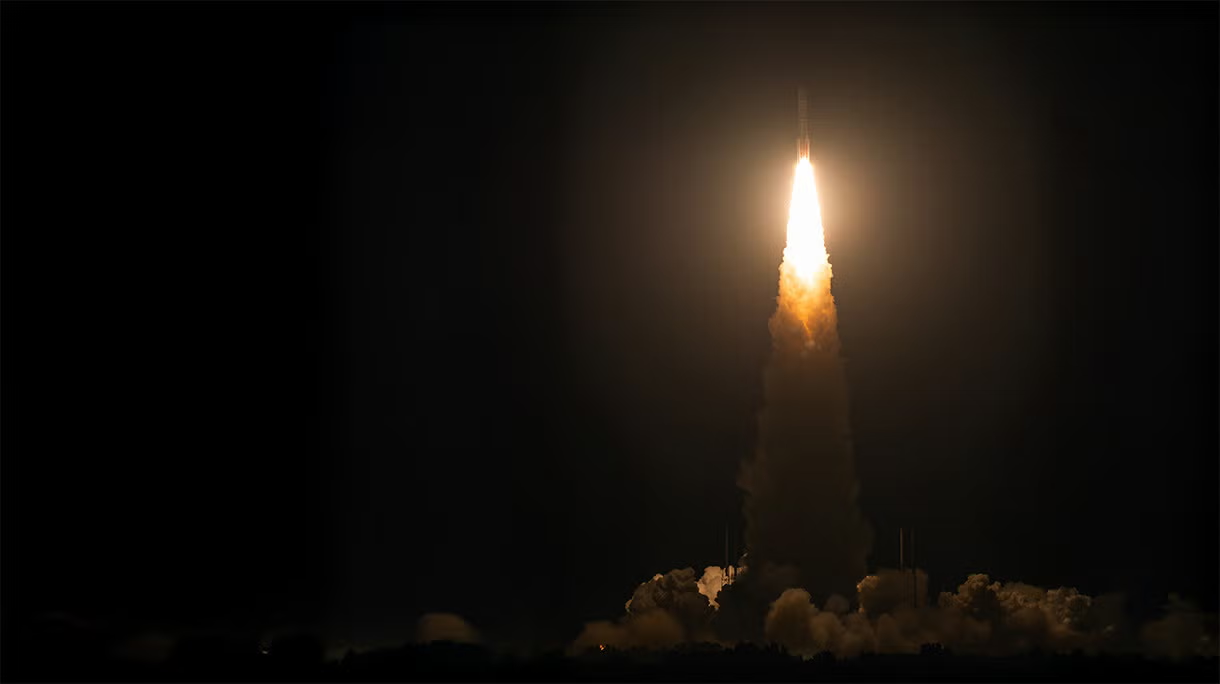
The Space Force announced Tuesday that it has officially established four more PAEs — a new organizational framework spearheaded by Secretary of Defense Pete Hegseth’s large-scale acquisition overhaul. Broadly, PAEs are designed to consolidate multiple program executive offices (PEOs) that execute the same mission area into a single organization to ensure individual efforts are aligned.
The service began implementing Hegseth’s reforms in January, when it created the first two PAEs: one for space access and another for space-based sensing and targeting.
The second tranche of PAEs announced by the Space Force on Tuesday includes infrastructure; battle management, command, control, communication (BMC3); satellite communications and positioning, navigation and timing; and missile warning and tracking.
However, Tom Ainsworth, who is performing the duties of the Air Force assistant secretary for space acquisition and integration, outlined three more mission areas that will steer the new organizations during the annual McAleese Defense Programs Conference on Tuesday.
Those include PAEs for integration; space control; and electronic warfare, cyber warfare and orbital warfare, he said.
“Overall, the mission areas have to be adaptable to support the warfighter,” Ainsworth said. “When you understand your mission set and you understand the breadth of that and are responsible for it, it’s a lot easier to integrate in new technologies as they come and are made available.”
Although he could not share many details about the three pending organizations, Ainsworth noted that the new integration PAE will serve as a chief engineer and systems architect. The office will also work to bring commercial capabilities and emerging technologies into the Space Force.
“Integration is not just their job, they’re trying to help us and all the PAEs get the job done,” Ainsworth said. “The responsibility goes down to each PAE and each program manager to integrate within their portfolio and integrate with our partners.”
The integration PAE will also be tasked with creating service-wide plans to identify, develop and acquire emerging technologies that address new mission areas as they become more prevalent within the Space Force, he noted.
One new mission area the service is already thinking about is cislunar operations, according to Ainsworth.
“I don’t have the final plan for it yet, but specifically coming out of the president’s executive order for space superiority, we do need to begin integrating the cislunar capability into the Space Force,” Ainsworth said. “We are serious about that. We are going to be standing up leadership positions and integration points where we can start bringing those technologies in and actually have a plan to execute them going forward.”