Wilsbach: FAMM low-cost cruise missile to begin production this fall
Industry is slated to begin building the Air Force’s nascent Family of Affordable Mass Missiles (FAMM) in September, kicking off a multi-year effort to grow the service’s arsenal of low-cost weapons.
Speaking in front of the Senate Appropriations defense subcommittee on Tuesday, Air Force Chief of Staff Gen. Kenneth Wilsbach said the initial FAMM munitions “are on track to start production” later this fall. Once production begins, the service intends to purchase nearly 28,000 FAMM weapons over the next five years, according to the Air Force’s fiscal 2027 budget documents.
FAMM is one of several ongoing efforts across the Defense Department intended to boost production of critical munitions. Although the Pentagon has struggled for years to rapidly field missiles in a cost-effective way, recent operations in the Middle East have renewed concerns over diminishing stockpiles.
Broadly, the program seeks to develop an inexpensive and modular stand-off cruise missile that the service can deploy en masse to overwhelm adversary air defenses.
In contrast to the Air Force’s other munitions, FAMM is specifically designed to be built rapidly at a much lower cost than other weapons — meaning the service can purchase them in the thousands annually to replenish stockpiles.
“What we’ve learned from seeing these — not only in the Middle East, but also from what’s happening in Europe — is we can see the value of mass and the ability to produce at a much higher rate that gives you that mass,” Wilsbach told lawmakers. “When you have a lot of them, [adversaries] will end up using their exquisite defenses to shoot those weapons down, and eventually we’re going to get some through.”
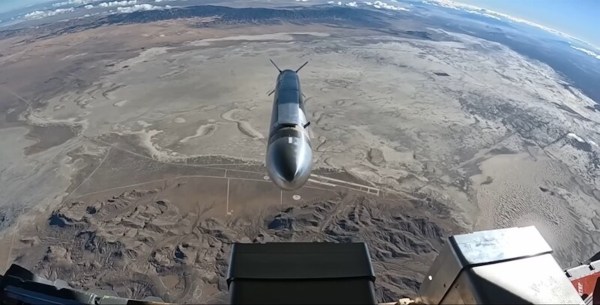
The FAMM program was born from a separate Defense Innovation Unit effort known as the Enterprise Test Vehicle (ETV) program, which sought to develop a palletized munition that could be launched from the Air Force’s cargo aircraft. Now, the service is planning to develop multiple FAMM variants with different deployment configurations and capabilities.
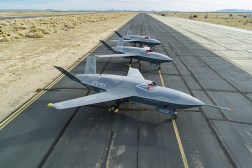
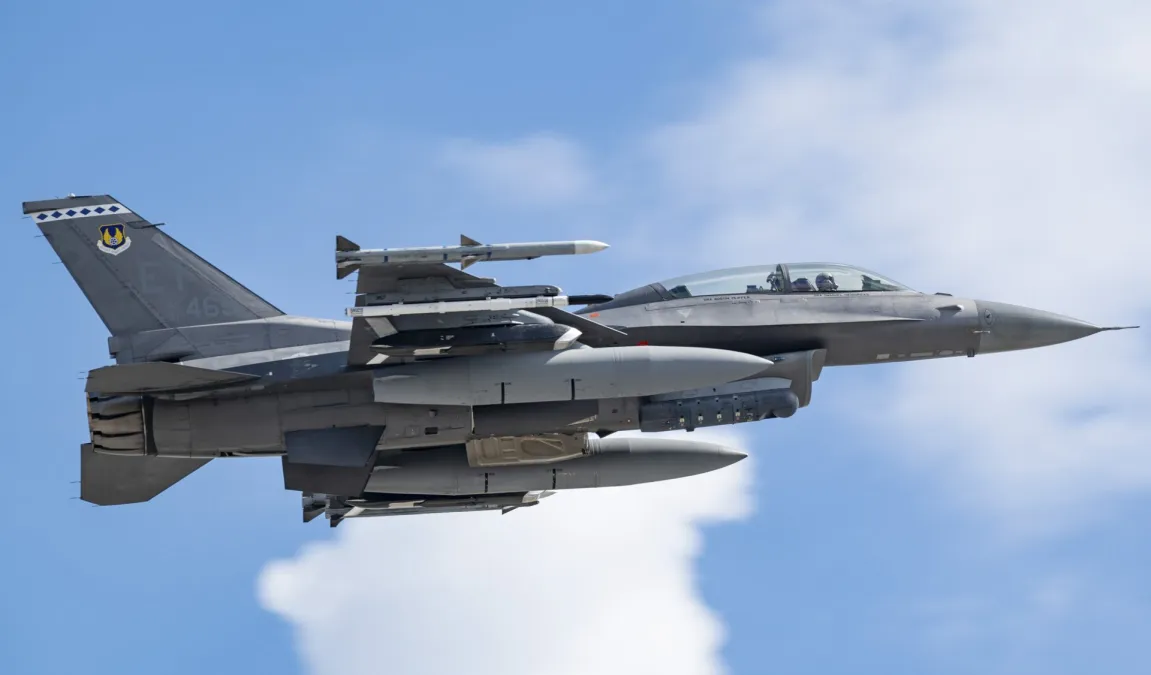
Along with the original palletized munition, the Air Force is working on a “lugged” variant that is attached to an aircraft’s pylons or weapons bay, according to FY27 budget documents. Anduril, CoAspire and Zone 5 Technologies are the three known prime contractors on the FAMM program, specifically for the lugged variant.
The Air Force received funds from the One Big Beautiful Bill Act to purchase the first 1,000 FAMM weapons in 2026, and is now requesting multi-year procurement authorities to acquire more of the missiles in the coming years.
The service’s FY27 budget request includes $300 million in reconciliation funding that would be used to buy up to 1,000 FAMM all-up-rounds in both palletized and lugged configurations and expand current production capacity. The service’s request also includes $55 million of discretionary funds in FY27 to purchase a FAMM variant with extended range — also known as the FAMM Beyond Adversary’s Reach (FAMM-BAR).
“The Air Force is on track to finalize production agreements in September for the Family of Affordable Mass Missiles Air-to-Surface variants. The specific vendors selected to support this phase of the program will be formally announced upon congressional notification and the final execution of the agreement awards,” an Air Force spokesperson told DefenseScoop in a statement Thursday.
“These early production efforts are directly aligned with meeting warfighter requirements. As outlined in the Fiscal Year 2027 RDT&E budget request, initial deliveries will support necessary development, vehicle integration, and flight testing. While these early missiles are critical for completing standard test and evaluation milestones to ensure safety and platform integration, the ultimate objective of the production agreement is to rapidly transition and field these capabilities to support the warfighter in operational environments,” the spokesperson added.
Quantities are expected to increase each year as production capacity expands. The Air Force’s five-year spending plan projects it will be able to buy 7,990 FAMM weapons in fiscal 2031.
Updated on June 11, 2026, at 10:45 AM: This story has been updated to include a statement from an Air Force spokesperson.