Salesforce previews plans to deliver newly authorized ‘AI agents’ across DOD
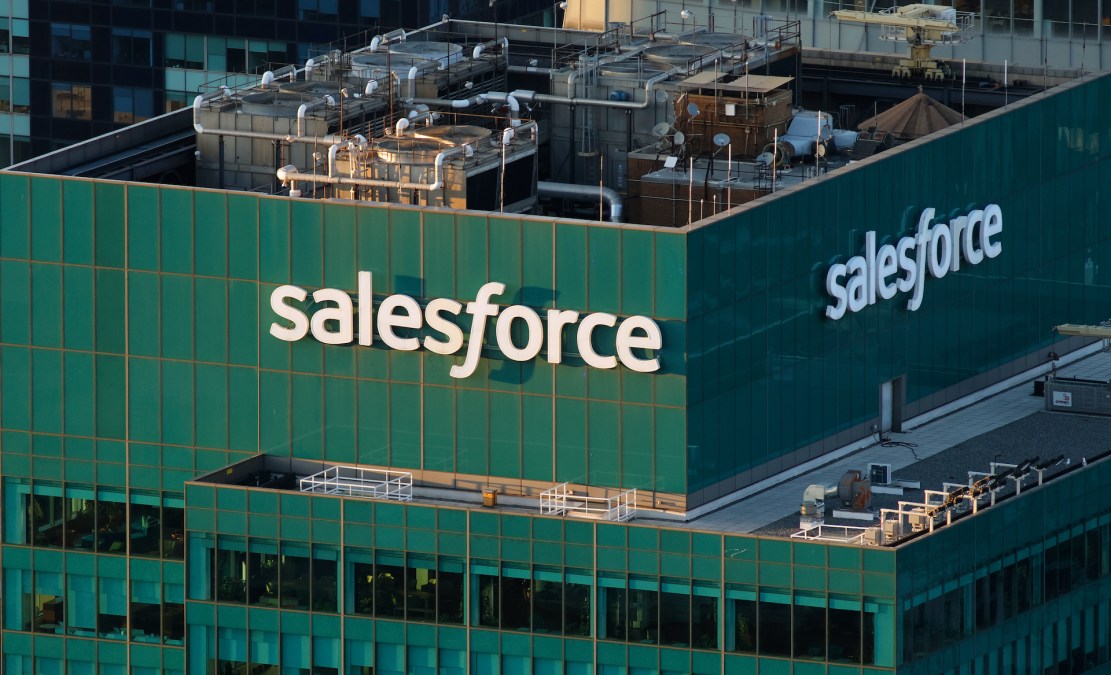
The Defense Department approved Salesforce’s enterprise agentic AI platform — Agentforce 360 — to securely store and process high-sensitivity workloads with Controlled Unclassified Information (CUI) and unclassified National Security Systems (NSS) data.
The company revealed on Wednesday that its signature product offering is officially authorized to operate at DOD Impact Level 5.
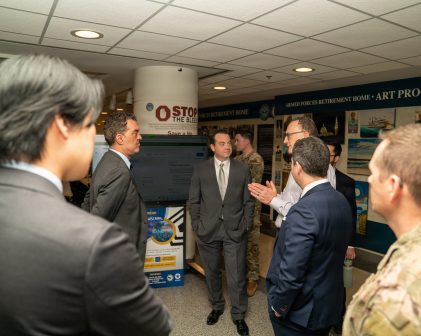
Ahead of that announcement, senior Salesforce executives briefed a small group of reporters last week about the company’s plans to further expand into U.S. defense and intelligence markets, and some early government use cases in the pipeline for its versatile “AI agents” to complete.
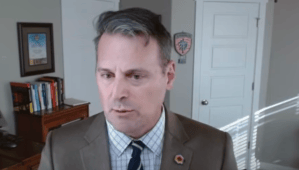
“We’re the first ones, as a commercial software company, bringing an agentic platform that’s been productive in the commercial side into the national security environment,” Salesforce’s CEO of Missionforce and Government Cloud Kendall Collins said at a media roundtable. “And it’s not just that we’re delivering the technology, but we’ve also got one of our first customers, Human Resources Command for the Army.”
Missionforce refers to the specialized national security-focused business unit and product initiative that Salesforce leadership launched in 2025, more than two decades after the company was founded in 1999.
Collins framed Missionforce, which he leads, as a “startup inside a 27‑year‑old company” that’s facilitating all the work associated with DOD, Intelligence Community and other federal agency missions. He noted that, on scale, the U.S. government is Salesforce’s “single biggest customer, globally” — and that national security is one of the firm’s “best and fastest growing areas.”
DOD relies on an “Impact Level” classification system to categorize data and ensure that cloud-based hosting environments and services are secure and compliant with existing policies.
For the department, Impact Level 5, or IL5, encompasses the highest authorization granted to environments built to store and process CUI and NSS data. IL6 is more rigid, as it’s required to process classified data for cloud-based defense workloads. Beyond that is IL7 — the most stringent security classification, which covers top secret, highly sensitive, or critical national security information.
Salesforce officials said that, on top of Agentforce 360 products now being IL5‑accredited for widespread DOD use, the Missionforce team also operates a fully air‑gapped, top‑secret environment that will likely see even more use by the IC in the near term.
“Trust is our number one value in our company. And in national security, that’s not just about the security side of it. It’s about making sure that when our warfighters or intelligence officers need the system to be operational, it’s available to them. It’s making sure that it is secure, and it’s making sure that the community with which we partner are the right team members to deliver on time and on budget — every time. That’s what we embody,” said Missionforce senior vice president Bill Pessin. “So, we’re in it for the long haul.”
The IL5-compliant Agentforce 360 platform is hosted on Amazon Web Services’ GovCloud, which Salesforce described in a press release as “a physically and logically isolated region operated exclusively by U.S. personnel.”
Collins told DefenseScoop that the company’s “primary partners on the infrastructure front” are AWS and Google.
He and the other senior officials who participated in the roundtable said that Agentforce 360 is designed to equip DOD and IC users to build and deploy autonomous and background AI agents, unify complex military data silos, and streamline logistics for high-stakes operations.
“What I want is airmen, soldiers, sailors, Marines, guardians — anybody — can innovate on this platform and go fast, because they know the basics are set. The guardrails are built in,” retired Maj. Gen. Allan Day, a vice president and industry strategy executive for the company, noted. “Guardrails, to me, built-in means I can accelerate. It’s not a speed bump. It’s actually something that allows me to go fast.”
Collins added that the company runs AI agents that “ride alongside and assist” humans, as well as autonomous agents that can independently take action in support of people’s prompts.
Army Human Resources Command marks the first DOD component contracted to deploy Agentforce 360 assets in Salesforce’s newly authorized IL5 environment. Officials involved from the tech company have already identified more than 1,500 cases per day that are expected to be supported by automated case summarization — and ultimately free up frontline analysts who manually review communications.
Collins said the company estimates that the command is also managing more than 55 million conversations per month serving soldiers, civilians, spouses and veterans, which can now be handled by secure AI agents.
“This is where agentic AI, I think, can really lift humans so they can focus on more important problems — and people can still get the right answer and feel like they’re getting taken care of,” he explained.
Salesforce announced in January that the Army had awarded it an indefinite-delivery/indefinite-quantity contract vehicle worth up to $5.6 billion over the next 10 years. The company’s latest work with Army Human Resources Command is unfolding under that IDIQ, with more from across the department anticipated to follow.
The senior company officials repeatedly emphasized that this award reflects a major shift Salesforce is pursuing to be treated by DOD as a prime contractor — as opposed to working solely through systems integrators, as it historically has.
Notably, in response to reporters’ questions, they also suggested that Salesforce had to attest to the Pentagon that generative AI models and capabilities supplied by Anthropic were disabled, in order to achieve IL5. DOD is currently engaged in a major legal dispute with Anthropic about the U.S. military’s use of the startup’s Claude AI model in real-world operations.
Outside of that constraint, officials said Salesforce’s platform is model-agnostic. They also have a sort of policy‑driven toggle that can be lifted to include Anthropic if DOD changes its stance down the line.
“Trust is letting our customers choose the model that works for them. There are very strong opinions about models. There are very strong opinions about certain companies. I listen to the customer. The customer wants to choose the model, my job is to make it work,” Collins told DefenseScoop.