Marine Corps awards Epirus $11M for high-powered microwave program, company says
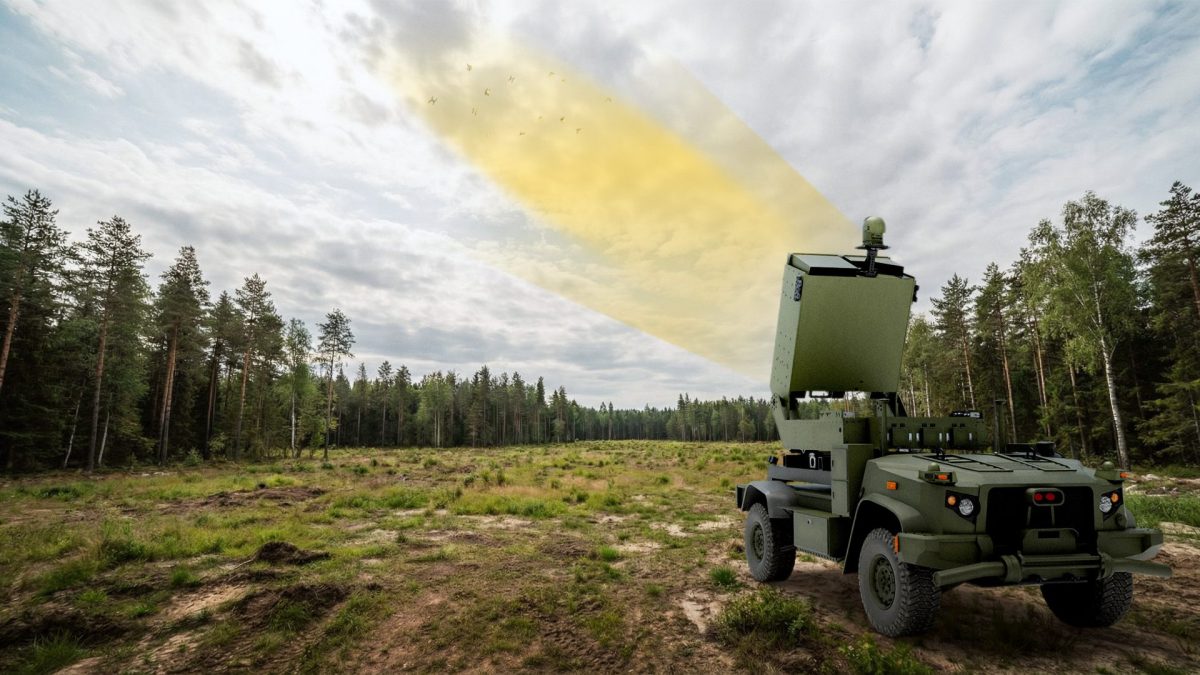
The Marine Corps awarded self-described “neo-prime” Epirus $11 million for its high-powered microwave program, including a system the company says can attach to different vehicles to zap down drone swarms on the move.
The High-power Microwave Autonomous Vehicle Operation Capability, or HAVOC, is based off of the company’s Leonidas weapon and comes with a “universal sled mount” so it can append to different vehicles, according to the company.
Epirus CEO Andy Lowery told DefenseScoop on Friday that HAVOC is meant to work in tandem with the Marine Air Defense Integrated System (MADIS), which has become key to the service’s mobile, surface-to-air protection units.
The price tag includes the system, testing, training and support. After Marine Corps testing, Epirus hopes the service will adopt HAVOC “more widespread” and has prepared its facilities for low-rate production amid business with the Army and international buyers, Lowery added.
“We have the capacity to get up to about one system per week already, today,” he said. “We are poised and ready. It’s not just the Marines, the Marines are a little lagging, trailing a little behind. I’m sure they’ll catch up though, that’s what Marines do.”
The Marine Corps did not respond to inquiries from DefenseScoop about the award.
Defense officials are eyeing high-powered microwaves and lasers as low-cost, “low-collateral” counter-drone options, variables the military is especially contending with amid the Iran war where cheap Iranian Shaheds and missiles are draining expensive U.S. interceptors.
The high-powered microwave family of directed energy weapons uses electromagnetic pulses to fry internal drone components. Lowery said that a variant of the company’s HPM “has been deployed in three different operational assessments overseas in CENTCOM and Indo-Pacific” with the Army, but did not offer specific details.
HAVOC is suited for critical point defense and covering mobile forces by “creating like a small, let’s call it, force field or bubble around that group to protect specifically against drones,” he added.
A company press release specifically cited ground-based air defense assets, refueling points, radars, communications, power equipment and “other forward-deployed assets,” as examples of sites HAVOC is meant to protect.
“If you get Group 1, Group 1 swarms of 10, 20, 50, it does an amazing job at taking out large swarms of drones,” according to Lowery, adding that HAVOC’s meant for short-range employment. The U.S. military categorizes drones into groups based on their size and capabilities, with Group 1 being on the smaller end of the spectrum.
Last year, the Army awarded Epirus nearly $44 million for the company’s Leonidas high-power microwave. The California-based vendor delivered its Expeditionary Directed Energy Counter-Swarm (ExDECS) system to the Corps last spring. HAVOC is an “autonomy-enabled evolution of” that system, the company said.
The military has tested directed energy systems domestically, banking on their ability to defend against drones without having to launch missiles or bullets into protected U.S. airspace, though the new technology caused interagency turmoil after back-to-back laser incidents in February.
“It’s inherently very safe, that’s why we call it one of the lowest-collateral solutions,” Lowery said about the company’s high-powered microwave tech. “We have weapon control software, firing software that’s designed to kind of Silicon Valley standards where you have all kinds of lockout, keep out zones” to avoid zapping unintended equipment.
The company’s most recent award was managed through the Office of Naval Research, the press release said.