Pentagon signs deals with industry to rapidly field 10,000 low-cost missiles
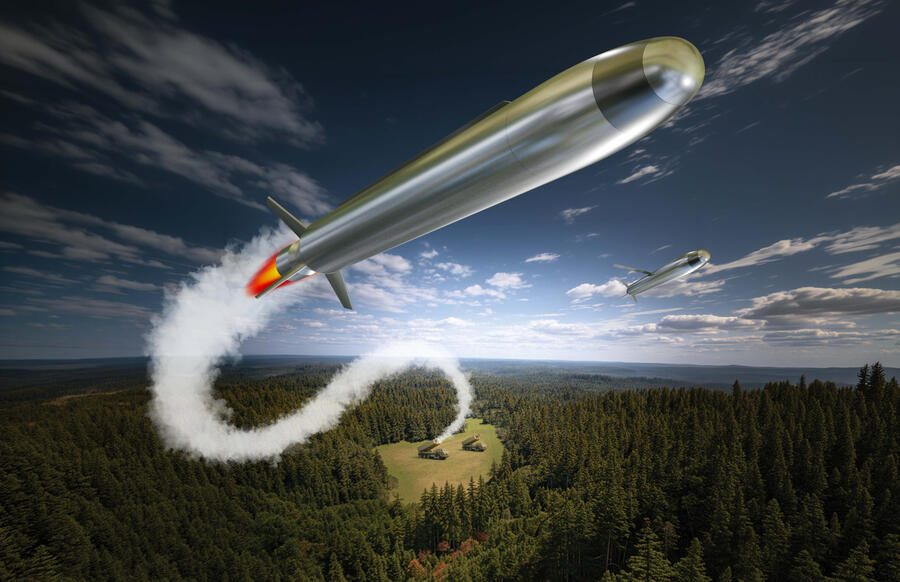
The Defense Department announced a batch of agreements with companies Wednesday that aim for the procurement of at least 10,000 inexpensive cruise missiles within three years.
Under the new Low-Cost Containerized Missiles (LCCM) program, Anduril, CoAspire, Leidos and Zone 5 Technologies will provide test missiles to the Pentagon to begin an experimentation and assessment campaign this June, according to a DOD news release. If all goes to plan, the department will begin purchasing weapons from the vendors in 2027 under firm fixed material-unit costs included in the agreements.
“These represent a new era where we can have mass [with] attritable, affordable weapons,” Undersecretary of Defense for Research and Engineering Emil Michael said Thursday during a hearing with the House Armed Services Subcommittee on Cyber, Information Technologies and Innovation.
The announcement is the latest multi-year framework agreement the Defense Department has made with commercial vendors focused on shoring up the United States’ weapons arsenal. While the Pentagon’s ability to quickly deliver munitions in a cost-effective manner has been an issue for years, recent operations in the Middle East have prompted renewed concerns over stockpiles.
According to the DOD, many of the vendors tapped for LCCM will be able to scale their production capacity without investment from the Pentagon.
“We’re not doing this on a cost-plus basis, we’re doing it on a fixed-price basis,” Michael told lawmakers. “It allows us to lay out a clear and rapid pathway for new and innovative ideas to make its way from working prototype to scaling the capability for the joint force.”
Containerized missiles are weapons systems designed to fit within and launch from commercial-sized shipping containers — allowing the Pentagon to covertly transport and deploy them much more easily than other munitions.
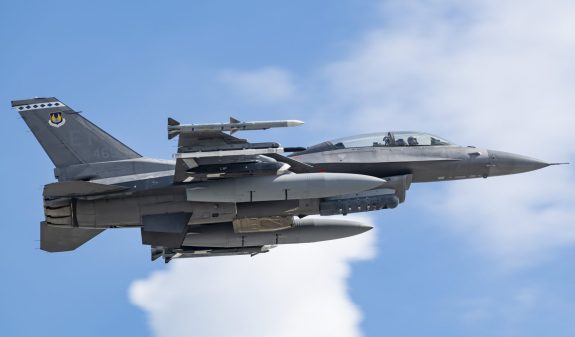
While a majority of the weapons detailed in the LCCM agreements are launched from the ground, containerized missiles can also be fired from military aircraft by dropping the container during flight to release the cruise missile mid-air.
Anduril will provide its surface-launched Barracuda-500M munition through the LCCM agreements, the company said in a statement. Anduril plans to scale its production capacity to allow it to deliver 1,000 missiles per year, with the first batch expected in early 2027.
Leidos also announced that it will deliver “an initial 3,000” munitions under the agreement. According to a company news release, Leidos began working on its LCCM design in December and has since developed a larger variant of its AGM-190A Small Cruise Missile, also known as Black Arrow, for the program that will begin production in 2027, as well.
“At approximately twice the size of the AGM-190A, the LCCM offers increased mission effectiveness and fuel capacity to maximize range,” Leidos said in a statement. “While initially ground-launched, LCCM’s modular design could also support maritime platform integration and air-launched variants.”
CoAspire will be offering for its GHOST cruise missile, a ground-launched variant of the company’s Rapidly Adaptable Affordable Cruise Missile-Extended Range (RAACM-ER). The weapon is expected to begin flight testing this year, according to the company.
Zone 5 has yet to detail its LCCM capability, but the company is already on contract for the Air Force’s Family of Affordable Mass Missile (FAMM) program — alongside CoAspire and Anduril, according to the service’s fiscal 2027 budget request.
Like the munitions detailed in the Pentagon’s latest agreement, FAMM aims to field low-cost missiles that are designed for non-traditional deployment configurations such as palletized or “lugged.”
Meanwhile, the Pentagon also announced Wednesday that it has reached an agreement with Castelion that states once the company’s Blackbeard hypersonic missiles have achieved testing and validation, the department will award a two-year procurement deal for at least 500 weapons per year.
The department is “actively seeking” the authorities and appropriations needed to buy over 12,000 Blackbeard missiles within five years, according to the news release.
“Today’s announcement is the latest sign that our Acquisition Transformation Strategy is delivering on its promise to rebuild the Arsenal of Freedom,” Michael Duffey, undersecretary of defense for acquisition and sustainment, said in a statement. “We are moving beyond the traditional prime contractors to expand our industrial base, accelerating testing timelines, and sending a clear, long-term demand signal to innovative new entrants.”