GAO: Lockheed Martin struggling to build Navy hypersonic missile at scale
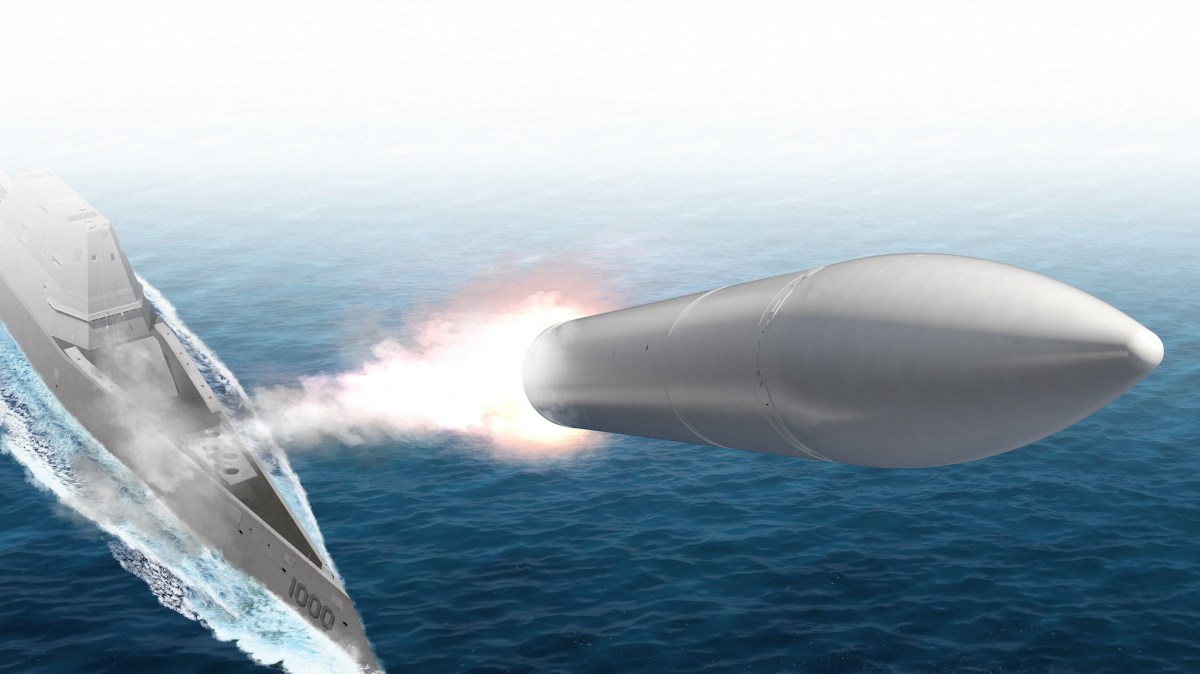
The Navy’s new hypersonic missile is facing significant manufacturing and quality-control challenges that are preventing the program from reaching its planned production rates, according to the Government Accountability Office.
Lockheed Martin is currently capable of building only six to seven rounds of the Conventional Prompt Strike (CPS) missile annually — around half of the sea service’s target production rate of 12 missiles per year, GAO found in a new report published Friday. Because the Navy jointly developed the hypersonic missile with the Army, production woes could impact both services’ plans to rapidly field the weapons at scale.
The GAO first reported the program’s manufacturing challenges in its 2026 annual assessment of the Pentagon’s major acquisition efforts, which noted that “missing, inconsistent and unclear work standards for missile production” forced the Army and Navy to delay several key milestones for the weapons.
However, the latest report delves deeper — highlighting parts contamination, incomplete production kits, workforce gaps and the CPS’s overall design complexity. And because the Navy shares a production line with the Army, manufacturing problems affect the two hypersonic programs simultaneously.
“Navy data indicate that the contractor facility operations are not currently able to meet demand, making it difficult for Lockheed Martin to keep production commitments,” the GAO said. “Additionally, a Navy audit of the production facility in 2023 noted various issues relating to lack of adequate parts inspection; multiple instances of untagged expired materials, such as adhesives; and numerous instances of quality assurance steps not being followed.”
Lockheed was tapped as the prime contractor for both the Navy’s CPS program and the Army’s Long Range Hypersonic Weapon (LRHW) in 2023. The company is responsible for development and integration, while Dynetics manufactures the common hypersonic glide body system used by both missiles.
The Navy plans to deploy its hypersonic weapon on Zumwalt-class destroyers beginning in 2027. The sea service also intends to integrate CPS onto Block V Virginia-class submarines sometime in the early 2030s.
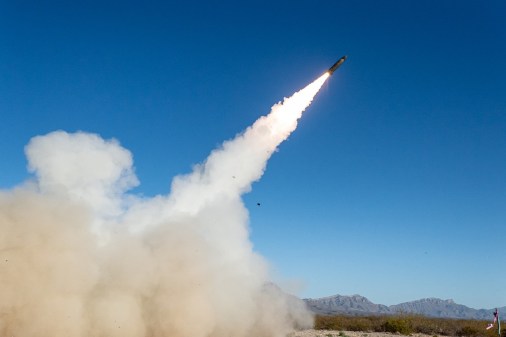
The Army’s LRHW — also known as Dark Eagle — will be deployed from ground-based launchers. After multiple issues and delays during the program’s flight tests, the service began fielding the first Dark Eagle battery at the end of 2025 and expects to deliver the second in early 2027.
Among the manufacturing issues identified by GAO were processes that remain significantly more labor intensive than originally anticipated, limiting Lockheed Martin’s ability to efficiently move the weapons. As of March 2025, the amount of direct labor required to assemble each missile was well above the level necessary to achieve planned production rates, the watchdog said.
There has also been several quality-control and manufacturing deficiencies contributing to delays. According to the report, Navy and Army officials found Lockheed was using contaminated thermal protection coating materials and incomplete parts kits that caused production delays.
“Specifically, parts are sometimes missing from kits, which are groups of all the parts necessary to complete a portion of the missile. When parts are missing from kits, it slows production as these missing parts need to be borrowed from other missile kits,” the report stated. “In some cases, the contractor had to partially disassemble missiles in production to address issues with parts or incomplete assembly kits.”
The production workforce has also proven difficult to sustain, according to GAO. Work instructions provided to technicians were overly complex and written more like engineering specifications than manufacturing guidance — making them difficult for relatively inexperienced workers to follow.
At the same time, Lockheed Martin has experienced high employee turnover as technicians moved to other programs or left the company altogether, per the report. Although the contractor has expanded its manufacturing workforce from roughly 60 employees to about 80, Army officials told GAO that new workers require nearly a year before they can perform independently.
The watchdog noted that Lockheed has begun implementing corrective actions, but emphasized that it is too early to tell whether the company’s efforts will significantly improve production.
“We are enhancing production and manufacturing processes to deliver for the Arsenal of Freedom faster,” Lockheed Martin told DefenseScoop in a statement on Friday. “We’re confident in the quality of our capabilities and are working across the industrial base to strengthen supply chain resilience. Specific questions regarding the Long-Range Hypersonic Weapon system should be directed to the Office of the Secretary of War.”
Beyond manufacturing, the GAO concluded that the Defense Department lacks a comprehensive strategy for coordinating investments across the Navy and Army’s shared hypersonics enterprise.
The Army and Navy are planning to invest more than $50 billion across their initiatives, including missile development, production, testing and fielding efforts. The Navy alone now estimates the CPS program will cost approximately $41 billion over its lifecycle — up from an estimated $31 billion in 2020 — while the Army plans to spend more than $10 billion procuring 48 missiles and associated ground equipment.
Individual missiles are now expected to cost between $63 million and $71 million, averaging roughly $67 million each.
Overall, the report recommended that the Pentagon develop and regularly review a department-wide strategy to coordinate the Navy and Army’s investment decisions across their shared hypersonics portfolio. Such a document could improve how the services address production issues, according to GAO.
“Without a comprehensive strategy to guide investment decisions, it is unlikely that the Army and the Navy will be well-positioned to make decisions across the portfolio of programs that result in efficiently delivering the CPS capability at planned cost and schedule targets,” GAO said.