Portfolio executives describe changing roles as Air Force completes acquisition overhaul
DAYTON, Ohio — With all Air Force mission areas now led by newly-minted portfolio acquisition executives, senior officials say the service is beginning to reshape how it oversees programs, exercises new authorities and delivers capabilities.
The Air Force announced July 27 that it finished reorganizing its acquisition structure earlier that month, officially consolidating all of its program executive offices into 17 new organizations led by PAEs. The reforms are part of a Pentagon-wide shift directed by Secretary of Defense Pete Hegseth intended to change how the department manages capability development and sustainment, largely by encouraging acquirers to prioritize mission outcomes over following bureaucratic processes.
While most of the transitions were finalized just one month ago, senior officials say they are already seeing how the organizational changes are impacting day-to-day acquisition management. However, Air Force acquisition czar William Bailey emphasized that the transformation is far from complete.
“This is a monumental step forward, but our work is not done. Pushing these critical decisions down to the PAE level demands a heightened commitment to delivering results and holding ourselves accountable,” Bailey said in July during the Air Force Life Cycle Industry Days (LCID). “We must continue to be bold, to learn and to adapt — ensuring we provide our warfighters with the decisive edge they need when they need it.”
In 2025, Hegseth introduced massive reforms to the Defense Department’s acquisition processes designed to accelerate capability delivery to match commercial timelines, grow competition within the defense industrial base and foster emerging technology innovation.
One of Hegseth’s top critiques was that individual program executive offices were slow and bureaucratic, operating through multi-layered approval chains that were risk-averse and fragmented overall responsibility across different personnel.
His reforms called on the entire Pentagon to consolidate PEOs into new organizations led by a single PAE, who would be given cradle-to-grave authority over all of the programs within the same mission area.
In doing so, the Air Force is now able to delegate new authorities intended to improve visibility across programs, Bailey said.
“We’ve focused on in on the decision making and matching the authority with the accountability at that point of a portfolio acquisition executive. It gave us a chance to take a look at what level are we making those decisions and how far down can we delegate [and] streamline,” he told reporters on the sidelines of LCID.
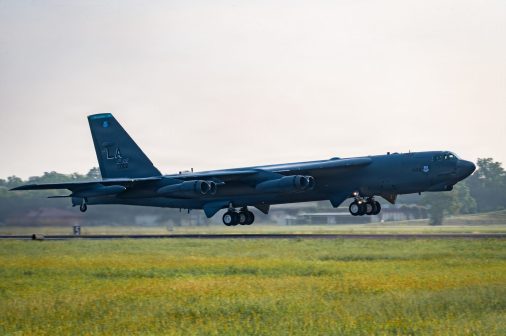
Each PAE has oversight over the entire lifecycle of all platforms in its portfolio. Rather than dividing authority across fragmented offices, they’re charged with enterprise-wide modernization, procurement and sustainment efforts while individual program managers retain responsibility for specific platforms, Col. Timothy Spaulding, PAE for bombers, told reporters during LCID.
“If you wanted to be cynical, you could just say that we swapped the PEOs to PAEs and called it a day,” he said. “That would be very, very incorrect. There’s a real change happening when we adopt the PAE mantle.”
The Air Force announced its first batch of five PAEs in January — command, control, communications and battle management (C3BM); fighters and advanced aircraft; nuclear command, control and communications (NC3); propulsion; and weapons.
The PAEs finalized in July include cyber and networks; bombers; intelligence, surveillance and reconnaissance and special operations forces; intercontinental ballistic missiles; mobility; combat readiness; business and enterprise systems; training; electronic systems; services; presidential and executive airpower; and nuclear air delivered.
John Sneden, PAE for propulsion, said that the shift to enterprise-wide management has given him a wider perspective that allows for optimization across all of the Air Force’s propulsion systems rather than just individual contracts.
“Instead of a program-by-program type focus, we now have a portfolio or enterprise focus,” Sneden said during a media roundtable at LCID. “That means that I can help drive integrated propulsion acquisition strategies and outcomes across the enterprise, enhance those enterprise-wise results, ensure the vitality and protection of the propulsion industrial base and align our demand signal to optimize the use of limited funds that we have.”
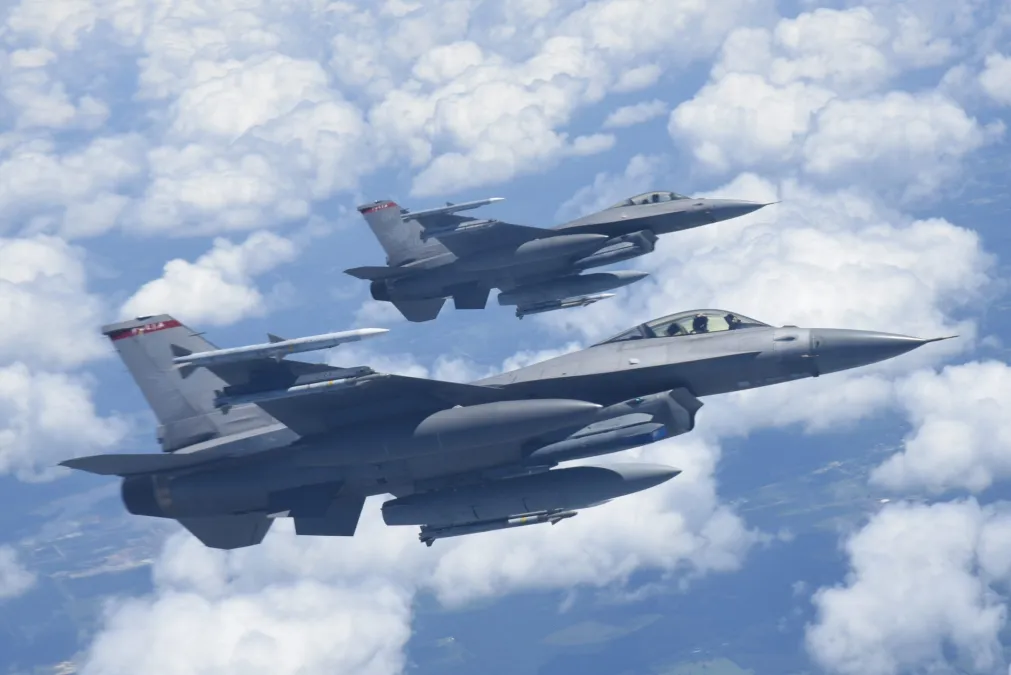
In practice, that involves taking successful elements of one program and applying it across other systems under the same mission area, Col. Timothy Helfrich, PAE for fighters and advanced aircraft, said during a separate media roundtable.
For example, an architecture or mission system that benefited the F-15EX Eagle II program could also work for the F-16 Fighting Falcon or even the sixth-generation F-47, he noted.
“As we’re moving and becoming a PAE organization — not just in name, but actually in how we act, how we’re organized — we are moving past simply looking at individual programs and stovepipes … and we’re looking at that cross-portfolio integration,” Helfrich said.
But officials said adopting a portfolio mindset requires more than looking across multiple programs, arguing that the model only works if leaders are also given the authority to make decisions on behalf of mission requirements.
Prior to Hegseth’s reforms, one person was responsible for a program’s outcomes but often depended on other organizations’ authorities to make decisions. Now, the Air Force is trying to move those authorities to the portfolio organization itself.
“The mission outcomes of the PAE are sustainment and modernization, so sometimes that requires giving us authorities we didn’t have before,” Spaulding explained. “Sometimes, it just means aligning authorities from somewhere else so that they are responsive to the [rapid acquisition authority].”
Col. John Dayton, PAE for ISR and special operations forces, said that roughly 85 percent of available contracting authorities within his organization are now delegated directly to him. The portfolio is able to leverage commercial solution openings and other transaction authorities, and is also considering an enterprise-wide indefinite-delivery/indefinite-quantity contract vehicle to speed up delivery, he said.
Even though the changes are new, Dayton told reporters that pushing decision-making power to one PAE has already demonstrated that the Air Force can field capabilities more quickly — with contract timelines being shaved down by weeks or months.
For example, direct access to acquisition authorities enabled the ISR and SOF portfolio to quickly field capabilities to support the Pentagon’s current military operations, he explained.
“It was a combination of acquisition transformation and just the urgency of support to operations,” Dayton said. “What it allowed this team to do was look at a federated capability, and the team felt really empowered to take risks to step into and weigh whether they needed some of the acquisition process that might normally be there or whether the priority was giving some support.”
While redesignating the Air Force’s acquisition portfolios marks a significant milestone in the department’s transition, officials emphasized that long-term success will require a massive cultural change across the entire organization, not only in its acquisition offices.
Spaulding noted that while there have been clear advantages to the new structure, the Air Force will likely continue to refine the balance as it matures rather than try to reorganize everything at once.
“It’s a nuance because you can’t just break the whole organization apart and put it back together in a certain way,” Spaulding said. “You have to be very careful about when you do that and when you just wire things up.”
Bailey also said that a broader challenge moving forward will be refining how acquisition organizations balance operational urgency with traditional acquisition processes. Ultimately, the goal is to develop leaders focused on delivering critical capabilities to warfighters — even if they aren’t completely perfect — rather than complying with established procedures.
“There’s a reason for the process, they can represent lessons learned over time. But if it’s having you march off of that cliff, you should stop marching,” Bailey said. “Having that focus on operational outcomes is the generation of acquisition we’re raising today.”