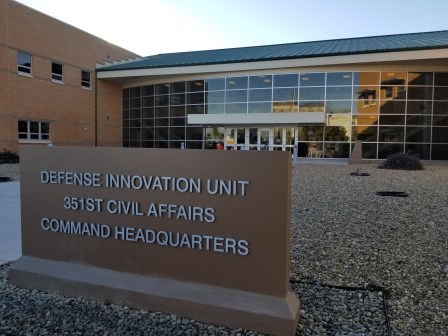
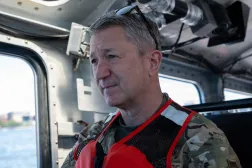
DIU’s first active-duty military deputy wants to help U.S. forces meet future fights ‘with swagger’
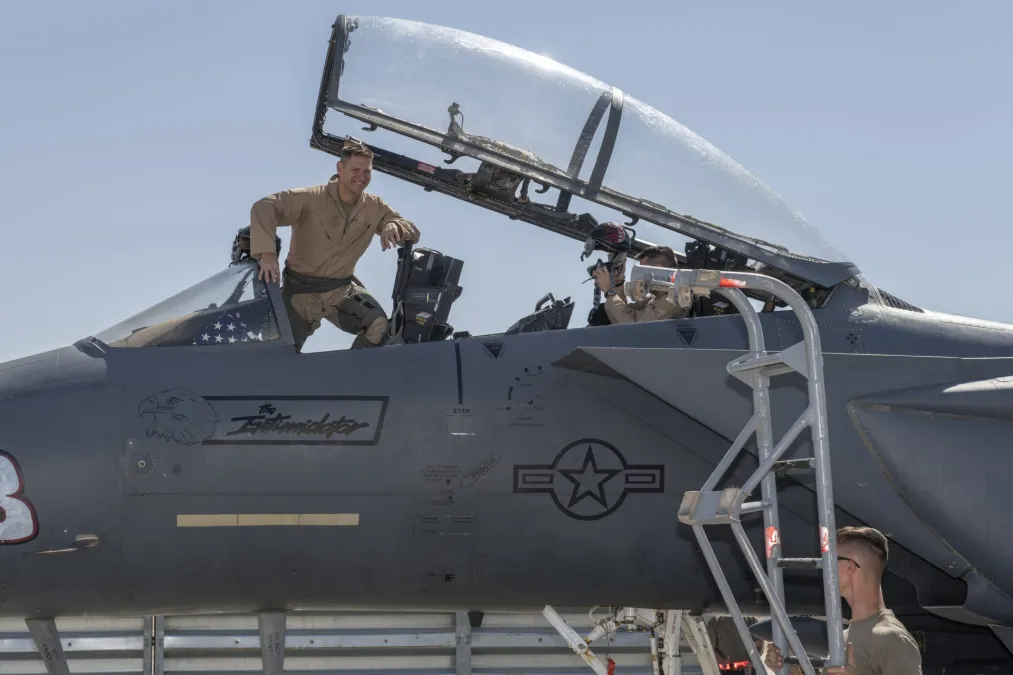
When Maj. Gen. Joseph Kunkel joined the Air Force in the 1990s, he had no idea he’d spend the next three decades of his life “roaming around the world, actually executing combat operations,” as he puts it, armed with capabilities that those who served before him made sure “were perfectly suited for winning those fights.”
He’s inherited a modern version of that responsibility today — to equip U.S. forces with the right and best weapons, faster than ever before — as the Defense Innovation Unit’s first full-time military deputy.
“We have walked into every fight over the last 30 years with swagger. We had full confidence that we were going to win,” Kunkel told DefenseScoop. “I feel like, now, this organization is really focused on that obligation to ensure that our warfighters have everything they need to succeed in battle.”
The two-star general joined DIU in this new role as the hub is pivoting under fresh leadership to produce measurable, real-world impacts by fielding in-demand technologies to frontline users and across the joint force on more relevant timelines.
“In basic terms, to raise our conversion ratio, we have to get closer to the military services and solve operational problems,” said DIU’s new Director, Owen West.
In separate, exclusive interviews with DefenseScoop this month, the two senior DIU officials shed new light on their near-term plans to align the unit’s project portfolios directly with U.S. combatant commands’ needs, and help the nation build out a more surge-capable defense industrial base.
“Solo is so forward-leaning,” West said, referring to Kunkel by his callsign. “He is totally aligned with [Defense Secretary Pete Hegseth’s] vision, which is to get these cheap machines on the battlefield and get Americans off of it.”
Finding those ‘happy marriages’
Hegseth gave West explicit instructions when he took over at DIU early this year: Improve the Defense Department’s conversion ratio of contract dollars spent to assets deployed on the field, and help reverse the current dynamic where the military’s weapons cost more than the threats they’re targeting.
“Everything we do is in the frame of reference of an operational problem or a military problem that DIU can help solve,” West said.
Having deployed earlier in his career as a U.S. Marine, he told DefenseScoop that, in his current capacity, it’s “nice to have mission-type orders from the secretary.”
And in working to help flip the cost equations against U.S. adversaries, DIU is also charged with becoming the department’s fastest contracting and fielding agent. To help make that happen, West said Hegseth “was nice enough to give DIU its first-ever full-time, active-duty two-star general to lead this effort to get closer to the military services.”
Since Kunkel hit the ground running in this position as DIU’s military deputy, West noted, “it’s had an enormous impact in only two months.”
“We’ve been all over the place, frankly,” Kunkel told DefenseScoop of his early days on the job. “If we haven’t been out to every combatant command, we’ve at least communicated with them.”
Under its former director Doug Beck, DIU previously started embedding its personnel directly inside U.S. combatant commands and other key directorates to bridge the gaps between operational needs and existing commercial technologies.
In Kunkel’s view, embeds have always been critical to that function but they “weren’t always at the rank that could play in some of the circles,” or deeply influence the reform and impacts the unit was aiming for. The DIU embeds remain active, now working closely with the military deputy.
“So, having an active-duty general officer that is able to make the connections at the higher levels in the combatant commands and the services, I think that’s where we’re really paying off,” Kunkel explained. “The daily business, the daily interactions with those combatant command embeds, it’s critical. And frankly, it’s priceless when you combine that with the new things we’re doing. I think it’s not just additive, but multiplicative.”
Offering an example of recent progress, he said a DIU team had just visited Space Force personnel for an in-depth working session.
“We spent six hours just combing over projects,” Kunkel said. “And after that meeting, we were able to, one, figure out the projects that we were doing that the Space Force wasn’t interested in — and two, we were able to find out where we needed to emphasize projects that we were currently doing. And then we started [considering] the direction ahead and what projects we need to do in the future.”
When asked about product or capability areas that the services have shown the most interest in during those meetings as of late, he pointed to persistent, long-range intelligence, surveillance and reconnaissance (ISR) technologies as a requirement that has repeatedly emerged across at least four of the 11 combatant commands.
Such multi-domain technologies — like quantum sensors, AI and data fusion assets, and various uncrewed systems — are designed to provide battlefield awareness and improve tactical decision-making.
“You’ve seen how we’ve done in Operation Epic Fury and you’ve seen what we’ve done with the MQ-9 — that ability to do ISR at-range with something that may be more attritable is a need,” Kunkel said. “And those are things that we can do. There is a significant number of new entrants that can produce capabilities within that space, so we’re finding those happy marriages of combatant command problems, service problems, and then where there’s an industry available to serve them.”
Converting tech to lethality
When West invited him to join DIU as its first-ever military deputy, Kunkel asked the newly appointed director what problem the unit was trying to solve by introducing an active-duty general officer into the organization.
“And the concern he had was technology transition,” Kunkel told DefenseScoop. “He had this new model of, ‘It doesn’t count until it’s fielded forward,’ which is to say, ‘Hey, this stuff we’re doing — it doesn’t really matter unless it’s in the hands of warfighters, and warfighters can actually use it.’ And so this thought of transition was something that he really wanted to emphasize, but he also knew that, unless you have a really close connection to the services, you’re not going to get transition to happen.”
A command pilot with more than 2,770 flying hours, Kunkel has completed 10 combat deployments. According to his DIU bio, he flew the F-15E Strike Eagle, was part of the initial Pacific Air Forces F-22 Raptor cadre and served as the commander of the 90th Fighter Squadron, among other senior roles.
Most recently, before he moved into the new position as DIU’s top military liaison, Kunkel was the Air Force’s director of force design, integration, and wargaming in the service’s Futures directorate.
“Obviously I’ve got a history in wargaming, which has proven helpful as I’ve stepped into this role in DIU,” he said. “What I don’t think you’ll see DIU do is host a bunch of wargames. We’re not going to be the ones that sponsor the wargames, but we certainly will help the services by facilitating the adoption of wargaming tools that frankly bring on an entirely new breed of new thought on what wargaming brings to the table.”
Historically, there has been a “giant chasm between operations and the business side of the department,” which Kunkel said could be solved in some ways by modern wargaming activities that can also rapidly inform what DOD buys and fields, based on users’ actual, quickly changing needs.
Still, it’s no secret that DIU and the department writ large are facing an uncertain future due to legislative gridlock in Congress over trillion-dollar fiscal 2027 defense spending budget proposals that hang in flux.
“For the most part the market is now saturated with purpose-built defense tech, which is wonderful, because these are folks who at some level come to the aid of their country, and their costs on balance are dramatically lower than the primes. Now, in terms of capability, they’re still behind,” West said. “So, what the secretary is trying to do is pivot the force, and this is why this budget request is so crucial, because it comes at a crucial time, where he has traveled the country encouraging new entrants to come to the defense of their nation, and the technology they bring is world-leading.”
“But some of this needs some maturation, and it’s going to be quick maturation,” he added, noting that congressional funding for DOD’s Drone Dominance Program has already resulted in multiple, small U.S. drone companies rapidly scaling to deliver for the military. West, who also steers the DDP, said that under his leadership at DIU, “this has to be done across many other facets” of the unit’s defense technology portfolios.
The team will also be steadily scouring commercial markets for the best, military-applicable tech.
“We’ll never be 100% on that conversion ratio, because we should still have some ‘push,’ if you will, and some advocacy of tech that can be converted into lethality,” West told DefenseScoop. “But, for the most part, we’re going to be a ‘pull’ organization.”
Kunkel also suggested DIU is being charged with helping the Pentagon stimulate the nation’s industrial base to ensure it is capable of surging, mobilizing and scaling production in any time of need.
That involves communicating the combatant commands’ and services’ demands directly to the market — with money and buyers to back the requirements.
“It’s the ability to manufacture as quickly as we’re expanding capabilities, that’s something that we’ve always talked about but we haven’t been able to do. If we can create an industrial base that can do that, it’s really going to help us out in a time of war,” Kunkel said. “And then, there’s another aspect of this, which is the signaling to private capital about where there might be some good bets for them to make investments.”
In separate conversations with DefenseScoop, the two senior DIU officials said that installing the unit’s first military deputy reflects the department’s “serious commitment” to solving operational problems for the joint force on “a timeframe that actually matters.”
“We want to walk into the fights that our nation is going to have in the future with swagger — without any doubt about their ability to succeed,” Kunkel said. “That’s frankly the motto that DIU is taking.”
Editor’s Note: This is the second in a two-part series on DIU’s modern mission. Part one can be found here.