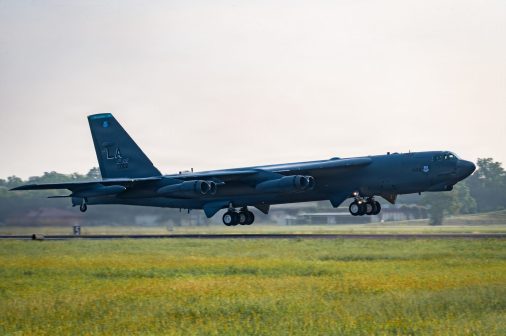
Air Force moves key B-52 engine and radar upgrades forward
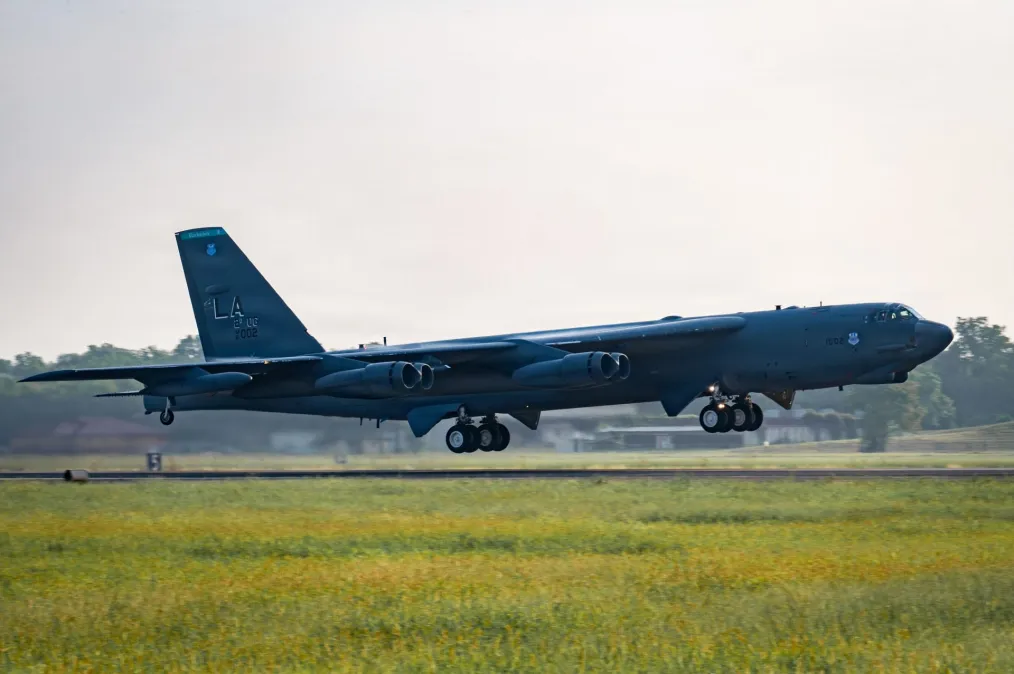
NATIONAL HARBOR, Md. — The Air Force has approved two critical milestones for the B-52 Stratofortress modernization effort designed to keep the heavy bomber flying through the 2050s.
Air Force acquisition czar William Bailey told reporters Tuesday at the AFA Air, Space and Cyber Conference that the Commercial Engine Replacement Program (CERP) achieved Milestone B in June, officially putting the initiative into the engineering and manufacturing development phase. Additionally, the B-52’s Radar Modernization Program (RMP) was approved for low-rate initial production (LRIP) in August, he said.
The two programs are a linchpin for the Air Force’s broad B-52 modernization program, a $21 billion effort to upgrade dozens of the Eisenhower-era bombers, which were built by Boeing, with 13 new systems. However, a June report from the Government Accountability Office found that both efforts have experienced cost growth of more than 30% and schedule delays of more than three years.
Rolls-Royce is the prime contractor for CERP, which will replace the bomber’s aging TF33 engines with the company’s modern F130 engines. The Air Force is slated to begin production developmental flight testing of the engines in fiscal 2029, and reach initial operational capability in 2033.
Furthermore, Air Force officials told the GAO that the engine modernization’s cost increased to over $15.4 billion in 2025 — 38% higher than original estimates. As a result, the service began an affordability study to “assess alternatives and allow the B-52 program office to confirm its cost estimates prior to the start of development,” according to the report.
Regarding the decision to move CERP into development, Bailey said there was “a lot of great work in understanding what it’s going to take for us to be able to re-engine the aircraft. And that’s the byproduct of a lot of great modeling, a lot of great ground testing, and understanding what the engine is going to need to be able to do it.”
As for RMP, Raytheon is contracted by Boeing to integrate the advanced AN/APQ-188 radar onto the B-52. In August, the Air Force awarded a pair of contracts to both companies — worth a combined $766 million — to kick off low-rate initial production, according to a report from Breaking Defense.
“Again, this is after a lot of great work getting through the integration challenges of getting that radar and all the support equipment that radar needs integrated into the aircraft,” Bailey said.
The GAO found that the program’s budget swelled to nearly $3 billion in 2025, and that the Air Force anticipates the radars will become operational in fiscal 2030.
The service’s RMP work also experienced a significant setback in June when one of its two B-52 test aircraft crashed during a mission to test the AN/APQ-188 radar kits, killing all eight crew members on board.
The Air Force expects to have a replacement bomber ready to resume testing before the end of the year. Bailey told reporters that he is waiting to see the results from the service’s ongoing investigation into the crash to understand “what do we need to do with that second aircraft as part of the rest of that test program.”