U.S. military building resilience against emerging OPSEC risks from automated surveillance networks
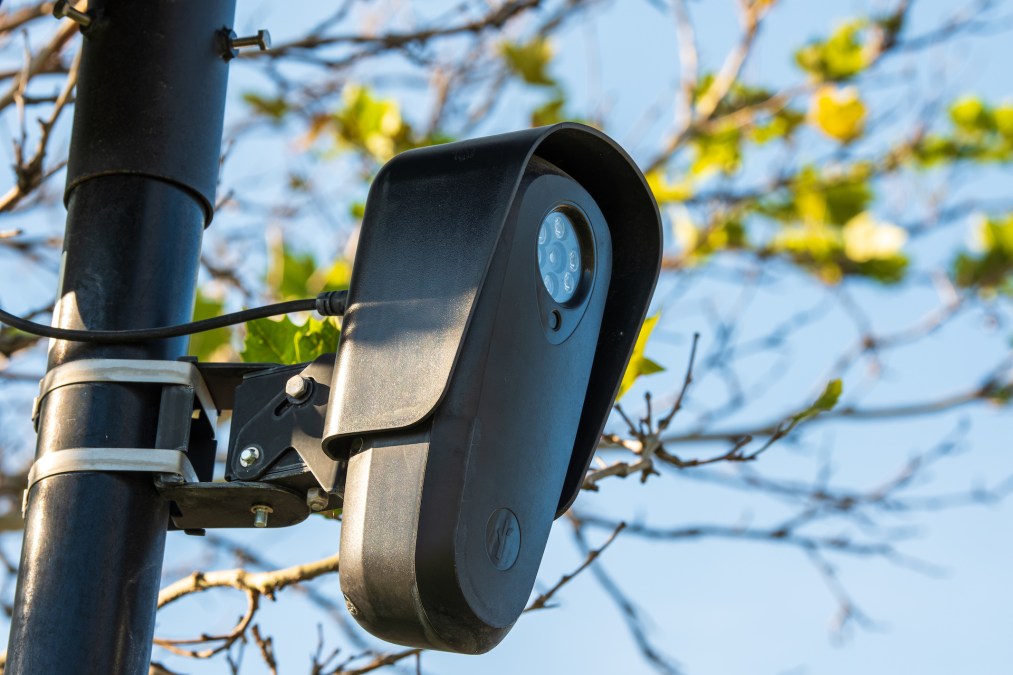
GRAPEVINE, Texas — The U.S. government and law enforcement agencies are increasingly utilizing commercial surveillance products that fuse computer vision, pattern tracking and behavioral analysis assets to support public safety and other operations.
That ever-growing network of integrated cameras, sensors and other tech is simultaneously introducing new security risks across the joint force.
“Everything has a vulnerability,” a U.S. Transportation Command official told DefenseScoop on Tuesday. “You just have to understand what it is, and exploit it.”
On the sidelines of the annual Fall Meeting co-hosted by the National Defense Transportation Association and Transcom this week, multiple officials from that combatant command discussed countering threats against military personnel and logistics posed by AI-enabled capabilities that trace patterns of movement en masse. They requested anonymity to speak freely about their concerns.
Their comments come as automated license plate readers, cloud-connected surveillance hardware and AI-enabled tracking tools (from companies like Flock Safety, Axon and Motorola Solutions) are being widely integrated across America and used by police departments, neighborhood homeowners associations, business districts, and private entities.
“It’s analogous to a picket line, which would be a series of observers along specific routes that can report back,” a Transcom official said. “These cameras kind of do the same thing — they run software [for] optical character recognition, so they can read your [license] plate data.”
While these technologies are designed and marketed for crime detection and civilian neighborhood protection, their dense networks of interconnected devices present new operational security risks for the U.S. military’s personnel and assets.
Transcom’s mission hinges on coordinating strategic air, land, and sea transportation for troops and weapons worldwide, during peacetime and war.
According to the officials who spoke to DefenseScoop this week, the commercial surveillance technologies are enabling easier pattern-of-life tracking of service members — as well as force movement and unit deployment indicators that can reveal sensitive information to adversaries paying attention about training schedules and mobilization plans.
“For me, it’s understanding the mission threats, understanding that infrastructure,” a Transcom official said. “I mean, companies are going to secure their networks and things of that nature, but what does that data traverse across? Those are your choke points that you can exploit.”
Another Transcom source noted that frontier models and other advanced AI capabilities are also helping bad actors capitalize on certain data vulnerabilities at a larger scale than what’s been done before.
“I’m really not as concerned about, ‘can you see my tag?’ It’s about if you are able to understand what that tag is tied to from an intent and timing” perspective, the Transcom official said. “Other than that, it’s a great opportunity because there are a lot of bees in that swarm.”
When asked how the command is thinking creatively about resilience and countering these modern threats as the network continues to expand, officials pointed to initiatives to protect sensitive context around military movement data and diversify geographic locations, ports, and airfields to get ahead of potential effects of localized disruptions — including cyber incidents or power failures.
They also cited a need for more whole-of-government engagement opportunities with local and private infrastructure partners.
“There are some real policy [aspects] that we need to start to look at that will enable our actions and make it harder for somebody trying to exploit or operationalize that opportunity. The other portion of it is, at Transcom, you have to get very comfortable with the amount of data that you usually would never allow somebody to have their hands on — because it’s just the way logistics is,” an official told DefenseScoop.
Spokespersons from Flock, Axon and Motorola did not immediately respond to requests for comment on Wednesday.