Army inks $1.2B contract with Lockheed for Precision Strike Missile that can hit ships and other moving targets
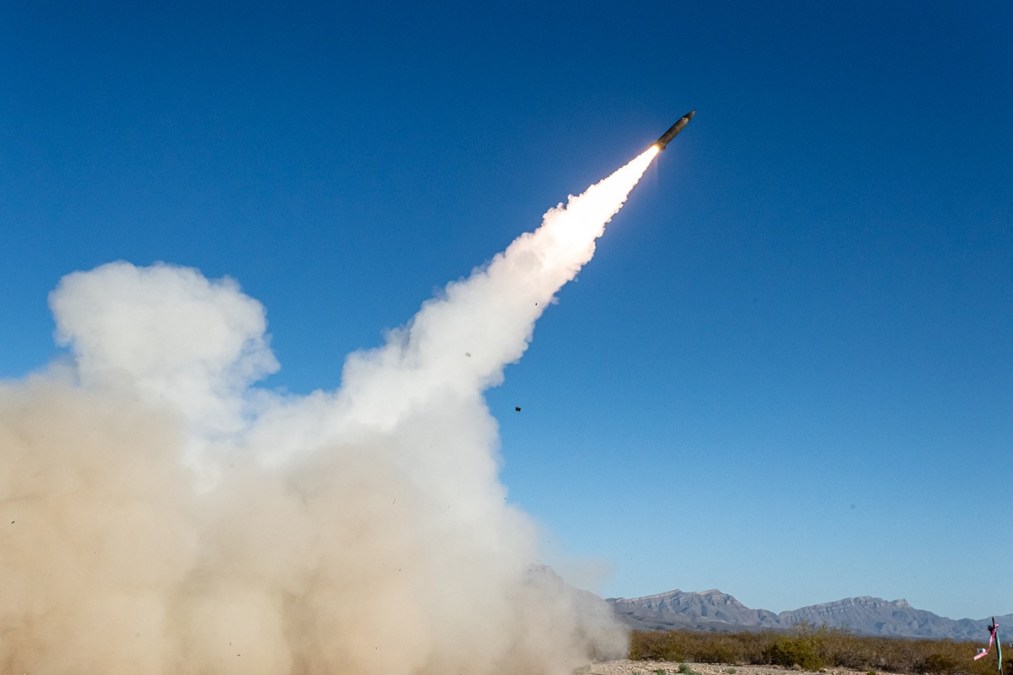
Following an initial flight test earlier this year, the Army inked a more than $1.2 billion contract with Lockheed Martin for its Precision Strike Missile (PrSM) Increment 2 platform, which company officials say is capable of striking a moving ship.
While funding will be ironed out with each order, the military said in a notice Monday that it expects production under the contract to finish by Sept. 13, 2031. The key addition to this version of PrSM is a multi-mode seeker designed to lock-on to “time-sensitive” threats, specifically moving maritime targets, according to the company.
A Lockheed spokesperson deferred questions to the Army about how many missiles the award is intended to produce and when they would be delivered.
“This award marks an important step in delivering PrSM Increment 2 to the warfighter,” Dave Griser, vice president of Lockheed’s precision fires launchers and missiles program, said in a statement shared with DefenseScoop. “We’re ready to move from flight testing into production and provide the Army with an expanded long-range precision fires capability.”
The company said PrSM Increment 2 met test objectives during an inaugural 350-kilometer flight test in February and was quickly pushing the missile toward “operational capability,” according to a press release at the time. It lists the PrSM’s range at more than 500 kilometers.
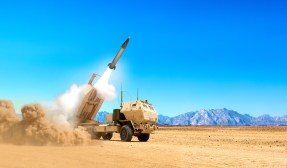
“The Army can now strike relocating or fleeting targets in both land and maritime environments, strengthening sea-denial contributions,” Lockheed said in March following the test, which saw PrSM launched out of a High Mobility Artillery Rocket System (HIMARS).
As its stockpiles are strained by the Iran war, now in its seventh month, the Army has been working to diversify its munition types through a “high-low” mix of both expensive missiles and cheaper, mass-producible alternatives to fill its arsenal and better prepare for a large-scale war.
The Defense Department’s inspector general on Wednesday published a report that said the Iran war “has resulted in strategic inventory shortfalls and revealed industrial base bottlenecks for munitions resupply,” citing the Office of the Under Secretary for Acquisition and Sustainment. The report echoed defense experts who have been warning for months of such a shortfall despite denials from top Trump administration and defense officials.
The IG report said the department was working to streamline procurement, boost production and stockpile critical components. The Trump administration invoked the Defense Production Act in June to boost munition production and inked several framework agreements with missile developers for billions of dollars, which rely on congressional appropriations to actually materialize, defense experts previously told DefenseScoop.
Lockheed entered into such an agreement with the DOD in March to produce the PrSM. The company said that, along with existing contracts, the agreement “will quadruple PrSM production capacity.” Last year, Lockheed said it was gunning to produce 400 PrSMs a year.
The Army solicited — and received — one bid for the $1.2 billion contract with Lockheed, according to the DOD.
In April, the Center for Strategic and International Studies estimated that the military had blown through anywhere between 44% and 77% of its pre-war PrSM stockpile. Reuters reported early last month that the U.S. used “virtually all” of its PrSM missiles during the Iran war, citing anonymous sources.
The Army used PrSM Increment 1 for the first time in combat during the early days of the Iran war.
The New York Times reported in late March that the U.S. military struck a sports hall and school using the missile, killing 21 people on the first day of the war, which U.S. Central Command denied and blamed on an Iranian cruise missile.
PrSM is intended to replace the Army Tactical Missile System (ATACMS), which has a shorter range. Lockheed is planning for and developing additional PrSM increments, including a system it tested earlier this summer that can fly over 1,000 kilometers, according to the company.