Marine Corps moving new chatbot prototyped at recent hackathon into full production
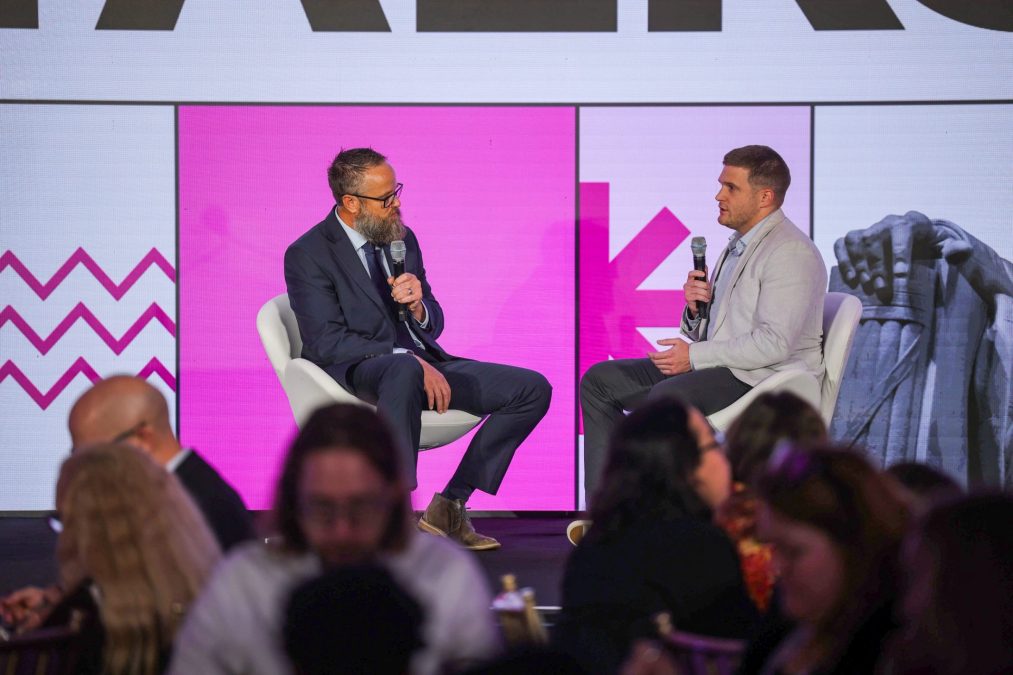
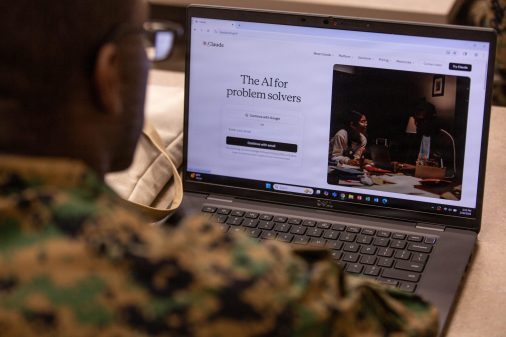
The Marine Corps hosted a “sprint hackathon” in California late last month, where dozens of military officials across nine teams competed to develop and refine artificial intelligence products that could quickly be released into the service for broader adoption and refinement.
Multiple teams that participated — including the “hackers” who ranked highest in the competition — generated AI-enabled tools to support Marine Corps Community Services, or MCCS, which aims to enhance the quality of life for Marines and their families.
One of those tools that came out on top is a new chatbot designed to help Marines and their families get on-demand answers and support, via the MCCS Connect mobile application, two officials involved told DefenseScoop in interviews last week.
“They really were working through making it as user-friendly as possible, and that’s kind of the prompts that we kept giving them,” said Andrew Barcomb, MCCS digital product and user experience manager.
He shared new details about the hackathon-driven prototype and the organization’s plans to field it into broader production in the near term.
Broadly, MCCS provides programs and assets associated with morale, welfare, well-being, readiness and recreation to defense personnel across Marine Corps installations worldwide. Those elements help troops and retirees navigate military life, deployments, work transitions, physical fitness, off-duty activity options, and more.
Barcomb said MCCS Connect was launched as a new enterprise app to make information about these elements that can help enhance insiders’ life experiences more accessible around the Corps.
For instance, he said the team behind it recently started building out a platform for small unit leaders to host in-app fitness challenges for Marines who are interested.
“They can make, like, scoreboards with each other — and talk shit to each other if they’re not stationed near each other. So, we’re trying to keep that community and that brotherhood that is the Marine Corps,” Barcomb said. “I’ve heard some Marines say it’s not the same as it used to be. Well, how do we get that back? How can we help facilitate the community and the connectedness that are the Marines?”
The Corps hosted its recent hackathon at the Naval Postgraduate School during the last week of October. The team leading it contacted Barcomb in the planning process, and MCCS efforts soon influenced some of the participants’ projects in the competition.
“We wanted to build an AI chatbot for our installation websites and MCCS Connect,” he explained. “So, we went out and gave them some use cases on what we wanted the chatbot to end up doing, and showed them some proof of concepts that we have been working on for the vision of where we want to go.”
Multiple teams made prototypes for MCCS over the course of the sprint.
Barcomb said they worked through real-world use cases that would likely occur with the envisioned chatbot — like where to find childcare or local fitness facilities. All hackers involved prioritized setting appropriate safety guardrails and protection against AI hallucinations.
In the process, they tested how chatbots should handle sensitive questions, including potential messages from Marines indicating suicidal thoughts.
“When someone goes and says they want to end it all, or they just bluntly say, ‘I want to kill myself,’ we’ve seen stories of how AI kind of hallucinates and almost like eggs them on to do it, unfortunately,” Barcomb said. “Whereas, we have guardrails where it doesn’t even get to the processing point of letting the AI respond. The check happens, and it just goes directly to content that is specifically written and curated by our suicide prevention staff — clinical people that have gone through and written this content that is very specific worded a certain way.”
Ultimately, one of the teams that created an MCCS Connect chatbot won the overall hackathon.
Post-hackathon, Barcomb is set to review that prototype and identify production requirements with the Marine Corps’ Operation StormBreaker team. StormBreaker is an enterprise DevSecOps platform that MCCS built and operates to move software capabilities across the force from development through deployment and sustainment.
“We’re working to collapse the tech valley of death,” Dave Raley, USMC chief digital services officer who leads Operation StormBreaker, told DefenseScoop. “Because we happen to have that capability, and we want to operationalize as quickly as possible what was done in the hackathon.”
He and Barcomb emphasized that, as they explore next steps, MCCS also wants direct feedback from Marines about how to make the app better serve their needs. The latter said he reviews every piece of input submitted through the MCCS Connect’s contact form.
“I want to know what people want in it — what struggles they’re having that an app can solve,” Barcomb said. “If somehow we can make technology work for them, I genuinely want to hear that.”