Army issues RFIs for Common Autonomous Multi-Domain Launcher program
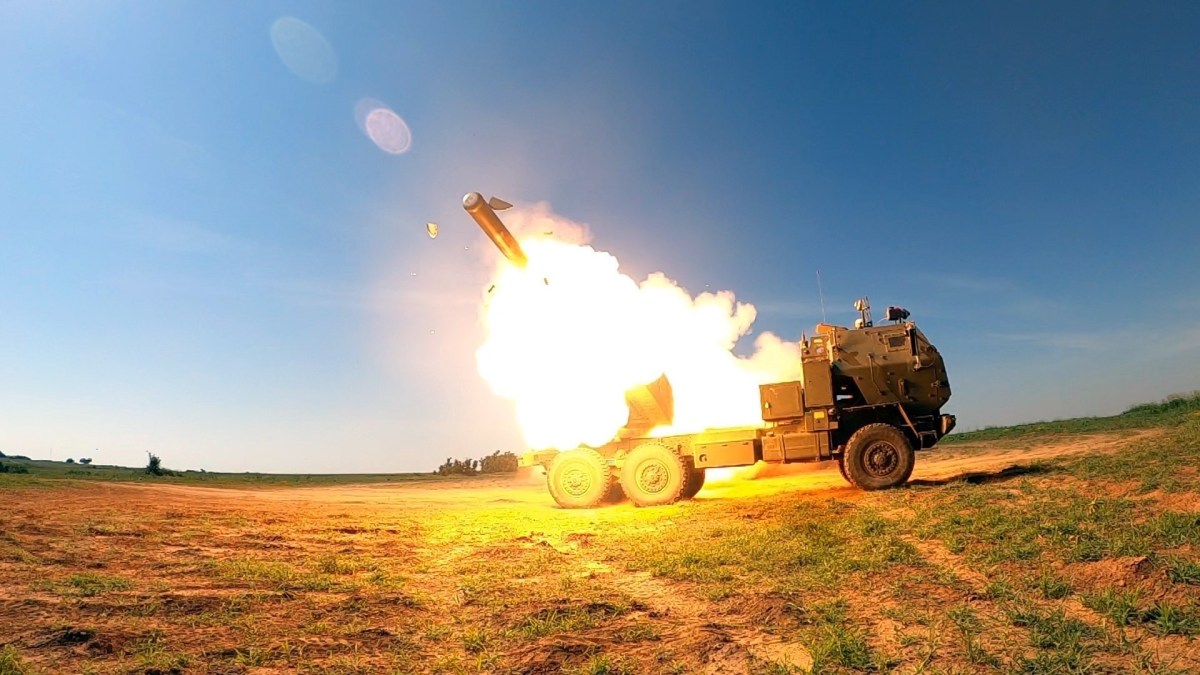
The Army’s new Portfolio Acquisition Executive for Fires issued multiple memorandums to industry Monday as it looks to advance an initiative known as the Common Autonomous Multi-Domain Launcher.
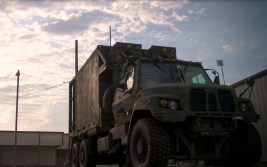
For the CAML effort, the Army is interested in autonomous vehicles that could move around the battlefield and shoot missiles at adversaries. The service is aiming to boost its firepower and capacity while minimizing risk to soldiers.
Officials envision the system as an air-transportable platform that can launch offensive and defensive fires — augmenting or potentially replacing some of the service’s existing weapons launchers.
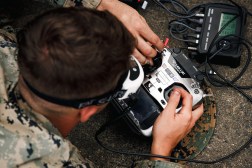
In a request for information released Monday, the Army inquired about the capabilities of vendors to develop and produce an “autonomous mobility platform” that could function in three different modes: convoy mode for following a crewed vehicle, waypoint following mode, and a more manual “optionally piloted” mode.
“The scope of this effort is to design, build, test and deliver: 1) a CAML autonomous mobility platform, 2) a convoy leader vehicle capable of leading more than two CAML autonomous mobility platforms, and 3) a vehicle autonomy command and control (C2) system, all within 12-18 months,” officials wrote.
Officials are keen on commercial and “near-commercial” solutions, noting in the RFI that the CAML platforms aren’t required to be standard Army-inventory vehicles.
The Portfolio Acquisition Executive for Fires is one of the six new PAEs established under a recent overhaul of the Army’s acquisition enterprise.
For the CAML initiative, the service wants uncrewed vehicles that can support 40,000 to 60,000-pound palletized payloads without trailers.
“CAML autonomous mobility platforms will be designed with a reload architecture that will autonomously load/unload payloads with no human intervention,” officials wrote, noting that the vehicles need to be able to support “a wide range of pallet weight distribution and dynamics to accommodate different types of palletized payloads, including payloads that elevate and significantly shift weight distribution.”
A second RFI released Monday related to the CAML effort focused on the munitions pallets and launcher electronics the autonomous systems will carry.
The service aims to design, build, test and deliver the munitions pallet for the program within 12 months of contract award, according to the document, which noted that vendors’ solutions aren’t required to utilize a specific Army missile.
The pallets need to be capable of being erected to the correct firing angle and executing launch missions on command via external interfaces, per the RFI.
A third RFI released Monday for the CAML initiative requested information from vendors who could potentially serve as weapon system integrators, combining the munitions pallets with the autonomous vehicles that are to be developed separately.
An industry day for the CAML effort is slated for January. The Army aims to hold a field demonstration in the third or fourth quarter of fiscal 2026 to evaluate the maturity and capabilities of vendors’ technologies.
Responses to the RFIs are due Dec. 15.