Army picks Anduril to provide next-gen fire control platform for IBCS-M program
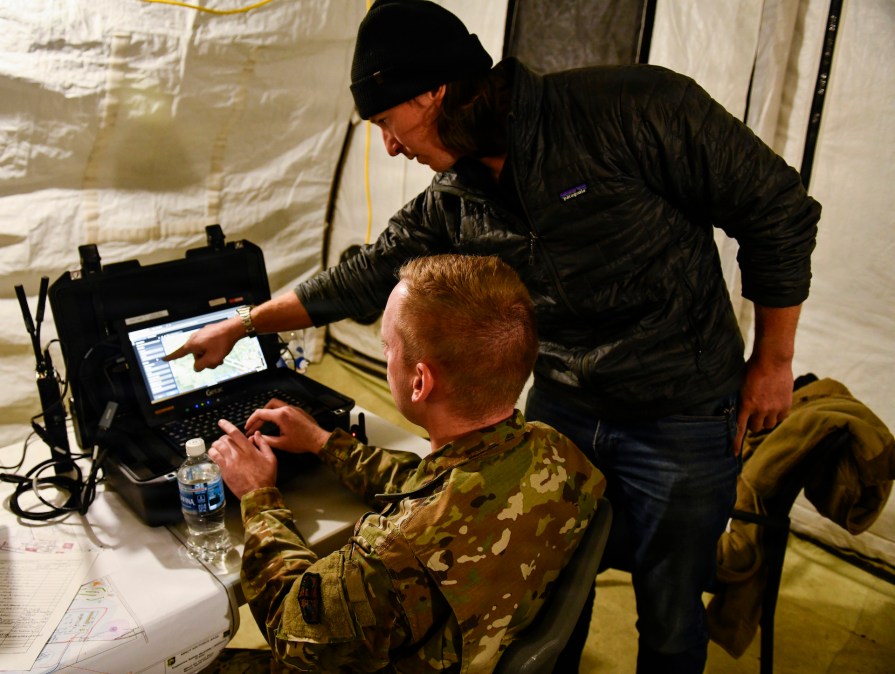
Defense technology company Anduril will provide its AI-powered Lattice software platform to the Army for the Integrated Battle Command System Maneuver (IBCS-M) program, the contractor announced Monday.
The Army’s selection comes as the service is pursuing new capabilities and mobile tools to protect troops from adversaries’ small unmanned aerial systems, which are seen as a growing threat on modern battlefields across the globe.
Army officials have described IBCS as the “materiel solution that links current and future [air-and-missile defense] sensors, effectors, and mission command nodes on a single common network,” noting that it consists of an engagement operations center, integrated fire control network relays, and integration kits to “network-enable” current and future components.
In a press release, Anduril said its Lattice technology will equip the Army with a “next-generation fire control platform” for countering UAS.
“IBCS-M provides the command, control, and integration backbone for a vast array of counter-drone systems, enabling a single operator to manage multiple threats simultaneously. It fuses sensor data, automates fire control, and integrates new capabilities, reducing operator load and compressing the time from detection to defeat,” per the release.
Anduril’s Lattice tech was recently put through its paces during a seven-day trial at Yuma Proving Ground, Arizona, where the platform “integrated a previously undisclosed sensor and effector within hours, executed live-fire intercepts that achieved four out of four kills, and demonstrated advanced features like autonomy-enhanced fire control, distributed tracking, and kill-chain optimization,” according to the company.
Lattice is a key component of other systems that the Defense Department is acquiring, such as the Army’s Soldier Borne Mission Command (SBMC) program and U.S. Northern Command’s Counter-small UAS fly-away kit.
In a statement, Army Chief Technology Officer Alex Miller noted the importance of software for the service’s counter-UAS arsenal, emphasizing that troops need a defensive shield that isn’t “static.”
“It has to be maneuverable, which means it has to be software-centric and adaptable above all else,” Miller said. “It has to support a platoon leader on the move with many small sensors across many vehicles as much as it has to support a forward operating base or garrison commander using a mix of existing and emerging systems.”
IBCS modernization is a priority for the Army. In a call for solutions issued Oct. 1, officials wrote that the existing system “delivers significant advancements in joint interoperability and sensor-to-effector integration; however, the current system architecture must evolve to leverage new technologies to enhance survivability, adaptability, and supportability on the future battlefield.”
A smaller and more agile design is required because the current hardware footprint “limits maneuverability, mobility, and emplacement,” they noted, adding that the technology baseline must also be restructured to accommodate future modernization requirements and enable rapid tech insertions.