Navy eyes extended subsea network to link up its arsenal of manned and unmanned assets for DMO
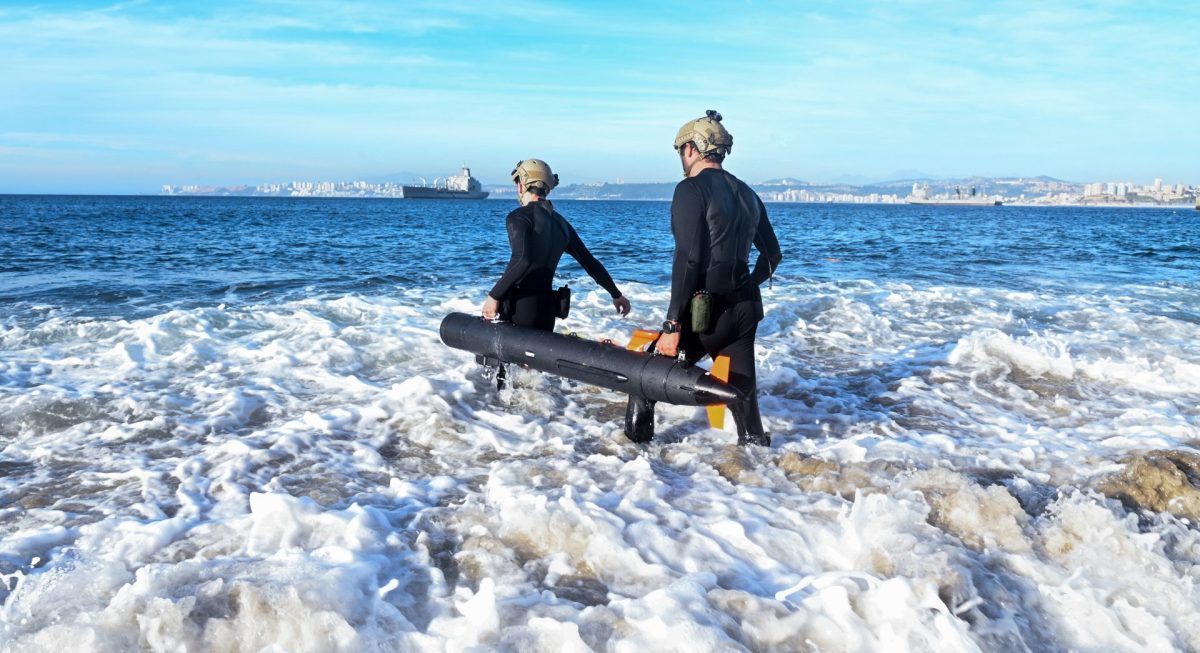
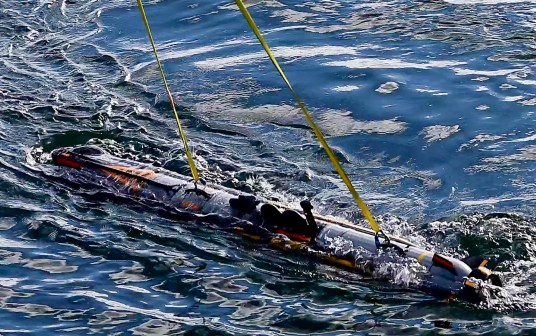
The Navy is moving to prototype deepwater networking technologies that can connect its subsea sensors, underwater drones, submarines and other platforms in support of ongoing efforts to fully realize its Distributed Maritime Operations (DMO) warfighting concept.
According to a new special notice for Networked Expeditionary Routing and Exchange for Undersea Systems — or NEREUS — the sea service wants mature and proven below-the-surface capabilities to enable DMO, with a focus on seabed and subsurface warfare mission needs.
“The project will leverage existing, fielded acoustic communications hardware and extend it with networking and routing functionality to enable reliable information exchange beyond simple point-to-point links,” officials wrote. “The resulting capability will support cooperative operation among unmanned underwater systems, fixed and mobile sensors, and expeditionary nodes deployed across wide maritime areas.”
DMO marks a complex, high-end operational concept that’s designed to help the military overcome advanced anti-ship and other anti-access/area-denial systems increasingly used by adversaries like China and Russia.
The Navy’s aim is to leverage sensors and weapons dispersed across a much wider, netted array of aircraft and maritime vessels — making forces and capabilities harder to target, while also expanding offensive capacity. It will rely heavily on artificial intelligence, automation, and resilient communication links to connect manned and unmanned platforms.
This special notice also comes days after Chief of Naval Operations Adm. Daryl Caudle unveiled the Navy’s new Hedge Strategy. That framework complements DMO as it seeks to strategically integrate unmanned systems and autonomous platforms to assist “tailored” forces against threats that may be consequential, but are unlikely to drive overall fleet design.
NEREUS’ scope, the special notice states, “includes system integration, laboratory and at-sea demonstration, and participation in deployment and recovery activities to validate operational feasibility to support fielding of a scalable, resilient undersea networking capability.”
The prototypes put forward should have a high Technology Readiness Level, officials noted, suggesting the Navy is looking to move fast and identify options that could soon be put to use in real-world operational environments.
Organizations that are interested in participating are directed to apply through the Information Warfare Research Project, a consortium managed by Advanced Technology International (ATI). Consortium membership is required for submissions.
Responses are due by Feb. 19.
A Navy spokesperson did not immediately respond on Thursday to DefenseScoop’s questions about the special notice, including whether the project is named after the aquatic god in Greek mythology or one of the sea service’s USS Nereus ships that are no longer in operation.