Adm. Thomas takes command of Fleet Forces Command
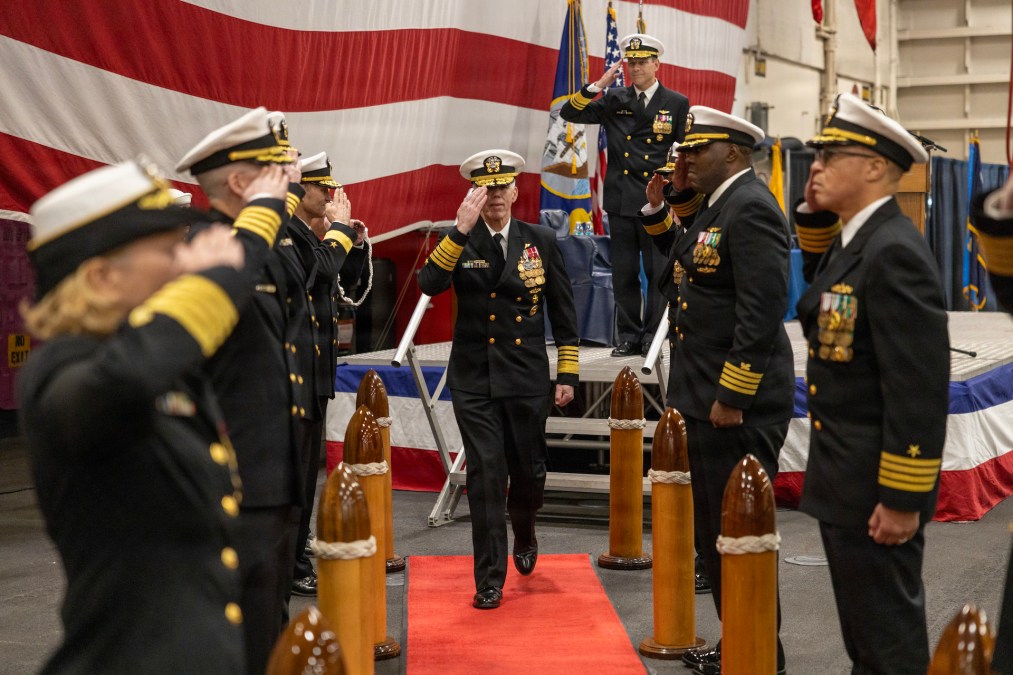
Adm. Karl Thomas officially took the helm of U.S. Fleet Forces Command on Monday, putting him in a key leadership role for the Navy as the sea service works to boost readiness and carry out its operational responsibilities.
USFFC is responsible for training, certifying and providing combat-ready forces; commanding and controlling subordinate Navy forces and shore activities during the planning and execution of assigned service functions in support of the chief of naval operations; providing operational planning and coordination support to U.S. Northern Command, NORAD and U.S. Strategic Command; and planning and executing joint missions in partnership with Northcom, according to the Navy. Its purview includes 138,000 personnel, more than 120 ships and submarines, 1,500 aircraft, seven task forces and five carrier strike groups.
Chief of Naval Operations Adm. Daryl Caudle recently led Fleet Forces Command prior to his nomination for CNO.
“Admiral Thomas brings exceptional leadership experience and strategic vision to U.S. Fleet Forces Command at a critical time for our Navy,” said Caudle, who presided over Monday’s ceremony for the new commander aboard the USS Harry S. Truman aircraft carrier at Naval Station Norfolk, according to a Navy press release. “His distinguished career spanning information warfare, intelligence operations, and fleet leadership makes him uniquely qualified to lead our forces in maintaining maritime superiority and readiness. I have complete confidence in his ability to guide Fleet Forces Command as we navigate an increasingly complex global security environment and ensure our sailors are trained, equipped, and ready to defend our nation’s interests worldwide.”
DefenseScoop reported in September that Thomas was nominated in September by President Donald Trump to lead the command. He was confirmed by the Senate by voice vote on Oct. 30.
Thomas has held a variety of assignments during his Navy career. He rose through the ranks of the service’s aviation community and later graduated from nuclear power school. He most recently served as deputy chief of naval operations for information warfare and director of naval intelligence. Prior to that, he commanded the Navy’s 7th Fleet in the Pacific, a high-priority theater for the sea service.
In his new role as head of USFFC, he noted that the Navy needs to be ready to project power across “all domains of naval warfare,” according to a press release, adding that the command must continue to “enhance fleet readiness, force generation and employment.”