DIU looks to prototype affordable fire-control sensors for enhanced missile defense

The Pentagon’s Defense Innovation Unit is on the hunt for commercial sensing capabilities that the department could launch into space to help detect, track and defeat missile threats.
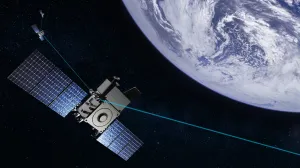
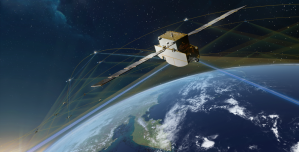
The organization recently posted a solicitation for a new “Sensors and Seekers for Fire Control” effort, which aims to prototype an inexpensive space-based sensor capable of providing highly accurate and real-time data needed to intercept incoming missiles. Vendors contracted for the program are expected to launch their prototype into space for an on-orbit demonstration no later than two years after receiving the award, according to DIU.
Fire control-capable systems are able to create high-fidelity tracking data of threats that includes the exact position and time accuracy needed to intercept and defeat them. Data created by these systems are critical for the Pentagon’s missile defense mission, especially with advancements in adversary intercontinental ballistic missiles and maneuvering hypersonic weapons.
“As these threats continue to advance, there is an increasing need for systems leveraging diverse phenomenologies capable of high-fidelity identification, tracking and discrimination under extreme environmental conditions and on short time scales,” DIU officials wrote in the new solicitation. “These systems must deliver high data throughput while adhering to rigorous size, weight and power (SWaP) constraints inherent to aerospace and interceptor platforms. A significant challenge remains in aligning these complex technical requirements with modern manufacturing efficiencies.”
While the Defense Department already has many ground-based fire control systems, efforts to launch space-based fire control for more persistent missile defense capabilities are relatively new. The technology is a key part of the Space Development Agency’s Proliferated Warfighter Space Architecture, as well as President Donald Trump’s homeland missile defense shield known as Golden Dome.
DIU is specifically looking to leverage commercial sensing and processing capabilities to create a sensor prototype capable of generating fire control-quality detection, tracking and discrimination data. The organization noted that solutions should support engagements that would either occur within the Earth’s atmosphere or in outer space, as well as across multiple missile flight phases.
“The objective is to transition toward designs that are affordably produced, minimize supply chain risks and maximize scalability to meet the urgent demand for space- and interceptor-based sensing capabilities,” the solicitation stated.
Although DIU is largely interested in sensors that can be launched into low-Earth orbit (LEO) for five years, solutions should also come in a modular form factor that can either be integrated onto a space vehicle or as a primary seeker on a kinetic kill vehicle, according to the solicitation.
The organization first intends to conduct a lab-based test of prototypes at least six months following a contract award. Then, DIU will host an on-orbit demonstration with the prototypes one-to-two years after the contract award.
Interested vendors have until Feb. 17 to submit solutions.