Army tests autonomous strike drone featuring AI-enabled targeting capabilities
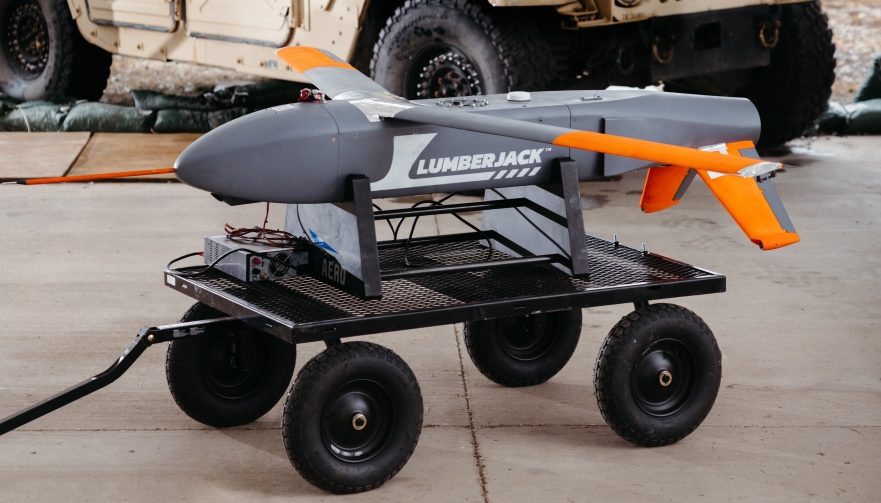
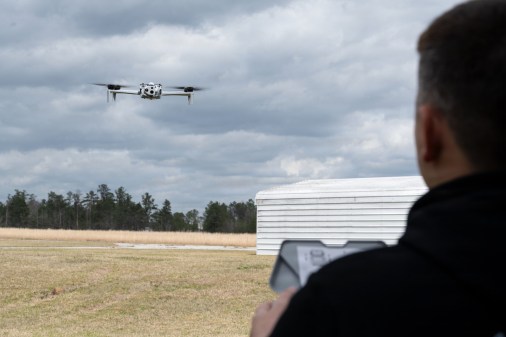
The Army’s 101st Airborne Division incorporated Northrop Grumman’s new Lumberjack one-way attack drone into a recent training exercise, testing the platform’s autonomous target detection and strike capabilities.
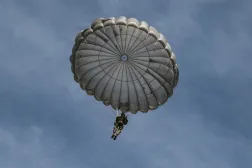
The demonstration took place during the unit’s Operation Lethal Eagle exercise, a large-scale training event that focuses on air assault operations and testing new military capabilities. According to Northrop Grumman, Lumberjack successfully showcased its capacity to conduct missions autonomously and use artificial intelligence for adaptive targeting.
“After going from concept to flight in under 14 months, we demonstrated Lumberjack’s ability to adapt across diverse missions and payloads at the U.S. Army’s Operation Lethal Eagle exercise,” Michael Bastin, director of distributed systems at Northrop Grumman, said in a statement.
Lumberjack is one of Northrop Grumman’s latest unmanned aerial vehicle offerings. Introduced in 2025, the Group 3 drone is an inexpensive, one-way attack platform that can drop smaller munitions and provide non-kinetic effects, according to the company.
The drone can also be launched from ground systems and other aircraft — including manned and larger unmanned platforms. During Operation Lethal Eagle, Lumberjack was launched using a platform-agnostic ground launcher that was modified by Empirical Systems Aerospace, a Northrop Grumman spokesperson told DefenseScoop.
The Army primarily used Lumberjack to conduct simulated precision strikes on ground targets, according to Northrop Grumman. The Army integrated the drone into its Palantir-built Maven Smart System, while also leveraging Palantir’s Agentic Effects Agent to automatically identify targets, analyze battlefield data and suggest actions to personnel.
“Operation Lethal Eagle is the first customer demonstration where Lumberjack was integrated into Maven Smart System for real-time mission planning and live mission monitoring, while being executed from a manned forward deployed command and control ground station,” the Northrop Grumman spokesperson said.
To perform the simulated strikes, Lumberjack deployed surrogates of Northrop Grumman’s Hatchet, a six-pound miniature weapon designed to deliver precision effects similar to larger guided munitions.
The Army also used the drone to conduct intelligence, surveillance and reconnaissance to gather live battlefield data, according to the company.
In line with the Defense Department’s broader “Drone Dominance” initiative, the Army is interested in deploying a range of unmanned aerial systems and is actively partnering with industry to do so.
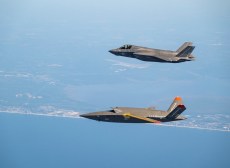
Along with longstanding programs such as Launched Effects, the service also wants to rapidly field thousands of small, attritable drones and develop the service’s own Collaborative Combat Aircraft.
“While primarily focused on readiness training, Operation Lethal Eagle also provided a unique opportunity to test and evaluate multiple new emerging systems from across the defense industrial enterprise,” Maj. Jonathon Bless, spokesperson for the 101st Airborne Division, said in a statement. “Northrop Grumman’s Lumberjack was one of many systems tested during the exercise that provided insight into how collaboration between military and industry can drive innovation in defense.”