Space Force using ‘integrated test teams’ to speed up capability delivery
The Space Force is consolidating developmental and operational testing phases for some of its new systems in order to accelerate fielding timelines, and is now looking ahead to recruit even more testers to meet the service’s demands, according to officials.
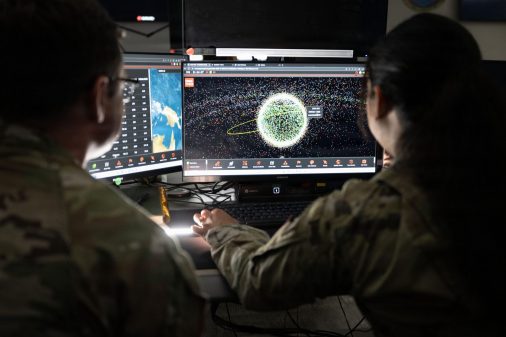
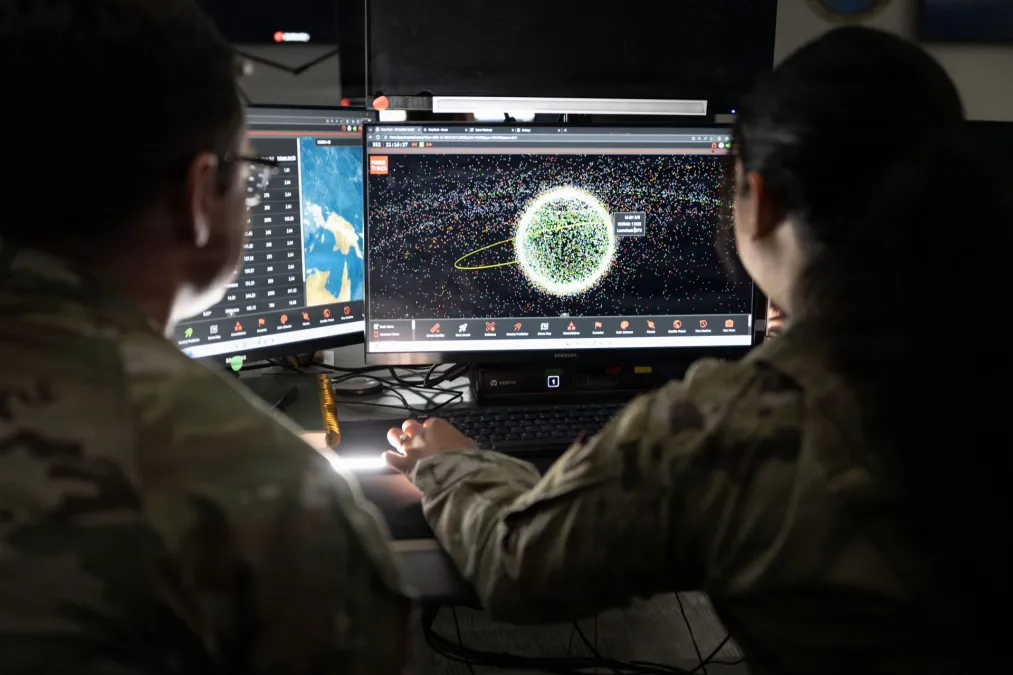
To get the new tech into the field faster, the Space Force is creating teams comprising acquisition officers, test officials and operators at the beginning of a program’s evaluation phase, Deputy Chief of Space Operations Lt. Gen. Douglas Schiess said Wednesday. Together, the groups are trying to determine at what point a new capability is mature enough to transition from a controlled testing environment to evaluation in the field.
“One of the things that we’re doing is, we’re kind of combining [developmental testing] and [operational testing],” Schiess said during the Mitchell Institute’s Spacepower Security Forum. “And the way we’re doing that is, we’re setting up — especially when it’s a new system — an integrated test team to be able to do that.”
Traditionally, a program goes through a developmental testing process with contractors and engineers to verify the system meets the service’s technical requirements. When approved, that capability begins operational testing with users to validate its ability to perform in real environments.
While developmental testing is used to mitigate risks associated with putting unproven systems into the field, Pentagon officials have stated the process has become too rigid and overly prescriptive — often delaying capability delivery as a result.
Lengthy development phases are not a new problem for the Space Force, and the service has previously taken steps to improve the process — such as by moving some beleaguered programs into operational testing earlier.
In 2025, the Space Force created two new unit structures known as integrated mission deltas (IMDs) and system deltas (SYDs). The units bring together professionals from a specific mission area’s acquisition, development, training and operational organizations to ensure new programs are aligned with real-world requirements from design to delivery.
By intentionally bringing operators into the testing teams, the Space Force is able to better understand when a new program is “good enough to work” in the field, Chief of Space Operations Gen. Chance Saltzman said.
“As a capability starts to become more and more operationally useful, you start to progress out of developmental test into operational test,” Saltzman said Wednesday during a keynote address. “Is the system doing what it’s designed to do, and now can that design meet the mission requirements? That’s the transition.”
Focusing developmental tests on getting a capability to operational evaluation allows the teams to concentrate solely on ensuring the system is relevant for missions instead of aiming for perfection, Saltzman said. The concept also allows the service to leverage the same data for both testing processes.
“So the two communities talking together can build a test plan that can be executed more quickly and put capabilities in the hands of the operators as fast as possible to start getting real feedback, rather than test and simulated feedback,” Saltzman said.
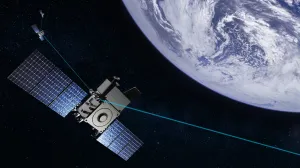
The teams are able to tailor their evaluations to each system, Schiess noted. That means more established capabilities — like updated versions of GPS satellites or legacy radar systems — can go through the process faster, while novel technologies can go through more detailed testing.
At the same time, the integrated testing teams have more flexibility to determine the level of risk a system may pose if deployed to the field earlier, he added.
“To what level is this [a nuclear command, control and communications] kind of system, that we’ve got to test this to make sure that [U.S. Strategic Command] and Space Command and Northern Command are okay with it? Or is this something that we can say, ‘We’re going to test at a lower level. We’re going to take a risk to be able to get that into the warfighter’s hands,’” Schiess explained.
As the Space Force continues working with integrated teams, however, Schiess warned that the service will need more personnel to keep up with its testing needs. He noted that each time an operator is assigned to a program’s test phase, they’re being taken away from their operational duties.
The service is also considering establishing its own testing entity outside of the Air Force Operational Test and Evaluation Center, Schiess said.
Development of the Space Force’s future Operational Test and Training Infrastructure (OTTI) is overseen by System Delta 81, established in September 2025. The system is envisioned as a networked set of digital, cyber and live elements that can both test new platforms and train guardians.
Overall, Schiess said that the integrated test teams are one of the mechanisms the Space Force is using to evolve.
“I think we are taking risks in those areas, but it’s risk that we have to do,” he said. “If we don’t do anything, then we’ve taken a lot of risk because we have zero capability that we’ve given to the warfighter.”