SDA resumes satellite launch campaign following months-long pause, tech issues
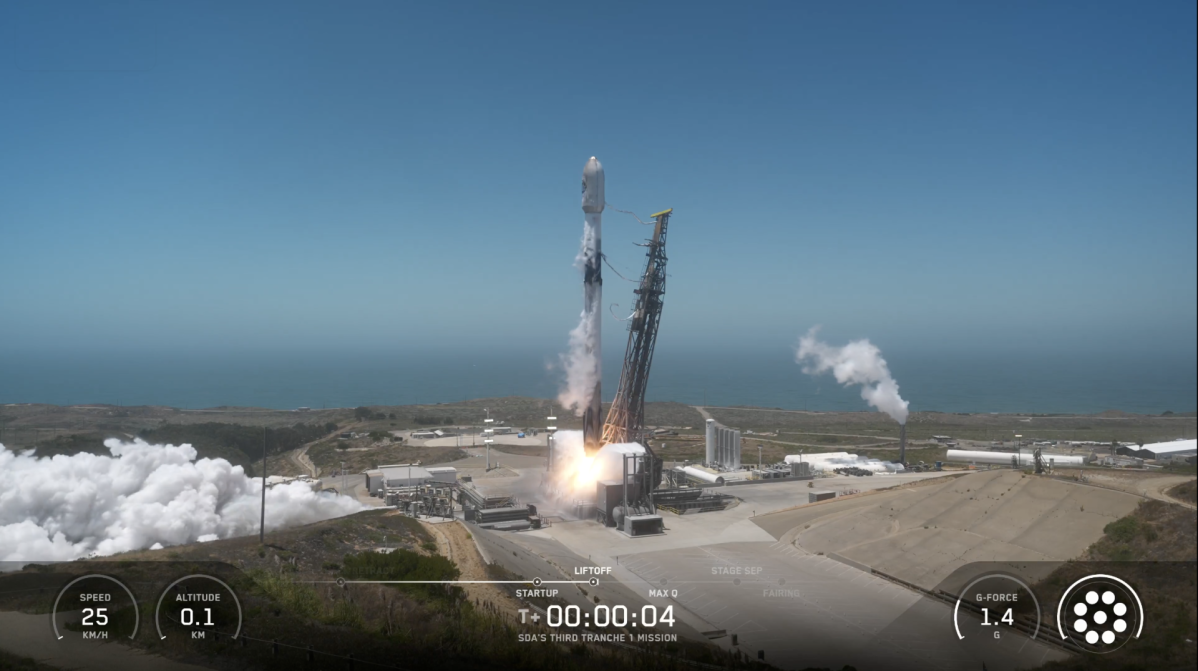
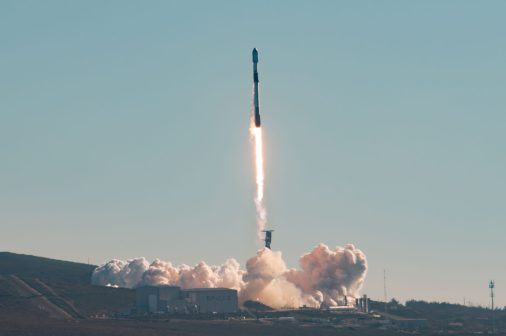
The Space Development Agency has successfully launched its third plane of operational data transport satellites Thursday — officially ending a nine-month pause in deployments to address software and hardware issues discovered in the initial satellites launched in 2025.
The batch of 21 Tranche 1 transport layer birds were hoisted into low-Earth orbit (LEO) via a SpaceX Falcon 9 rocket, which took off from Vandenberg Space Force Base in California. The space vehicles, developed by York Space Systems, are part of SDA’s mega-constellation of data relay and missile warning/tracking satellites known as the Proliferated Warfighter Space Architecture (PWSA).
The mission comes after the agency was forced to temporarily suspend its previously planned launch schedule for the PWSA’s Tranche 1, which would have seen new batches of birds deployed on orbit every month.
SDA Director Gurpartap “GP” Sandhoo told reporters Tuesday ahead of the launch that the delay was caused by various technical issues encountered after the first 42 satellites built by York Space Systems and Lockheed Martin were launched across two missions in October and November, respectively.
“We did see software and hardware issues on the ones on orbit right now. That’s why we kind of delayed and took a pause to make sure we fix at least the known issues,” said Sandhoo, who also serves as the Space Force’s portfolio acquisition executive for missile warning and tracking.
Sandhoo explained that there were discrepancies between the agency’s thermal modeling and what they were seeing on orbit, requiring the rest of the satellites to be integrated with additional thermal mitigation components before launch.
The agency also had trouble connecting all of the space vehicles to ground entry points, which slowed the entire checkout process and prompted SDA to realize it would need a larger number of entry points in the future, he added.
“It’s just the reality of building complicated systems,” Sandhoo said. “We think we have addressed most of the [issues] that we knew of, and our plan and our current schedule is that these checkouts should not be as long as the first couple of launches were.”
The PWSA represents a shift in the Pentagon’s strategy for deploying space-based capabilities, which has historically relied on a small number of expensive satellites. Instead, SDA wants to rapidly launch dozens of smaller sats into LEO across multiple batches — with each tranche improving the coverage and capabilities of their predecessors.
While the agency’s most recent launch was successful, Sandhoo admitted the agency is still resolving issues with the first two tranches as they move from checkout to operations.
Namely, some of the satellites had complications with their electric propulsion systems that kept them from moving into the correct operational plane once they were in space, he said. Lockheed Martin also lost contact with one of its 21 satellites in orbit, but Sandhoo asserted that the loss shouldn’t impact the PWSA’s overall operations.
“I do expect some failures, but we have enough resilience in the architecture that we don’t need all of them. We cannot have designed it to be that way, because we do expect loss,” he said. “The whole reason we’ve gone to this design, this proliferated architecture, is that we expect to take hits and be able to continue the mission.”
SDA has seven more missions slated for Tranche 1 — three more for the transport layer and four tracking layer launches, Sandhoo said. The tranche will consist of 158 platforms in total, including 126 in the data transport layer, 28 in the missile tracking layer and four experimental demonstration birds. York Space Systems, Northrop Grumman, Lockheed Martin and L3Harris are the prime contractors on the program.
Moving forward, Sandhoo said that he is less focused on sticking to a monthly launch schedule for the remaining Tranche 1 birds. Instead, SDA will prioritize launching satellites as they’re ready and processing them for operations as quickly as possible — even if that means pushing back missions to make sure there are no issues before space vehicles are deployed into space.
“I’d rather take the three-week launch delay versus the four-month checkout delay,” he said. “That’s the kind of math we’re doing, but the goal is to get to operational as quickly as possible once you get on orbit.”