Marine regiment tests AeroVironment’s JUMP 20-X system for the first time, but faces lack of Group 3 drone operators
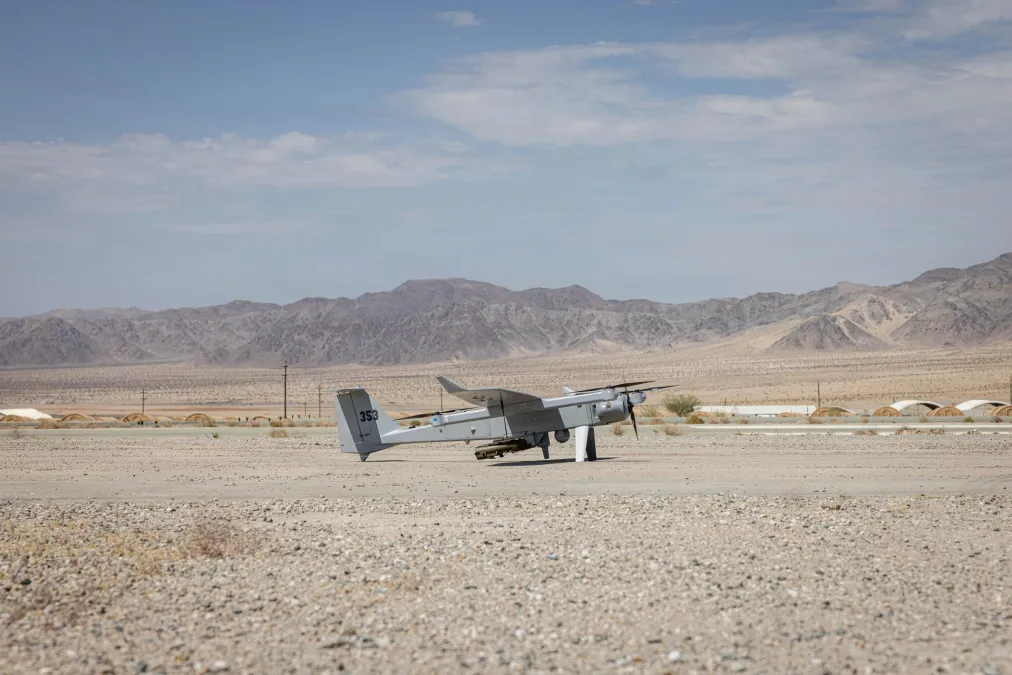
A Marine Corps regiment experimented with a new Group 3 unmanned aerial system during a recent training exercise in what officials said marked the first time a drone of that size had been tested by one of the service’s conventional units. However, its troops relied on the system’s vendor to employ the technology because the regiment lacked operators.
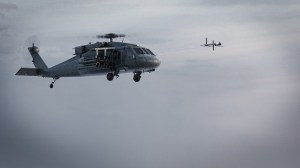
Because the 2nd Marine Regiment does not have any Marines trained to operate Group 3 drones, contractors with AeroVironment launched the JUMP 20-X uncrewed platform — equipped with the company’s hallmark loitering munition known as the Switchblade — late last week in California alongside troops who were learning how to use it, officials said.
While the Marine Corps uses larger drones, such as the MQ-9 Reaper, and is building out a stable of smaller, often first-person-view UAS, the test helps pave the way for the service to give its ground troops a longer-range asset at the regimental level, according to officials, who noted the “side-by-side” test would put the unit ahead for additional training next month.
“We at 2nd Marines are the first ones testing a Group 3 asset at the Regimental level,” Chief Warrant Officer 2 Christopher Leone, an intelligence, surveillance and reconnaissance tactical controller for the regiment, said in a press release. “[JUMP 20-X] is big for us, and to fly it into the regimental deep space as we’re looking to shape fires in the environment for our battalions to keep moving towards the next objective — none of our current [programs of record] that are Group 1 would be able to go that far.”
He added that the regiment was trying to fix the lack of Group 3 pilots during the exercise, but the press release did not detail how.
The U.S. military categorizes drones into various groups by size and capability, with Group 1 being on the smaller end of the spectrum and Group 5 being on the larger end.
The JUMP 20-X can fly for more than 13 hours at a range of 115 miles, according to AV. It is a vertical take-off and landing UAS, a capability several services are looking to wield in preparation for large-scale combat where officials predict long, vulnerable runways used by other drones would become prime targets.
Officials said the Marine regiment used the drone to attack a target more than 15 miles “into the battlespace” by launching one of AV’s Switchblade 300 Block 20 loitering munitions from the JUMP 20-X.
“[Switchblade 300 Block 20] can be launched, go into a holding pattern as you look for your adversary and you can directly fly some organic precision fires that are tube launched from Marines on the ground,” Leone said. “For the JUMP 20-X experiment that we’re doing, AeroVironment has tested its capabilities to launch that same ground loitering munition from the belly of the bird itself.”
Leone said the combination filled a gap the rest of the service’s programs of record can’t achieve, specifically its smaller Group 1 drones, such as the Puma and Sky Raiders, which have comparatively short endurance and smaller ranges. The 2nd Marine Regiment also only has one Group 1 POR, which includes the aforementioned systems.
“As the [2nd Marine] Regiment, this is the first conventional unit to at least test and do a combat research and development agreement with AeroVironment,” Leone said.