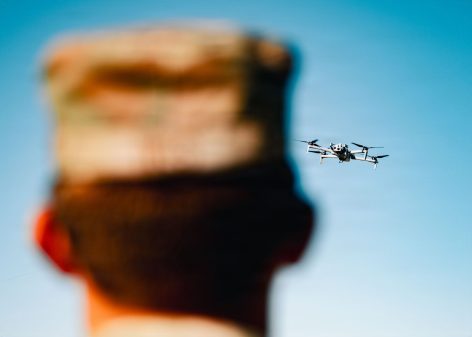
Marine division to get first-of-its-kind counter-drone training as officials signal ‘significant concern’ over defeating UAS
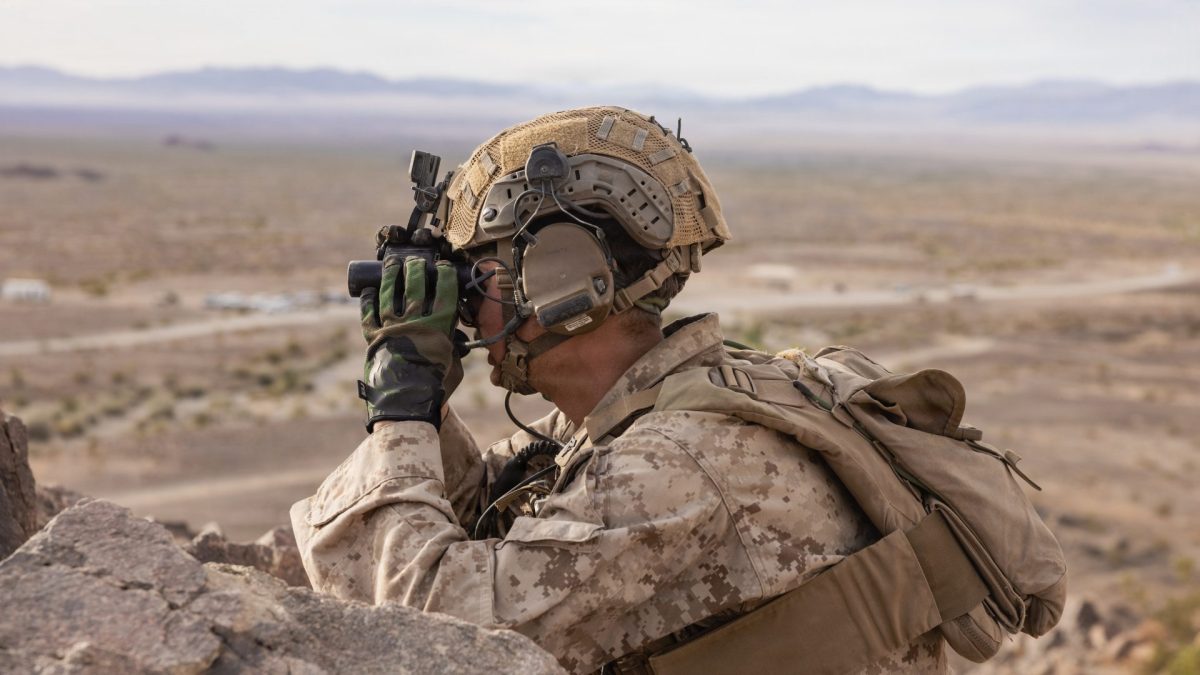
Over the summer, troops with 2nd Marine Division will head to Twentynine Palms, California, to experience something entirely new to them: drone-defeat training from the service’s primary readiness unit.
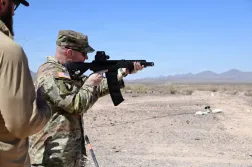
Between mid-July to late August, Marine Air-Ground Task Force Training Command will host the division for an integrated training exercise where it will run troops through counter-UAS “lanes” and possibly incorporate the capability into live-fire scenarios, Maj. Gen. Farrell Sullivan told DefenseScoop on the sidelines of the Modern Day Marine conference.
While details about what the lanes will look like and which counter-UAS systems Marines will employ are scant, the announcement of upcoming training comes as the service continues to build its drone repertoire, including counter-systems, and officials signal concern about how to defeat them on the battlefield.
“I think if you asked any one of us, that’s a significant concern right now,” Sullivan said of counter-UAS, gesturing to other Marine leaders who took the stage with him at the conference on Tuesday to discuss the future of combat.
“But I know when we go out to service-level training this summer” for the Twentynine Palms exercise, he added, the MAGTFTC “will offer — for the first time — a counter-UAS lane training for the units as they begin their training cycles there, outfitted with the kit so that we can start to get more standard sets and reps in how we employ that capability.”
Concern from officials on how to knock down drones is not entirely new, but has gained additional scrutiny amid the war with Iran where Tehran has launched thousands of drones against the U.S. and its allies, particularly at the beginning of the conflict. In the first days of what U.S. officials have called Operation Epic Fury, six troops were killed by an Iranian drone in Kuwait.
Despite years of watching how drone warfare has reshaped modern conflict during the Russia-Ukraine war, the U.S. military has been slow to field its own counter-UAS capabilities, defense experts previously told DefenseScoop, a now-galvanized effort that has seen hundreds of millions of dollars flow to the Middle East for such systems over the course of the war.
The conflict has been largely defined as a war of munitions attrition, where the U.S. had been employing expensive defensive systems to counter much cheaper attack drones, though DefenseScoop previously reported the Army sent more than 13,000 low-cost Merops platforms to U.S. Central Command in the early days of the conflict.
The Pentagon’s hub for counter-drone efforts, Joint Interagency Task Force 401, has also committed money for systems to protect domestic infrastructure, events and civilians.
What Marine leaders focused on during Tuesday’s panel were smaller UAS. While Russia employs a version of Iran’s Shahed system, smaller drones — including first-person view platforms — have also wrought havoc across battlefields in Eastern Europe.
“When you envision the type of fight we’re preparing for, where we would face a peer or near-peer adversary in a high-end fight where all domains are contested, and in some the adversary will have an advantage — that’s not a battlefield we have fought on, at least not since I’ve been in the Marine Corps,” Sullivan said.
Combined with denied airspace, electronic warfare attacks and other contested domains that have changed rapidly, the Marine Corps is looking to quickly equip tactical-level troops with tools and training to push through that fight.
In recent years, the service has developed larger, more expensive tools, such as the Marine Air Defense Integrated System (MADIS) to small counter-drone optics, which Marines were recently seen with en route to the Middle East.
Maj. Gen. Jason Morris, director of the Marine Corps’ operation division, said that while the service is focused on the UAS threat and it has fielded a number of systems such as the MADIS, “there is still a shortful of maneuver coverage” at the ground combat and logistics level, which has prompted leaders to field counter-UAS kits to smaller formations.
For the Corps, the counter-UAS efforts also come amid significant attention and resources towards its small drone fleet, DefenseScoop previously reported. Officials from various services have said that scaling both drones and counter-UAS systems continues to be a thorn.
“This is a work in progress,” Morris said. “We’re building the plane as we’re flying it, but we can’t wait on the standard acquisitions program timeline for things to be fielded in five to seven years, because things are changing on the battlefield so much and so quickly that we’ve got to be able to adapt faster than that — in the weeks and months timeframe.”
Sullivan said that units are prioritizing integrating “red” or enemy UAS into training in an effort to expose — and therefore let Marines adapt — to such threats. He mentioned how signature management has changed for Marines: instead of just digging a fighting hole, the service is now seeking new camouflage garments to hide from infrared and thermal imaging.
“When you have something that’s flying against you that’s observing you, it will change your behavior,” Sullivan said. “I’m not satisfied with where we are in that regard, and so we’re getting after that.”