Northrop Grumman launches in-space servicing satellites for life-extension missions
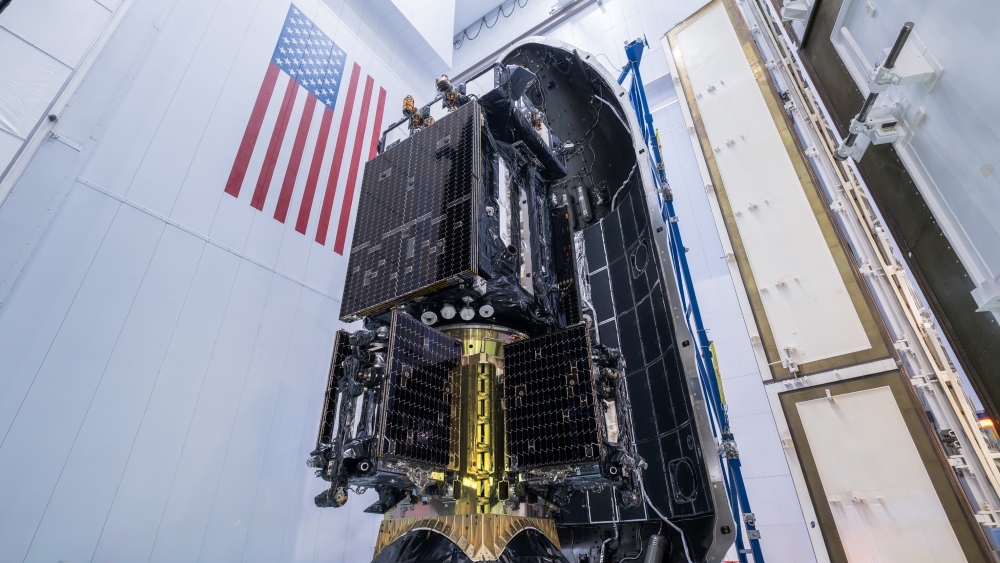
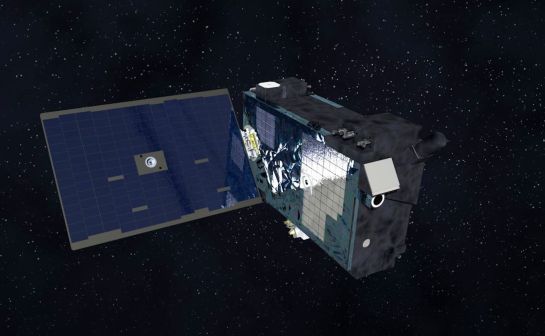
Northrop Grumman’s novel Mission Robotic Vehicle (MRV) and three “jetpack” pods were lifted into orbit Tuesday night, kicking off the company’s next batch of efforts designed to extend the life of aging satellites.
The MRV and Mission Extension Pods (MEPs) were launched onboard a SpaceX Falcon 9 rocket from Cape Canaveral Space Force Station in Florida. Over the next year, the spacecraft will move into geosynchronous orbit and then begin the process of servicing three commercial satellites with additional fuel and potentially adding years to their operational lifespan, according to the company.
“The MRV is a whole new class of advanced autonomous space robotics that will learn and evolve to support novel missions for our nation. These are not demonstrations. Our world-leading investments in these capabilities are finally providing options in space that are only limited by our imagination,” Ryan Tintner, vice president and general manager of space superiority at Northrop Grumman, said in a statement.
Developed by Northrop Grumman subsidiary SpaceLogistics, the MRV and MEP represent the company’s evolution in proving the viability of on-orbit servicing and logistics.
The new MRV features two robotic arms and other tools built by the Naval Research Laboratory and funded by the Defense Advanced Research Projects Agency. The Mission Extension Pods are smaller and function as orbital “jetpacks” that attach to the exterior of aging satellites.
When all the spacecraft are in position, the MRV will move towards an extension pod and attach it to a nearby satellite — after which the MEP will take over orbital maneuvering and allow the aging spacecraft to continue operations for years despite running low on its own fuel.
Once an extension pod is integrated, the MRV will move away and perform the same mission on two other sats.
The Mission Robotic Vehicle builds upon SpaceLogistics’s first two satellite servicing capabilities known as the Mission Extension Vehicles (MEV), the first of which was launched in 2019 and the second in 2020. Since being deployed, the spacecraft have docked with three commercial communications satellites stationed in GEO.
The Space Force has taken interest in emerging on-orbit servicing capabilities and operations, including the Mission Robotic Vehicle and Mission Extension Pods.
The service believes that the technology — which has been mostly developed by the commercial space industry — can enable satellite refueling, repair, relocation and other life-extension efforts.
Moving forward, Northrop Grumman plans to launch additional Mission Extension Pods for more customers while the MRV remains in orbit to install them. The MRV is also equipped with the company’s first Passive Refueling Module — a capability approved by the Space Force that will allow it to be refueled on orbit and perform other space maneuver missions in the future.