Space Force accelerating work to operationalize on-orbit logistics tech
After years of considering how to leverage in-space refueling and servicing technologies, the Space Force is kicking off a number of near-term efforts to chart a path toward operationalizing the capability.
The service is planning to host two demonstrations in 2027 for on-orbit logistics — one focused on refueling satellites in space and another on augmented maneuver, Col. Scott Carstetter, Space System Command’s director of servicing, mobility and logistics (SML), told reporters Wednesday.
Although the upcoming demos are meant to inform the Space Force’s future path to creating an in-space logistics enterprise, the capabilities also have near-term applicability, he said.
“In the near term, we’re looking to operationalize these demonstrations that we’re doing to see how we can actually use them operationally with programs and operational clients that we have in need today,” Carstetter said during a media roundtable.
Space Force officials have expressed interest in establishing an on-orbit logistics architecture in recent years, taking time to weigh the feasibility and cost-benefits of the nascent technology before committing to a concrete program of record.
On-orbit refueling has been of particular interest to the Space Force, as it would allow the service to extend the lifespan of satellites and easily maneuver in space without fear of running out of fuel.
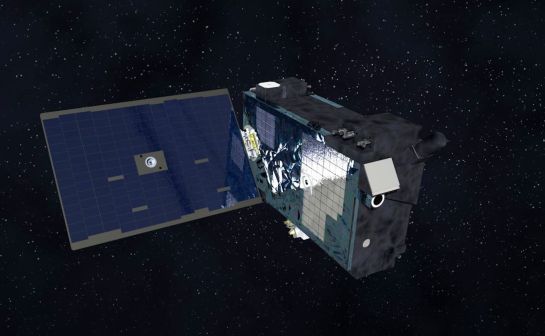
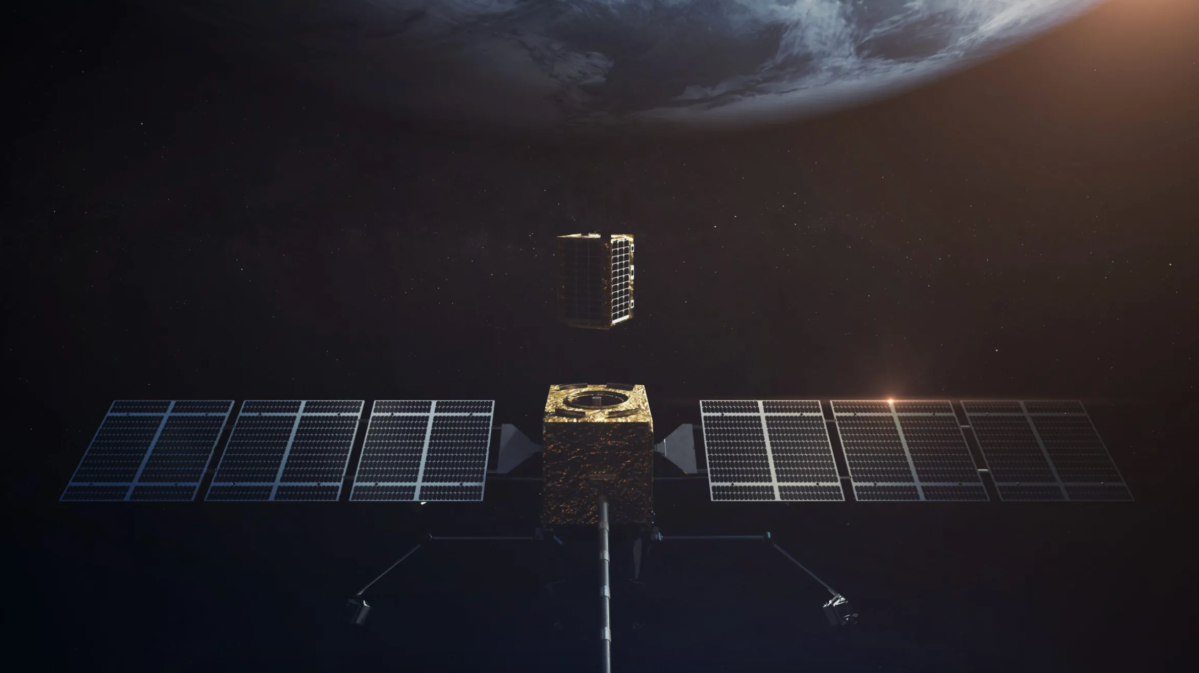
Carstetter said that for the upcoming refueling demonstration, the Space Force is partnering with the Defense Innovation Unit and the Air Force Research Laboratory to launch multiple space vehicles over the next year. The service plans to have Astroscale’s Provisioner space vehicle refuel a satellite developed by Tetra 5, as well as refuel itself from a space-based depot provided by Orbit Fab, he explained.
“Once we launch all of these vehicles, the servicer is going to first mate with the AFRL client — the Tetra 5 vehicle — and refuel it, then go back to the depot and get more fuel itself, and then go back and mate with the Tetra 5 again to refuel it again, showing that process and how that architecture could work,” Carstetter said.
The demonstration could help inform efforts like RG-XX, the Space Force’s next-generation space domain awareness satellites. The program is the service’s first to have a specific refueling requirement, although Carstetter said acquisition leaders are still hashing out whether to pursue a bespoke refueling spacecraft or implement servicing contracts.
As for the second demonstration planned for augmented maneuver, the Space Force has contracted with Starfish Space. The company’s Otter space vehicle is essentially a “space tug,” designed to connect to satellites without docks and move them to different locations within the same orbit.
“The first vehicle that we’ll meet with is a non-operational vehicle that we’re going to move to a disposable orbit,” Carstetter said. “And once we demonstrate that capability, then we can mate with operational satellites to conduct life extension and those sorts of things.”
Refueling and augmented maneuver were picked for the first batch of demonstrations because the technology is more advanced than others within on-orbit logistics and fill critical capability gaps, he said.
“As we transition between new capabilities of different constellations, if there’s a delay to one of those constellations to recapitalize on that capability we’ll have a means in the meantime to have interim support by having that augmented maneuver spacecraft dock with the satellite and position it to really continue operating in its original fashion,” Carstetter said.
The service has closely followed advancements in on-orbit logistics happening in the commercial sector, which has seen significant investments in the tech to support the growing space industry. However, companies have called on the Space Force to commit more funding to the capability area to help accelerate development for both military and commercial use.
The two demonstrations will be funded by past-year budgets, as the Space Force did not request allocations for its SML efforts in fiscal 2027. Carstetter indicated that future budget requests will likely see increased funding as the service continues to demonstrate capabilities and refine its long-term plans.
“The time when you’ll see the SML budget plus-up is that longer-term — once we have an enterprise solution where we’re building, ideally, an architecture and a logistics enterprise that feeds the entire space domain for the Department of War,” he said, referring to a secondary name used for the Defense Department by the Trump administration.
Along with the upcoming demos, SSC has also launched an effort alongside SpaceWERX, the service’s innovation unit, known as the In-Domain Orbital Logistics Challenge.
The program has $20 million dedicated to “really looking at what are the opportunities out there with several different logistics architectures, taking that joint logistics enterprise that we have on the ground and extending it into space.”
The challenge will cover a number of on-orbit logistics technologies, including orbital warehousing, orbital transfer vehicles, distribution network mechanics, propellant management and “reusability, repairability and refuelability,” SSC said in a press release.
SSC plans to host multi-phase open calls for concept papers from industry, and then down-select to design sprints and tabletop exercises. Prototyping and limited demonstrations are also possible under the program, according to the service.
“We’ll take a subset of the awards that we get from industry on those and develop some of those technologies and advance them so that they’re ready for the future when we need them,” Carstetter said.