AI to help make logistics less predictable and vulnerable to adversaries, Transcom commander says
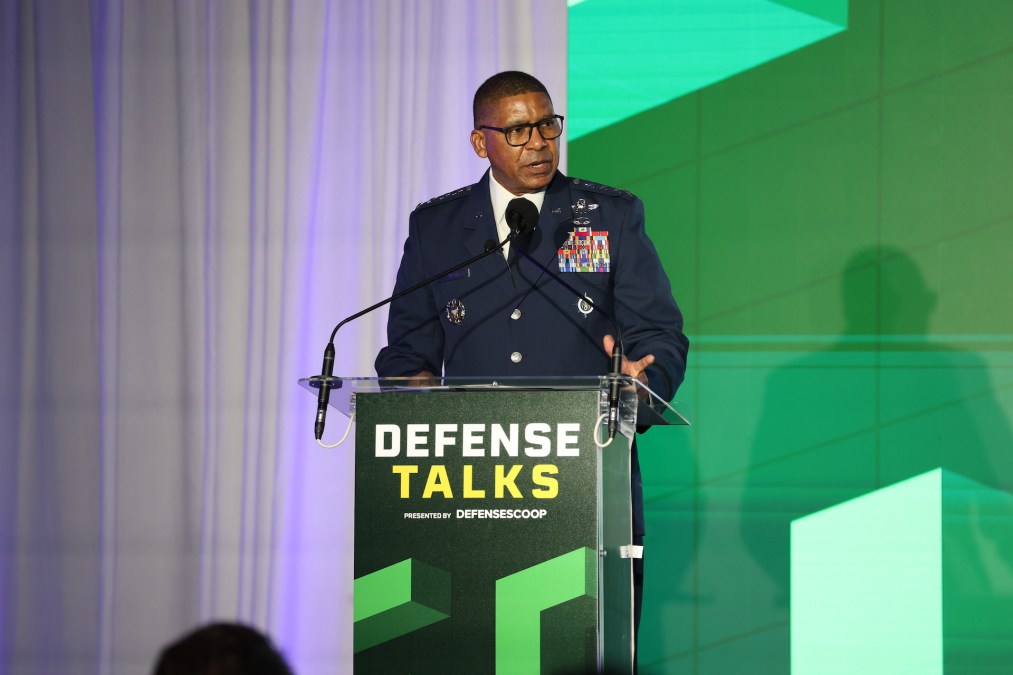
For Gen. Randall Reed, the head of U.S. Transportation Command, a predictable supply chain optimized for perfection has wrought its own “self-induced vulnerability,” especially in the AI age. In turn, he said AI could help Transcom become less predictable to adversaries.
The military, and the rest of the logistics world, relies on supply systems that value regular processes and precise deliveries that adversaries can analyze and exploit better than ever with the use of AI. The underbelly of this system is “fragile,” Reed said Tuesday at the DefenseTalks conference, hosted by DefenseScoop.
His comments mark the latest warning from top military officials grappling with how to use AI against adversaries wielding it themselves, part of the broader arms race over the disruptive technology that has increasingly gripped the world and put supply chains in the crosshairs.
“The adversary can and will contest our logistics at any point within the chain, both within the military, the government, and outside,” Reed said. “And this is where artificial intelligence in our adversaries can act as a barrier. It multiplies disruptions.”
He called AI an “engineered vulnerability” in the hands of foes who may use it to manipulate algorithms and lead military logisticians into making “catastrophic decisions based on hallucinated intelligence.”
“We operate in systems of industry designed for a secure, trusted environment where perfect knowledge and just-in-time delivery streamlines the process and eliminates waste, where systems are built to minimize burnout and streamline delivery to the absolute limit,” Reed said. “This, for supply chain management practitioners, is our self-induced vulnerability.”
The general noted that AI-savvy troops would offer their own value to Transcom, helping shift “from vulnerable, predictable routing to sustainable, randomized push logistics.”
“Under constant ambush and communications degradation, AI allows us to randomize routes, use autonomy to reduce cognitive overload, and predict operational friction before it happens,” Reed said. “AI can power predictive demand planning and network healing, while Internet of Things sensors track cargo, digital twins build virtual replicas, and blockchain secures data.”
He acknowledged AI bottlenecks that other defense officials have also recognized as hurdles to its military implementation.
“We do, however, still face challenges: data scarcity, flawed synthetic data, and the need for massive computing power stretching from factory to foxhole,” he said. “We are currently building a secure, authoritative data layer so that under fire, we are the ones who can out-deliver the adversary in ammunition, batteries, medical supplies, and even Cheetos.”