Transcom seeks partners to study autonomous, cargo-moving drone boats for future ops
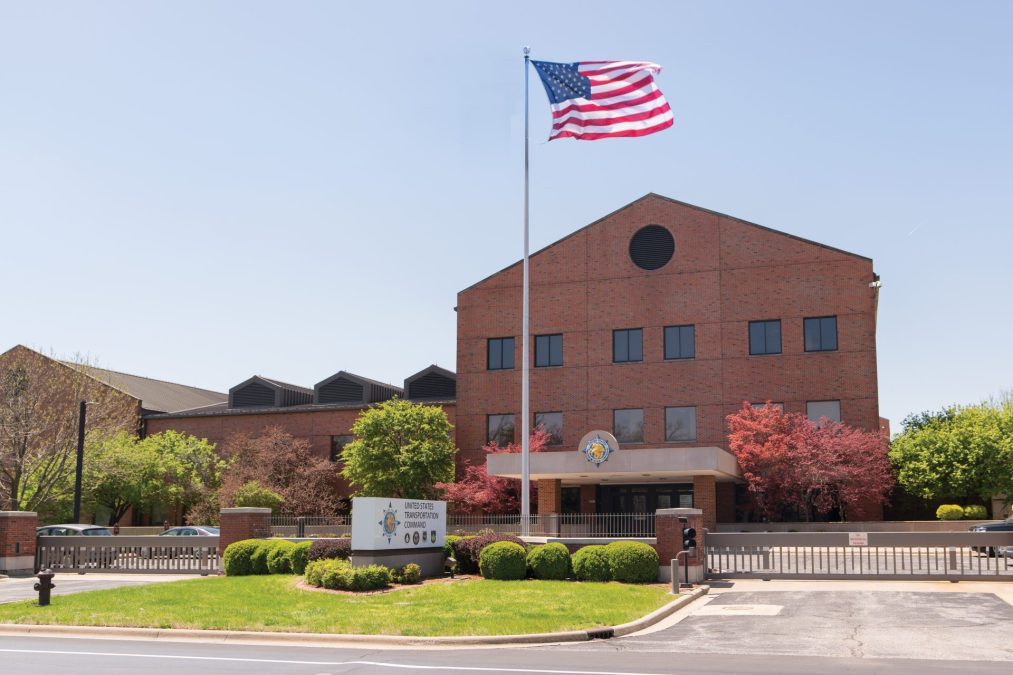
U.S. Transportation Command wants to partner with external stakeholders to explore integrating autonomous and remotely piloted drone boats into its global mobility network and military supply chains.
Participants interested in entering new cooperative research and development agreements with the combatant command to study “the uses, limitations, and delivered value” of Maritime Autonomous Surface Ships (MASS) for moving military personnel and cargo are invited to submit white papers by July 6.
“CRADAs resulting from this announcement are forecast to be in effect for approximately a 2-year period, although duration can be tailored to suit the parties’ interests before or even after work begins, by mutual agreement,” officials wrote in a recent request for information.
This opportunity reflects Transcom’s broader aims to assess and apply uncrewed systems to enhance its high-stakes and increasingly contested logistics and mobility operations — including for short-range deliveries, port security, infrastructure protection and other missions.
Congress also previously requested that the command supply “a comprehensive plan to increase sealift capacity, improve inter-service logistics coordination, and leverage private sector autonomous solutions to address inadequate contested logistics capabilities.”
MASS systems typically operate with differing degrees of human control, employing sensors and AI-enabled navigation features across various ranges and timespans.
CRADAs are vehicles by which federal entities can combine resources and engage in research and development activities with non-government institutions to drive breakthroughs in topics of shared interest.
Studies that stem from this potential Transcom-led collaboration, according to the RFI, “will produce findings on technical and operational maturity, uses, economics, underlying technologies, and risks/benefits of emerging MASS systems” to help address the Defense Department’s modern materiel distribution needs.
The command lists nearly a dozen potential research topics that could be pursued under new CRADAs.
Some of those include: strategic projections and proliferation of MASS technologies that will achieve commercial and military viability over two-, five-, and 10-year horizons; details on state-of-the-practice for MASS as a contracted distribution method; evaluations of new DOD operational concepts and feasibility for the capabilities in inland waterway, open ocean, and coastal operations; and reports on the survivability and resilience of emerging MASS assets against physical attacks, terrorist threats, cyber intrusions, extreme weather environments, and electromagnetic countermeasures.
While funding isn’t available for this work, Transcom may provide its CRADA partners with access to its installations and facilities, government subject matter experts, information on potential surge sealift needs and other resources.
Multiple government entities could also participate on behalf of or in partnership with the command, “including but not limited to agencies of Defense Logistics Agency, Military Sealift Command, Army Transportation Command, other Federal Laboratories,” the RFI states.
Representatives from organizations across industry and academia are asked to describe their study approaches, identify additional areas to pursue, and discuss the “unique” services and capabilities they could provide under a CRADA.
The command plans to host a virtual industry day after its initial white paper selection, where each chosen submitter will make a one-hour presentation on their system features and applications.
From there, Transcom officials will engage separately with each selected collaborator, “seeking to reach mutual agreement on objectives, duration, intellectual property, and resources to be applied by the parties in the proposed CRADA-based experiments.”