Former U.S. officials urge D.C. Circuit to reconsider decision in Anthropic-Pentagon fight
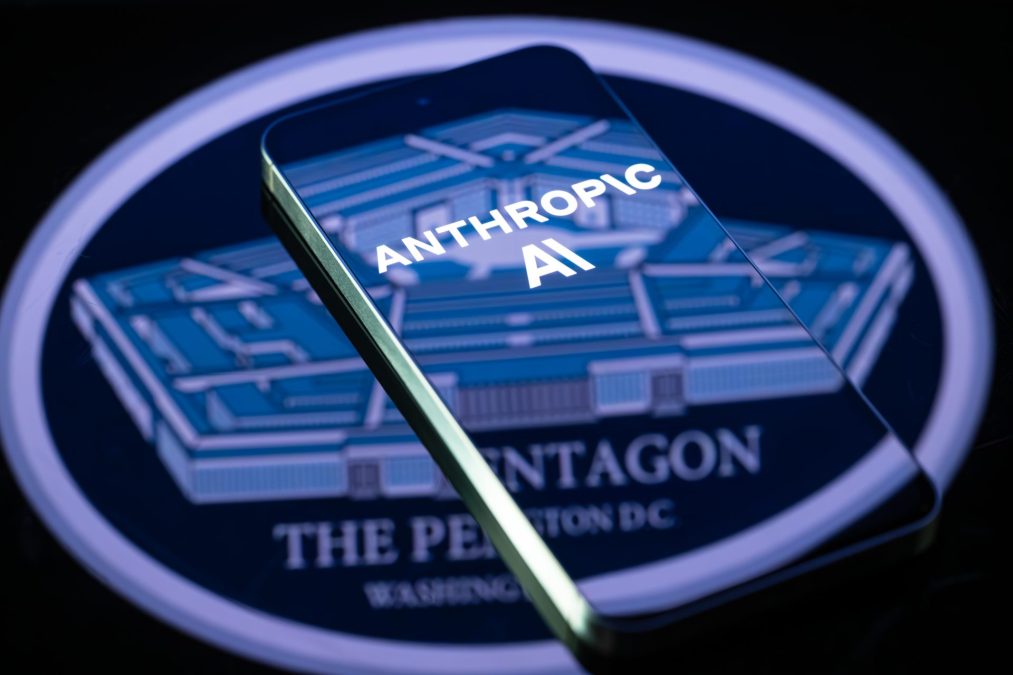
A bipartisan group of 17 former senior national security officials, diplomats and intelligence professionals filed a legal brief on Tuesday urging the U.S. Court of Appeals for the D.C. Circuit to rehear Anthropic’s challenge to the Pentagon’s designation of the company as a supply-chain risk.
“Left undisturbed that ruling will threaten all defense contractors,” they argue in the 26-page submission.
This brief marks the latest move in the messy saga between the Defense Department and Anthropic. The two remain at an impasse over safety guardrails and unrestricted military use of the company’s frontier AI models.
Anthropic was positioned as a premier AI partner for the U.S. government between 2024 and mid-2025. Through collaboration with Palantir and Amazon Web Services, Anthropic’s Claude was the first frontier AI model to deploy inside highly restricted, classified government networks.
But DOD’s alignment with Anthropic shattered in early 2026.
The company’s leadership refused to accede to new demands from Pentagon leadership that would permit the military to deploy commercial AI models for “all lawful use cases” — without limitation. In particular, Anthropic took issue with the government potentially using its models to surveil Americans en masse, and for applications of autonomous weapon systems that can attack targets without human intervention.
Following a series of failed negotiations, Defense Secretary Pete Hegseth in February officially designated Anthropic as a “supply-chain risk to national security.” That severe regulatory label is typically reserved for foreign, adversarial entities and functionally bars defense contractors and components from doing commercial business with Anthropic.
The firm subsequently sued the federal government.
This summer a federal judge in San Francisco ruled in favor of the Claude maker, deeming the Pentagon’s actions against Anthropic to be troubling and retaliatory. However, last month, the federal circuit court in D.C. ruled 2-to-1 in favor of the Pentagon in a simultaneous challenge.
In the new legal brief, the 17 former officials noted that — because Congress vested that specific court with exclusive jurisdiction over supply-chain risk designations — the panel’s decision is the governing law nationwide.
“No other court can revisit it,” they wrote. “If it stands, it will establish how DOD may deal with every defense contractor from here on out. Few questions could be of more exceptional importance for this Court to rehear en banc.”
The crew of subject matter experts behind this brief said they share “decades of combined experience” in federal procurement, supply-chain security, and protecting America’s technological edge in matters of national defense. The brief states that many held senior roles “in both Republican and Democratic administrations, at the White House, National Security Council, Departments of State, Defense, Justice, and Homeland Security, Office of Management and Budget, and other national security and intelligence institutions, where they implemented or advised on the statutory and constitutional authorities at issue here.”
Some of the more prominent members of the group include former Director of National Intelligence Avril Haines, former National Security Advisor Susan Rice and former National Security Advisor Jake Sullivan, among others.
The officials warned that the court’s decision “would set a dangerously erroneous standard” for supply chain risk designations moving forward, if a rehearing is not set.
Their key arguments include that the Pentagon’s national security risk label “was pretextual.” The brief points out that DOD announced the penalty and public denunciations on social media, before generating any administrative steps or formal justifications.
The experts also contend that the designation was made in retaliation against Anthropic for its leaders’ public comments, policy stances, and refusal to meet certain government demands — essentially serving as what they see as an unconstitutional warning to other military contractors and frontier AI makers.
“Further, had DOD engaged in a lawful process, it would have considered the specific risks posed by the two capabilities Anthropic refused to provide: mass domestic surveillance and lethal autonomous weapons. DOD has not explained why DOD should have the first, much less how it could exercise it lawfully. Nor has DOD reconciled the second with the United States’ commitment that [its military use of AI be in compliance with applicable international laws],” the brief stated.
Ultimately, the former officials argued that if “the panel decision stands, this Court will validate a sham process that not only weakens national security but gives this and future administrations authorization to punish any company that falls out of favor.”
Pentagon spokespersons did not immediately provide comments on the matter before publication.
FedScoop Senior Reporter Madison Alder contributed reporting.