The Marine Corps passed its third audit and is testing how AI, automation can make the process easier

The Marine Corps announced Monday that it passed its third clean financial audit, the only service to do so thus far. In a media roundtable last week, officials told reporters the Corps was participating in multiple AI and automation pilots intended to make the process easier.
None of the other services, nor the Pentagon itself, have passed an audit since they became mandated in 2018. After having failed its eighth audit last year, the Defense Department self-imposed a deadline of 2028 to pass one. President Donald Trump recently called for a massive increase in defense spending next year, a price tag that could total $1.5 trillion.
Meanwhile, the Marine Corps has become an example for other services to follow after having first successfully passed an audit for fiscal 2023 — a trend it has continued as it modernizes its financial systems, officials said.
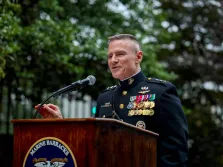
As the Corps continues to improve overall financial systems, “one of our endeavors is to make it easier for Marines to be able to produce financial statements and to be able to have samples that are auditable because there’s still a lot of manual effort involved,” said Edward Gardiner, assistant deputy commandant for programs and resources.
Part of that effort means moving away from “customized” systems — ones tailor-made for specific Marine tasks that may require expensive updates or new training should the process change — toward existing commercial solutions.
“What we’ve said in the past is we want to be able to make that more reliable and more automated,” Gardiner added. “With all the advances in artificial intelligence and additional system improvements, we continue to make strides there.”
While not a deal-breaker for a clean audit, independent inspectors found seven “material weaknesses” during the Marine Corps’ financial review, which included inconsistent internal oversight controls, various issues with financial information systems, and deficiencies in recording financial transactions.
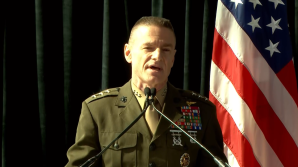
Lt. Gen. James Adams, deputy commandant for programs and resources, said the Marine Corps is involved in six pilot programs related to AI and automation. Some are already addressing weaknesses from audit or improving workflows, he and other officials said.
When Marines contract for and purchase a piece of equipment, for example, the service has to retroactively match the input cost with what the final purchase turned out to be. If they don’t line up, it produces an “unmatched transaction,” Adams said, which requires arduous backtracking to fix the error. Enough unmatched transactions can threaten a clean audit.
Now, one of the pilot programs intends to automate the discovery of the error and then automatically fix it, which he expects to result in “hundreds of thousands” of saved man-hours. Other officials said a separate automation system saved 20,000 man-hours this year.
While some of the AI and automation efforts remain in the planning phase, the Marine Corps is expected to make decisions about their use in the near future, according to officials.