Policy hurdles, disconnect with Pentagon office lead to ‘mixed success’ for major SOCOM programs, watchdog says
U.S. Special Operations Command “reported mixed success” in meeting cost and schedule goals for several of its most expensive acquisition programs, according to a Government Accountability Office report.
The report, released Thursday, cited a disconnect among military officials over access to acquisition information, inconsistent financial reporting, and disparate application of leading product development practices as reasons for SOCOM’s programmatic delays and cost concerns.
To help alleviate some of the delays and cost runup, the report recommended that the Defense Department establish clear oversight protocols between SOCOM and the Pentagon office tasked with ensuring that the combatant command’s acquisition programs are within budget.
That office, the Assistant Secretary of Defense for Special Operations and Low-Intensity Conflict, also known as ASD (SO/LIC), “cannot effectively conduct program oversight, in part, because DOD policy has not fully enabled it to perform its acquisition-related responsibilities,” the report said. “Collaboration between ASD(SO/LIC) and SOCOM to document clear protocols for the former’s access to this information could enhance its ability to monitor acquisitions and fulfill its statutory role.”
The report also recommended that SOCOM update its acquisition policy to specify how often its program officials update their cost estimates and that it adopt procedures “to reflect and encourage adoption of leading product development practices.” In responses included in the report, the Pentagon concurred with the recommendations and noted that some were already being updated.
The GAO analyzed nine acquisition programs for cost, development, test and evaluation progress, and timeline objectives, reflecting a mix of ongoing aviation and maritime programs. Some have been in development for years, while others are much newer, and many are considered high-priority special interest initiatives:
- Silent Knight Radar
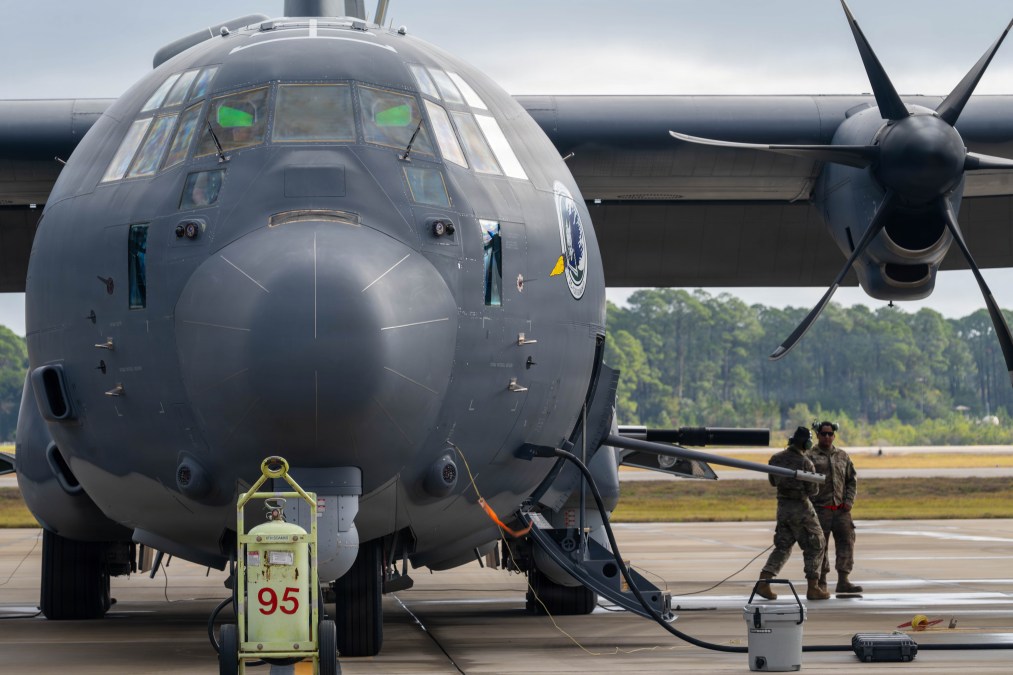
- AC-130J Ghostrider aircraft
- MH-60M Block I Upgrade
- Dry Deck Shelter Extension
- MH-47G Block II
- Dry Combat Submersible
- Mk 18 Mod 1 Unmanned Underwater Vehicle
- Armed Overwatch, known for the Skyraider II aircraft
- SEAL Delivery Vehicle Mk 11
Five of those programs experienced scheduling delays, according to the report. For example, the MH-47G Block II Chinook helicopter was delayed by seven months. Others had much longer delays, like the Mk 11 SEAL Delivery Vehicle — a manned mini-sub — at nearly five years behind schedule.
The Dry Combat Submersible, Mk 18 Mod 1 UUV and Armed Overwatch program were also delayed. Initially, SOCOM wanted 75 Skyraider II aircraft for the Armed Overwatch program, but that number was cut to 53 over “resource constraints,” according to Task & Purpose.
While the Chinook was the only program failing to meet its cost performance goal, according to the GAO report, authors noted that programmatic delays can “over time, result in increased costs.”
SOCOM’s acquisition policy requires programs to report current information, including cost estimates, to an online portal, the GAO wrote. Officials for eight of the nine programs the office selected to analyze failed to do so, partially because the command’s policy did not specify how frequently they had to report.
In 2016, Congress bolstered ASD(SO/LIC) oversight authorities over SOCOM’s programs, but they haven’t been implemented effectively, according to the GAO report. The watchdog previously reported that ASD(SO/LIC) suffered from frequent turnover and low staffing for acquisition-related responsibilities. In its most recent report, the GAO said the office had no intent to expand its stable of acquisition jobs, citing an ASD(SO/LIC) official.
SOCOM and ASD(SO/LIC) officials also disagreed on the level of access the Pentagon office should have over special operations acquisition programs, the recent report said. For example, SOCOM acquisition officials denied ASD(SO/LIC) officials from participating in a program briefing early last year, “due to a change in the structure of monthly program reviews,” the GAO said. Those disagreements resulted in ASD(SO/LIC) “not getting information to help perform its responsibilities,” which includes oversight over SOCOM program spending.
“One of Secretary [of Defense Pete] Hegseth’s initiatives within the department is requirements and acquisitions reform, and SOLIC is well positioned to play an important role,” Derrick Anderson, head of ASD(SO/LIC), said at the annual SOF Week conference last month. “We can serve as the department-wide leader in developing and validating the required advanced capabilities, and doing so more rapidly.”
Most SOCOM programs that experienced delays fell short in using “leading practices” or modernized acquisition processes for product development. An example that many programs implemented was end-user feedback, which saw changes to engine filters and inadequate threat warning systems for aircraft that were based on operator input.
However, one program, the AC-130J aircraft, used a “digital twin” to scheme systems integration. The report said that other programs were developing virtual renderings to help forecast development, but hadn’t implemented them.
“Without acquisition policies that more fully reflect leading practices for iterative product development, SOCOM will miss opportunities to better ensure it delivers innovative capabilities faster and informs prioritization of remaining capabilities based on evolving user needs,” the GAO wrote.