Top Northcom general adds to drumbeat of warnings about weak drone defenses in the homeland
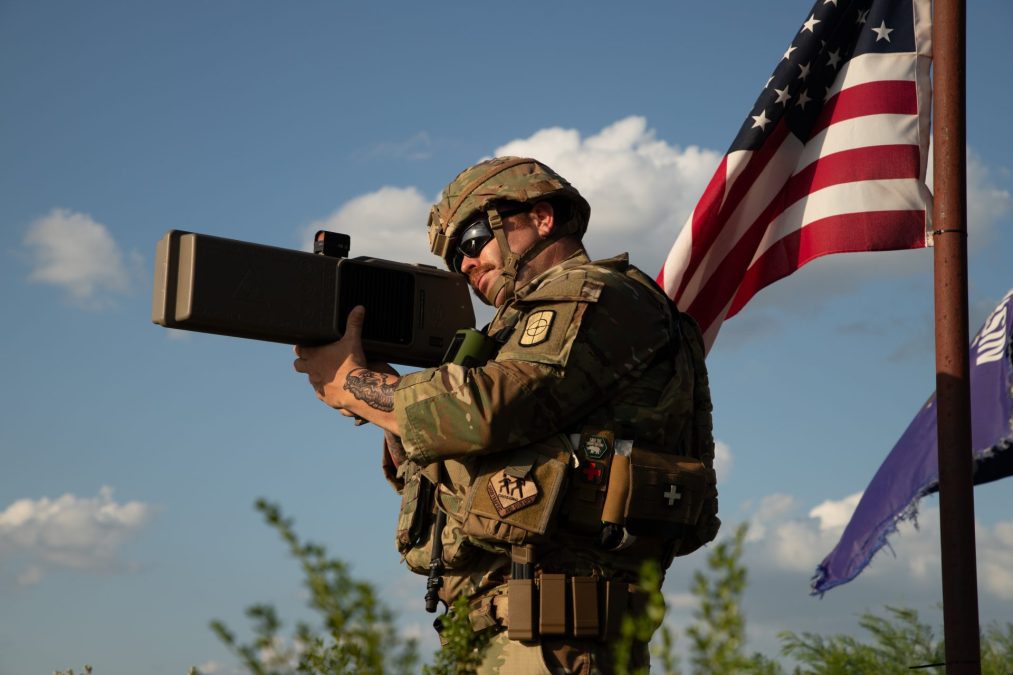
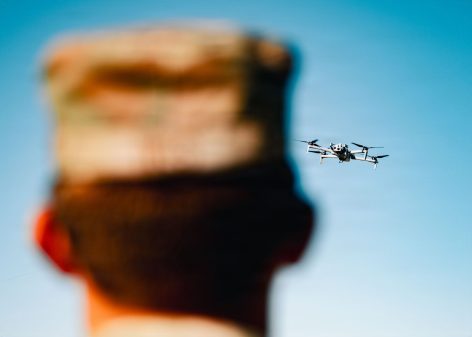
A top U.S. Northern Command general is once again warning of the American military’s inability to effectively counter drones stateside.
Army Lt. Gen. Joseph Jarrard, deputy commander of Northcom, cited a shortage of detection capabilities and weapons as a key reason why the military wouldn’t be able to defeat a swarm of unmanned aerial systems in the homeland.
“We don’t have the sensors, and depending on where that swarm is going to attack, it depends on whether we have any sensors at all, and also whether we’ve got any effectors to go after that problem,” he told an audience at the Space and Missile Defense Symposium in Alabama on Thursday. “We are ill-equipped right now to handle something like that.”
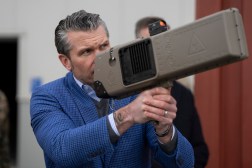
He is not the only Northcom official to have sounded the alarm about the military’s dearth of counter-drone equipment in recent months as the Pentagon asks for a record-breaking $21 billion for UAS defenses, munitions and other advanced, related equipment.
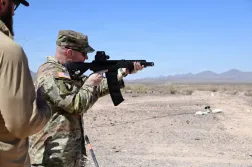
In May, Northcom commander Gen. Gregory Guillot said troops deployed to the border amid the Trump administration’s immigration crackdown lacked adequate tools to protect them from UAS while patrolling the region.
The comments come as the military scrambles to acquire low-cost counter-drone measures meant to fix the imbalance between shooting down cheap UAS with expensive interceptors, a deadly cycle that has played out during the Iran war.
“We’re seeing it used on a daily basis around the world, and we’ve got to figure out how to mitigate that threat,” Jarrard said of the swarms. “But we’re not there yet.”
The Pentagon’s counter-drone hub known as Joint Interagency Task Force 401, which has been in existence for a year, has broadened command authority to defeat drones around stateside military bases, which have long been a concern for military leaders.
The task force has also shepherded at least hundreds of millions of dollars worth of funding for counter-UAS technology, shipping much of it to U.S. Central Command amid the Iran war and to domestic military protection initiatives. The Army has also spearheaded a counter-drone marketplace where military, law enforcement and certain foreign militaries can buy systems.
But the process has experienced several challenges, such as back-to-back mishaps in Texas that temporarily closed down airspace earlier this year after federal agencies failed to coordinate the employment of a new anti-UAS laser and as military leaders keep warning of domestic drone threats.
Jarrard said the command was integrating counter-drone tactics into its Operation Noble Eagle program, a decades-old effort between the U.S. and Canada to bolster air defenses.
“Detection is obviously the biggest issue, and so how we are able to detect is one of our biggest concerns right now,” Jarrard said, adding that the North American Aerospace Defense Command (NORAD), for which the general is a vice commander, is relying on radars it already has while tying into other agencies, such as local law enforcement.
“That’s where we’ve got to get to with respect to the interoperability between not just military systems, but also those that are protecting our cities, critical infrastructure, etc., that are off our installations,” he added. The War Zone first reported his comments Thursday.
Several of the services, especially the Army, are sprinting to make these new systems coordinate with each other. Top officials have said that a unified suite of interconnected equipment and units are key to gaining advantage over adversaries, and have looked at Ukraine’s drone defense ecosystem as a model.
“We’ve got to be interoperable with the systems that they’re procuring, using, utilizing,” Jarrard said, referencing coordination with agencies across the country. “And they’ve all got to talk together.”
While he heralded several homeland defense efforts, Jarrard also painted a grim picture of the threats facing the United States, which he said were “immediate and complex.”
He warned of growing cooperation between Russia, China, North Korea and Iran, citing examples of how Beijing and Moscow were pressure testing Arctic territories around Alaska. These international threats are made worse by widely-available and advancing commercial technologies accessed by growing non-state and criminal actors, according to Jarrard.
“Small, uncrewed aircraft systems proliferate the open market,” he said. “In the hands of malign actors, these pose a growing threat to safety and security.”
U.S. officials often cite Ukraine’s Operation Spiderweb as an example of how drones can penetrate deep into a country’s borders, which has alarmed American decision makers as UAS sightings have exploded over critical domestic sites. Kyiv’s operation sent commercial trucks packed with drones into Russia, where they launched and set many of Moscow’s bombers ablaze as they sat idle on an airfield.
Jarrard said a keystone defense for thwarting these threats are in a “deep and broad network” of international allies Northcom relies on. President Donald Trump has railed against or directly threatened most of the those allies during his second administration.