Space industrial base stretched thin amid low-orbit satellite constellation shift, GAO says

The Pentagon’s preference for large groups of massed, small satellites in low-Earth orbit to help counter Chinese and Russian threats is stressing a specialized industrial base consumed by competing markets and imbalanced commercial output, a new government watchdog report says.
The Pentagon expects to shift some space systems from a small number of large satellites to massed “constellations” of systems closer to the Earth to “ensure U.S. superiority in space,” a Government Accountability Office report, published Tuesday, notes. The move comes with an expected $33 billion price tag over the next five years.
But recent industrial base woes caused by the shift threaten the Space Force’s “ability to procure the necessary technologies it plans to use to carry out future missions,” according to GAO.
The report also notes that “specialized and capital-intensive capabilities” required by the Defense Department put its industrial base at risk within a competitive market rife with other growing sectors that eat up a lot of the same resources.
“This simultaneous growth creates intense competition for critical assets and triggers shortages for semiconductors, electronics, raw materials, and manufacturing capacity,” the report says. It cites a September study that found “94 percent of U.S. satellites on orbit are privately owned.”
GAO recommended the defense secretary centralize enterprise-wide oversight of supply chain holes across the Department of the Air Force and National Reconnaissance Office (NRO). It also tasked the Air Force secretary, the top civilian official overseeing the Space Force, with ensuring leadership roles are stood up within the space program acquisition shop and to put together protocols for taking on enterprise-level risks. The Defense Department and Air Force agreed with all three recommendations.
The Air Force for its part did set up an “enterprise risk management service” through an April memorandum, but it neither established a leader or agency in charge nor did it “clearly define roles and responsibilities,” the report says.
Space Systems Command similarly put together a supply chain risk identification guide in April but the guide has no authority outside of the Space Force, according to the report.
For the study, GAO from August 2025 to November 2026 assessed the Space Force and its industrial base to point out holes in the supply chain within three separate programs: the Proliferated Warfighter Space Architecture (PWSA), the Global Positioning System III follow-on (GPS IIIF) and the Resilient Missile Warning and Tracking (MWT) Medium Earth Orbit (MEO).
GAO originally meant to target five agencies but left out two. Program managers for the Space Data Network (SDN) Backbone and Protected Tactical Satellite Communications – Global (PTS-G) hadn’t taken a hard look at their supply chains, the report says.
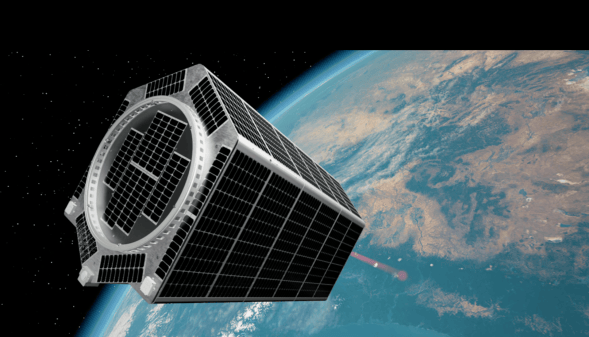
The department in 2020 kicked off PWSA, designed to reduce dependence on legacy satellites with geostationary Earth orbits and deploy groups of small satellites in lower orbits.
The idea behind the architecture is that a large group of low-orbit satellites means more substitutes are in play if the connection to one goes down. And moving them closer to Earth means higher speeds, better imagery and boosted survivability against potential attacks.
“DOD is concerned that U.S. adversaries can target the traditionally large and expensive satellites in outer orbits that DOD has relied on for missions such as missile warning and missile tracking,” the report says.
The lower altitude, however, does not make satellites invincible. It may put them at risk for “ground-based electronic warfare threats,” GAO notes.
PWSA, which is expected to cost the Pentagon $15.6 billion over the next five years, has already suffered missed demonstration deadlines, scaling challenges and delivery delays, which GAO attributed to supply chain disruptions.
Program officials as recently as April 2026 reported “supply chain bottlenecks and parts availability, among other factors, continue to delay planned launches,” the report says.
MWT MEO, which carries an $8.3 billion cost over the next five years, has seen launch delays prompted by printed circuit board shortages, the study notes.