SOCOM wants new tech to keep its militarized commercial vehicles hidden from data-hungry adversaries
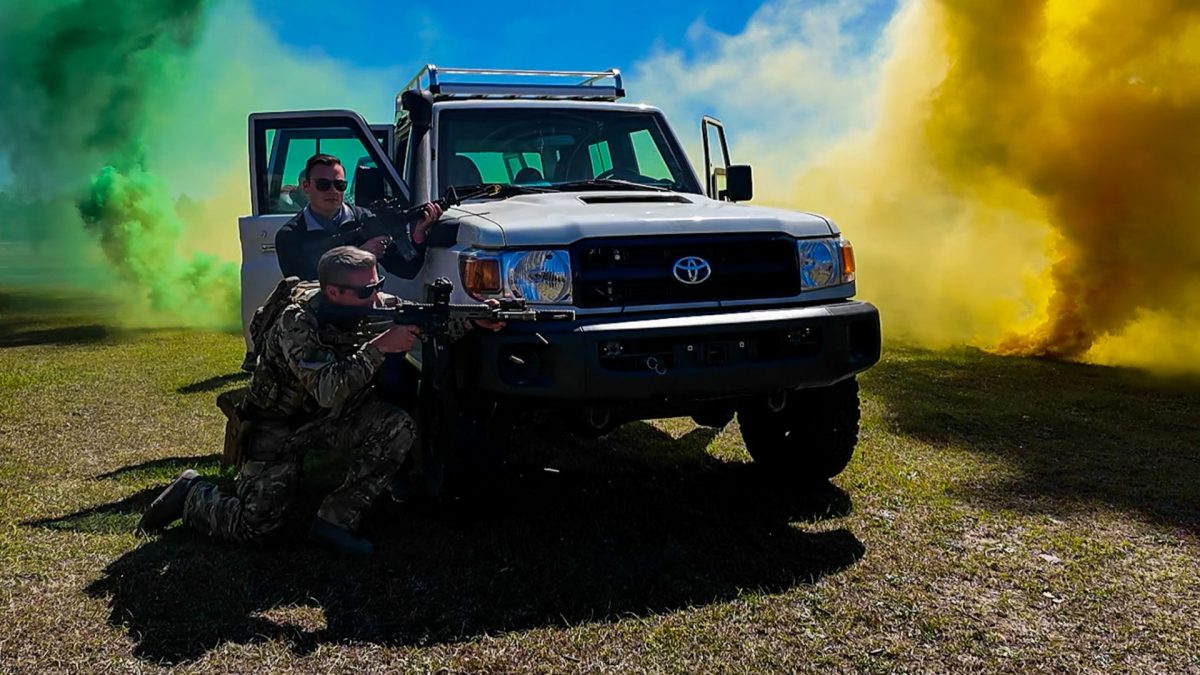
Special operators are looking for new technology to help their non-standard commercial vehicle fleet — often modified civilian trucks — keep a low profile during missions as advances in sensors and telematics open the door for enemy exploitation.
U.S. Special Operations Command is asking industry, cybersecurity, academic and government lab experts to develop or acquire existing solutions to minimize electronic signatures emitted by advanced telematics, sensors, GPS and communications systems that have become common in commercial vehicles, according to a special notice released Monday.
Elite U.S. troops have historically used commercial trucks buffed with armor, weapons or other specialized equipment overseas, especially when they need to conduct clandestine missions and blend in with local populations.
But advancements in commercial vehicle tech also “generate vast amounts of data and emit unique signatures,” according to the notice, meaning adversaries could use these emissions to “track vehicle movements, interfere with operations or compromise sensitive data” while commandos are using these platforms.
Over the several months, U.S. Special Operations Command’s acquisition hub will host a series of events to develop a work-around to commercial vehicle signature emission in collaboration with military capabilities non-profit, SOFWERX.
DefenseScoop previously reported that SOCOM was looking to boost IT and communications equipment for their Non-Standard Commercial Vehicles, or NSCV program in response to new, complex technology and the need to give commandos options when they’re in contested environments away from logistics support.
In a draft version of the National Defense Authorization Act, lawmakers warned that the command’s NSCV fleet was “at risk due to increasing technological constraints.” Members of Congress said commercial manufacturers controlled access to their software so tightly that SOCOM is forced to equip “workarounds” needed for its missions.
“This status quo is not sustainable,” according to the draft’s language, which did not appear in the NDAA signed into law by President Donald Trump last month. It advocated for SOCOM to own and edit its own vehicle electronic architecture “as control over the NSCV fleet deteriorates” and the need for the NSCV program “increase[s] globally.”
The new notice from SOFWERX and SOCOM said that submissions from industry are due by Jan. 30. By mid-March, select participants will meet with a SOCOM evaluation panel to pitch or demonstrate their solutions. Officials will be looking to negotiate contracts or other agreements with vendors whose offerings are favorably evaluated.