SOCOM exploring how AI can make it easier to survey key overseas facilities
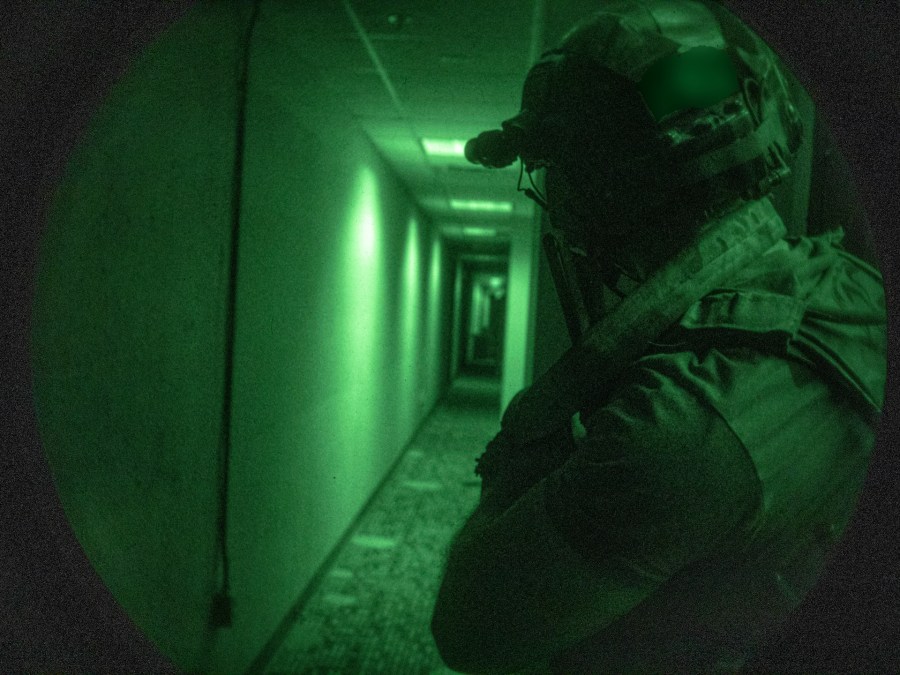
In an effort to more quickly map out key facilities around the world, U.S. Special Operations Command is looking toward artificial intelligence to reduce the number of personnel tasked with collecting data on building schematics, helicopter landing zones and other infrastructure critical in crisis scenarios.
SOCOM currently deploys teams of roughly six surveyors for up to a month to analyze key infrastructure, such as diplomatic facilities, ports and harbors — which help give the command a better understanding of infrastructure it may have to operate in, according to a special notice posted to SAM.gov Wednesday.
Over the next several months, SOCOM is inviting industry, academia and national laboratory groups to participate in a series of events intended to explore how AI can make its Integrated Survey Program (ISP) quicker while simultaneously reducing the number of surveyors required to deploy across the globe in support of it.
The special notice was posted in collaboration with SOFWERX, a military capabilities non-profit that frequently works with SOCOM. The command is looking to see if AI and “automated solutions” can better process structural blueprints, automate route data collection “between key pieces of terrain in a city,” map compounds without existing data and quickly photograph buildings, the document noted.
“The ISP team has been challenged by our leadership, in coordination with SOFWERX, to develop tactics, techniques and procedures to shorten the length of time surveyors must be deployed as well as reduce the number of personnel deployed for a given survey,” according to the special notice.
The notice comes as SOCOM is exploring other AI-enabled capabilities as high demand for special operations capabilities has proven to be a fixture in the second Trump administration’s military campaigns.
DefenseScoop reported last month that SOCOM was exploring ways AI could process data gathered by its operators during sensitive site exploitations. It was also looking for industry solutions related to facial recognition, speaker identification and DNA profiling.
Elite commandos played a central role in the Trump administration’s mission to capture former Venezuelan president Nicolás Maduro last month, a complex operation that required detailed information about his compound. The New York Times reported that Delta Force operators rehearsed the extraction of Maduro in a full-sized replica of his compound in Kentucky before Operation Absolute Resolve.
The Marine Corps recently told DefenseScoop that it recognized a “growing need” for key members of its own elite force.
Public SOCOM documents said ISP provides “detailed tactical planning data” for key diplomatic facilities and vessels, for example, and in support of “national requirements” under the Chairman of the Joint Chiefs of Staff.
The special notice listed several in-person events with SOFWERX through July. SOCOM will down-select respondents that it “feel[s] have the highest potential to satisfy their technology needs” by summer 2026, according to the notice.