DARPA aiding America’s fight against flesh-eating screwworm invasion
The Defense Advanced Research Projects Agency is actively involved in the U.S. government’s fight to stop the resurgence of the flesh-eating, New World Screwworm parasite infecting pets and livestock in at least two Southwest states.
“Invasive species are a national resilience challenge with significant economic and food supply implications, which DARPA recognizes as a national security risk,” Catherine Campbell, program manager in the agency’s Biological Technologies Office, told DefenseScoop.
Campbell’s portfolio at DARPA includes the nascent Genetic Utilization for Advanced Regulation and Defense of Indigenous and Native Species — or GUARDIAN — program.
In an interview this week, she shared new details about how the Pentagon’s research and development hub is ramping up those efforts to create and test advanced suppression technologies to stifle the New World Screwworm (NWS), Brown Tree Snake (BTS) and other modern bioinvaders.
“Unlike current reactive methods, GUARDIAN seeks to develop proactive, long-term solutions for protecting agricultural resources and native species to safeguard U.S. agriculture and ecosystem health while prioritizing safety and responsible innovation,” Campbell said.
NWS is endemic in parts of the Caribbean and South America — not the continental United States.
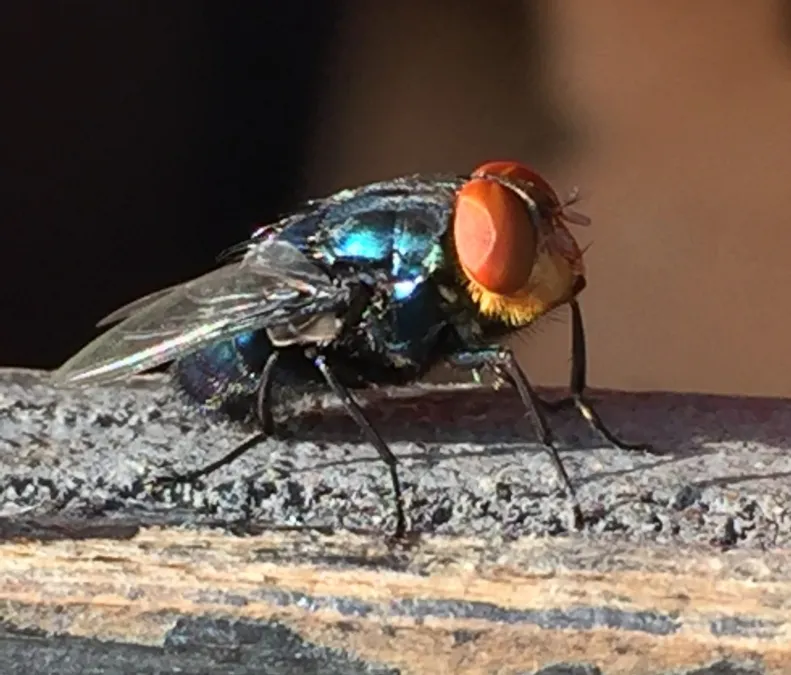
Adult Screwworm flies typically have bright orange eyes and a metallic blue or green body with three dark stripes on their backs. They’re slightly larger in size than a common housefly. And unlike most blowflies that feed on dead and decaying matter, screwworms target live, healthy tissue.
They can infest livestock, pets, wildlife, birds, and in rare cases, people.
The infestations begin when female flies lay their eggs in animals’ openings and orifices. NWS fly larvae often cause severe pain and deadly damage to warm-blooded animals whose flesh or wounds they burrow into — moving in a spiral motion like a screw being driven into wood. The attack areas swell and deepen as more maggots hatch and then feed on living tissue, causing foul odors, bloody discharge and serious discomfort for those affected.
Infested animals frequently stop eating, isolate themselves, and exhibit signs of depression and lethargy.
Historically, the NWS plagued the U.S. since before the Civil War, and up until it was originally eradicated by the Department of Agriculture in 1966. The threat from NWS was largely contained in America in the decades that followed, despite a few localized flare-ups.
But on June 3, USDA’s Animal and Plant Health Inspection Service (APHIS) confirmed the first U.S. animal case in this current NWS outbreak. The pest was detected in a 3-week-old calf in south Texas, roughly 50 miles from the U.S.-Mexico border.
This discovery emerged as the country’s cattle industry was already grappling with a historic herd shortage, with wholesale beef prices hitting record levels.
In an emailed statement Wednesday afternoon, DARPA Director Stephen Winchell told DefenseScoop that the potential for severe economic and food supply devastation pests like NWS introduce warrants a rapid, whole-of-government response to such outbreaks.
“Agricultural security is national security, and DARPA has proactively invested in breakthrough suppression technologies for threats such as the New World Screwworm,” Winchell said. “These technologies are engineered to be thousands of times more effective than current approaches while still integrating directly with USDA operations.”
According to a public dashboard, USDA has recorded six total NWS cases in America as of June 8 — five cases in cattle and goats around Texas, and one case affecting a dog in New Mexico.
“New World Screwworm threatens the $113 billion U.S. cattle industry,” Campbell said in the interview. “Should the current outbreak become widespread, in Texas alone it could result in economic losses on the order of $1.8 billion, based on USDA modeling of past outbreaks.”
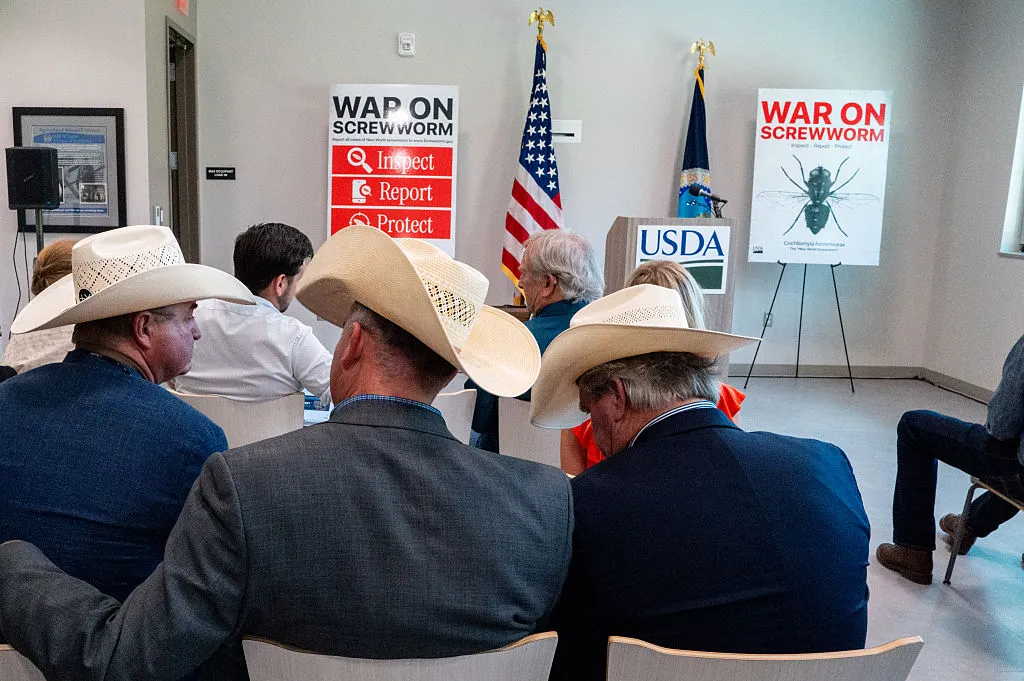
USDA and APHIS are leading the nation’s operational response and scaling capabilities against the immediate threat. Initially, the agriculture arm is fighting this outbreak by quarantining animals and releasing millions of sterile flies over the south Texas region to try to curb and control the size of the NWS population.
DARPA’s contributions are rooted in a more forward-looking research layer of the broader, multi-agency effort and enabling longer-term solutions for what comes next.
“GUARDIAN is focused on developing future tools — not on day-to-day surveillance or current response operations,” Campbell said. “The approach centers on developing advanced suppression technologies — safe, sustainable biological solutions that build on proven, mating-based methods to rapidly suppress and push back screwworm populations.”
The program’s role, she further noted, is to “advance the next generation of tools under rigorous evaluation, so validated options are ready if and when they are needed.” She didn’t elaborate on what those assets could be.
Last summer, DARPA launched its Ag x BTO effort to develop innovative solutions that can defend America’s agricultural supply chain against both natural and human-made threats.
“Recognizing food security as a critical national security priority, this initiative leveraged a rapid acquisition strategy to solicit disruptive technologies in areas such as early warning systems, rapid countermeasures, and advanced crop engineering,” Campbell noted. “Innovators who submitted compelling video pitch proposals were invited to a workshop and a follow-on Pitch Day in Washington to rapidly transition their defensive capabilities into practice.”
More recently, in February, the Defense Department signed a cabinet-level memorandum of understanding with USDA, which aligned with the second Trump administration’s National Farm Security Action Plan.
DARPA also signed a memo with USDA’s chief scientist, against that backdrop. In it, the two agencies pledged to participate on a more direct path for collaboration where national, economic, and agricultural security overlap — including methods to eliminate risks posed by non-native pests like the New World Screwworm.
Around that same time, the agency launched GUARDIAN.
“DARPA assembled this program to draw on complementary strengths across government, academia, and industry, including entomology, advanced genetics, regulatory expertise, and operational experience in insect control at scale. The objective is to give U.S. decision-makers credible, well-governed, evidence-based options that can help protect agriculture, animal health, and national resilience,” Campbell said.
The program manager confirmed that DARPA kicked off its NWS efforts under GUARDIAN in late April, based on submissions to an opportunity associated with Ag x BTO last November.
Campbell said the program is composed of three technical areas: modeling and laboratory testing, as well as contained (lab or greenhouse) testing; developing innovative cell cultures methods that accelerate the study of advanced suppression technologies; and advanced population and ecological modeling to assess performance of those technologies.
Beyond the New World Screwworm, DARPA also aims to suppress the Brown Tree Snake population in Guam via GUARDIAN.
“Invasive species pose a significant and growing threat to global economies and ecological stability,” Campbell told DefenseScoop.