More than 100K personnel use Maven Smart System: Pentagon official

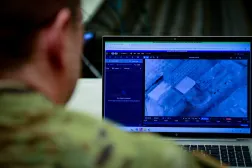
The Defense Department is growing the user base for Palantir’s Maven Smart System amid the Iran conflict and other demands for the AI-powered platform, a senior Pentagon official said Tuesday.
The MSS tool can fuse disparate systems, data streams and intelligence information for commanders and greatly speed up the U.S. military’s processes for targeting adversaries.
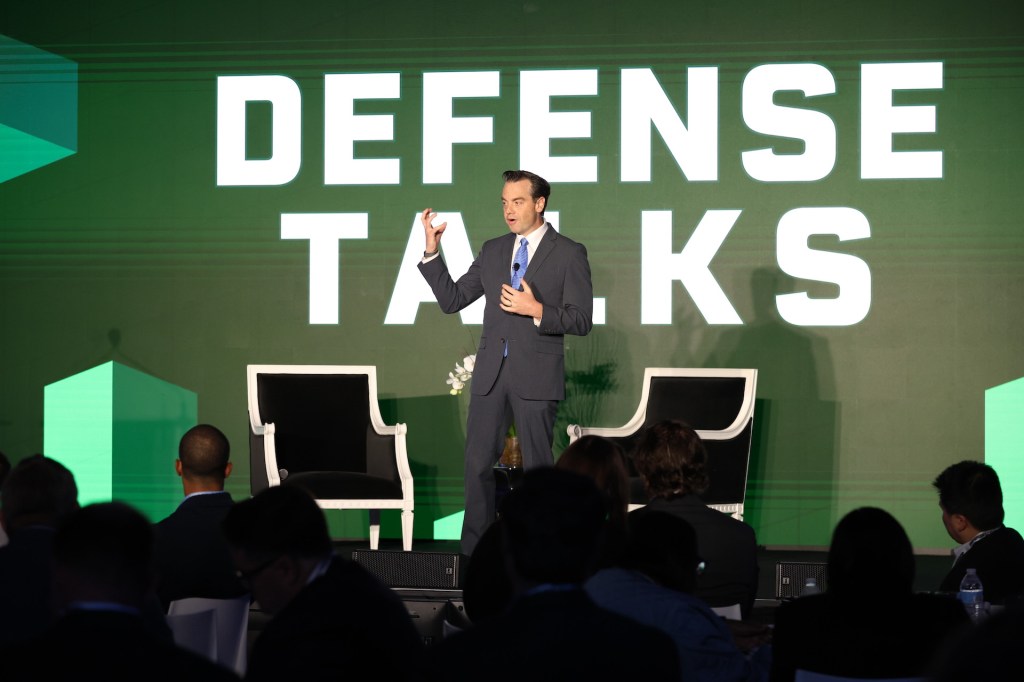
“In January of this year, we had about 50,000 people using Maven. Then [Operation] Epic Fury kicks off, and now we’re up to over 100,000,” James Mazol, deputy undersecretary of defense for research and engineering, said at the DefenseTalks conference, hosted by DefenseScoop.
“We’re proliferating it out to all the commands, to the National Guard Bureau. Everybody wants this because once they see the power of it, they want to sign up as quickly as they can to get across … classification models,” he added.
Cameron Stanley, the Pentagon’s chief digital and AI officer, noted that the Maven capability helped the U.S. military strike 13,000 targets in just 38 days during Epic Fury. “That’s data-centric warfare. That’s using AI at scale,” he said at DefenseTalks.
“We’re developing those algorithms, we’re pushing them out, and we’re actually integrating those quite effectively into a technology-centric solution. Part of the deal, though, is that our operational community then takes the process and they reconstruct it … to improve things. What this turns into is magic on the battlefield,” he said.
He touted AI as a tool that can help military leaders make better decisions, faster.
Other DOD leaders are keen on Maven. Deputy Defense Secretary Steve Feinberg issued a memo in March directing Pentagon and military leaders to transition MSS into a formal program of record by the end of this fiscal year. Last year, the department raised the contract ceiling for the system to more than $1 billion.
As the Pentagon embraces AI-enabled warfighting, leaders are concerned about constraints related to compute.
“One of our biggest challenges that we face is compute. This is a challenge in industry, but it’s a huge challenge for us, and it’s a bit of a different challenge because we need secure compute,” Mazol said at DefenseTalks, noting that the department can’t train an AI model on a classified data set using compute from commercial data centers.
“We’ve got very, very specialized requirements. It’s very expensive. And that’s why one of our prime legislative objectives is to secure funding for a program we’re calling ‘AI Arsenal,’ and that’s up before the Hill right now. And that’s about how do we have sovereign data centers. So think, like, government-owned, contractor-operated,” he said. “Again, this is all about secure compute. How do we have compute in our priority theaters, and then how do we have compute containerized at the edge for the warfighter?”
The Pentagon is also looking at how it can be better postured for protracted conflicts, Stanley said, noting that the department has previously underestimated how long wars would last.
“You just heard [about the U.S. military striking] 13,000 targets in 38 days. … Do we have all of our logistic supply chains built in to actually support that kind of sustained conflict over months, years? That’s a challenge,” he said.
“So from a data-centric approach, my job now shifts. It’s no longer just the tactical use cases,” Stanley added. “We’re really good at that. What we’re not good at is understanding the entire data architecture, being able to actually integrate our supply chain workflows, integrate our logistics all the way back to procurement, all the way back to early supply chain before it’s even in the government’s hands to better understand what we should be doing today to prepare for the 90-day fight, the 120-day fight, the 180-day fight. That’s a challenge that we are actually attacking right now.”