Pentagon uses GenAI.mil to create 100K agents
Defense officials recently used the Pentagon’s enterprise-wide generative artificial intelligence platform to create 100,000 agents amid a broader push by department leadership to speed up AI adoption, according to a senior member of the research and engineering directorate.
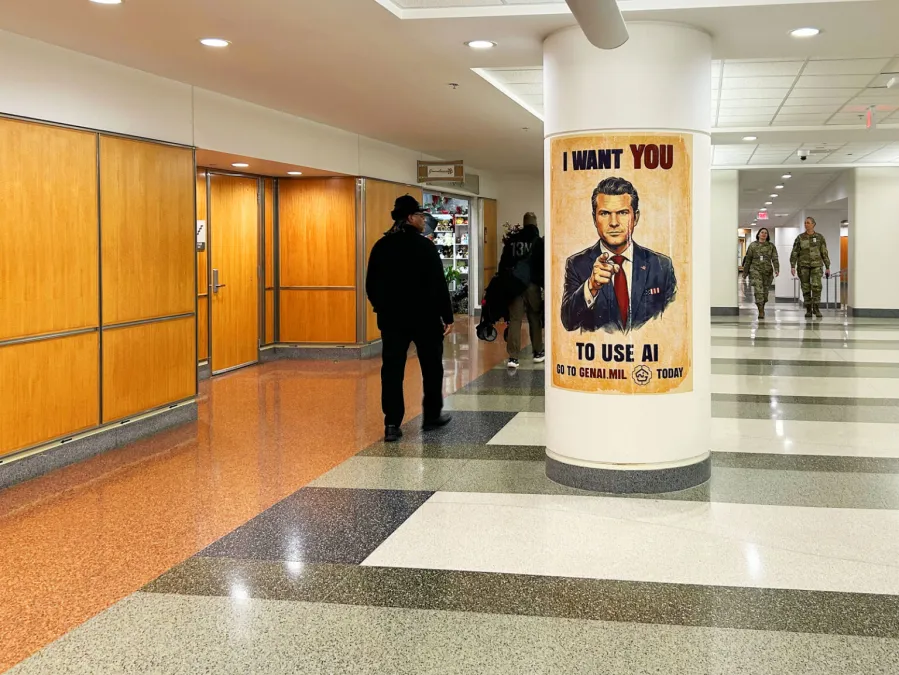
The Pentagon first introduced its GenAI.mil platform for its workforce in December, with the aim of providing commercial tools to millions of personnel across the DOD. Defense Secretary Pete Hegseth and CTO Emil Michael have both championed the capability and encouraged its widespread use. Michael has also put applied AI at the top of his list of critical technology areas.
Users had mixed reactions during the early days of the initial rollout of GenAI.mil, but the tech has since been adopted by the Army, Navy, Marines, Air Force and Space Force as their preferred enterprise system.
Google’s Gemini products were the first to be made available in the new asset. The Pentagon has also announced plans to integrate OpenAI’s ChatGPT and xAI’s Grok into the system.
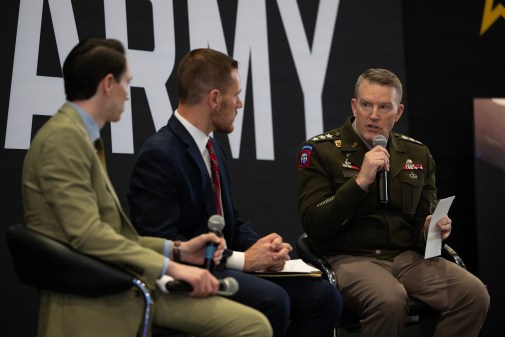
The platform now has more than 1.2 million discrete users, Jacob Glassman, deputy assistant secretary of defense for science and technology foundations in the R&E directorate, said Thursday at the Box Federal Summit, produced by FedScoop.
Pentagon leaders have touted the technology as a way to free up workers’ time and boost productivity.
“This is also a fascinating time because like it or not, we have this workforce constraint, we had this [Deferred Resignation Program, or DRP] and all that. That creates a crisis. We lost some really, really good people. That’s just a fact, and the downward pressure is not going away. But at the same time, we supplied the foundation of AI with GenAI.mil,” Glassman said.
He noted that the Chief Digital and AI Office (CDAO), which falls under the R&E undersecretariat, has started releasing agents that have been developed with the technology.
“Here we are two weeks later, we have 100,000 agents that have been built in that,” Glassman said.
The rollout is happening amid a precarious ceasefire in the U.S. war with Iran, dubbed Operation Epic Fury, which has put more work on the DOD’s plate, he noted.
“We are now at a point where we are in a constrained environment … [a] highly pressurized environment because the conflict in Iran is touching most of us in the department almost every single day,” Glassman said.
“Well, now we have agentic AI, we have these agents that we’re creating, we have generative AI,” he said. “When you talk about the adoption of these technologies … this is making us incredibly more efficient, incredibly more agile, and it’s really allowing us to focus, right? I’m really excited. It sounds like kind of a weird nuance thing, but we’re supplying the tool to our workforce. We’re encouraging them to use it, they’re pressurized to use it, and they’re innovating on their own.”
As an example, he shared an anecdote about a report that needed to be delivered to Congress, but the team responsible for producing it had fewer people available to help generate it.
“I said, ‘use GenAI.mil, do the best you can,’ because I’m not going to go back to Congress and say, ‘No, I’m not going to give you a report.’ I’m going to do the best we can. Sure enough, they came back to me about a week later and said … ‘not only did we generate the report, [but] this is the best report we’ve written in the past five years.’ So I’m like, this is incredible, right?” Glassman recalled. He didn’t identify which report he was referring to.
On the sidelines of Thursday’s conference, Glassman told DefenseScoop that department leaders are “cattle-driving, as we say, everything in GenAI.mil.”
The technology can perform drudge work, saving hours of service members’ time and freeing them up for training and other important tasks, he said.
Glassman told DefenseScoop that he uses GenAI.mil in his job “every single day.”
“I don’t recall once being like ‘wow, shucks, I really wish I hadn’t gone in and used GenAI.mil during this use case,’ right? I have yet to have that experience. I’ve been using it for five months now,” he said.
He suggested that it’s important for personnel and senior leaders in the R&E directorate to set an example for the rest of the department when it comes to the integration of artificial intelligence capabilities into their workflows.
However, some DOD employees might have less use for it.
“Personally, I don’t know if you’re always gonna have 100% [of personnel using it] because of [the makeup of] our workforce. We have a lot of mechanics, we got a lot of people turning wrenches. Not everyone is sitting in a nice, cushy, air-conditioned office typing away at a computer all day like some of us,” he told DefenseScoop.
“But … that’s not really the number I’m super concerned about. It’s an interesting indicator, but I’m interested in seeing the efficiencies that come out,” he added.
He noted that there won’t necessarily be “cold, hard metrics” for assessing all the efficiency gains from these technologies, likening it to trying to measure the efficiencies that have been generated by people using PCs and Microsoft Word instead of typewriters.