US military stands up first kamikaze drone squadron under Centcom’s new ‘Scorpion Strike’ task force
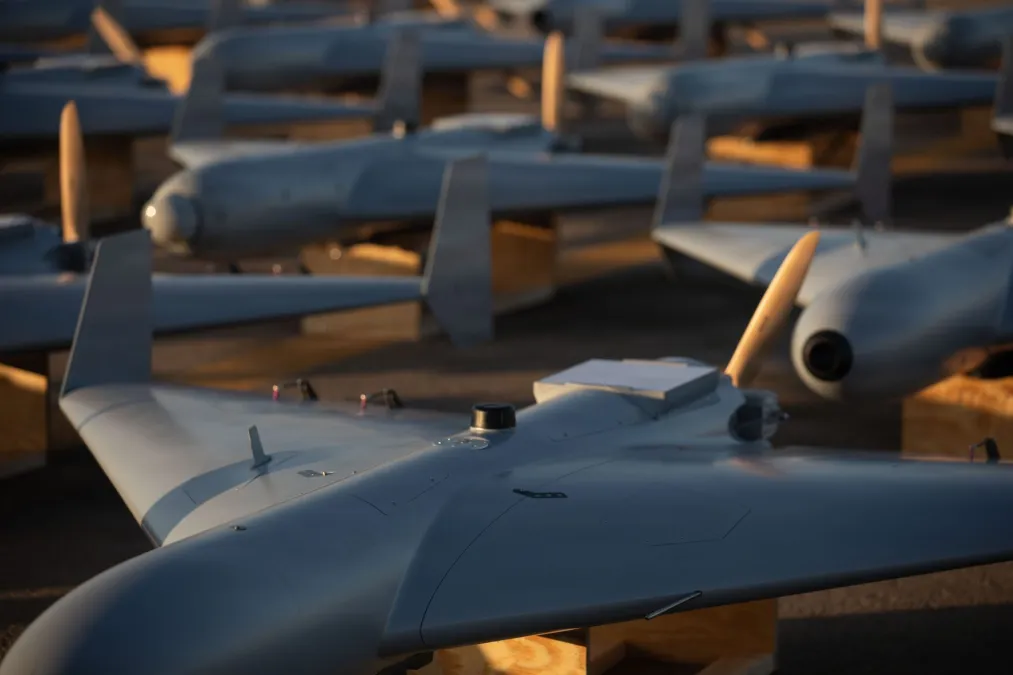
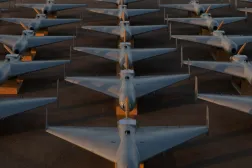
The Pentagon recently formed the U.S. military’s first kamikaze drone squadron under U.S. Central Command in the Middle East, marking its latest-to-be-revealed move to accelerate the adoption of affordable unmanned assets for modern warfare operations.
Centcom’s new Task Force Scorpion Strike already set up a unit that’s delivering so-called Low-cost Unmanned Combat Attack Systems (LUCAS) — just a few months after Defense Secretary Pete Hegseth issued guidance in July to “unleash U.S. military drone dominance” by speedily equipping forces with expendable platforms, according to a press release published by the command on Wednesday.
“This new task force sets the conditions for using innovation as a deterrent,” Centcom commander Adm. Brad Cooper said in a statement.
As autonomous technologies have improved in recent years, the deployment of weaponized, inexpensive drones has become a defining feature in multiple contemporary military conflicts.
However, despite the Pentagon’s sharp focus on uncrewed systems, the military services each continue to face challenges as they work to buy and deploy different-sized drones at scale.
Task Force Scorpion Strike, or TFSS “was created to equip warfighters with new combat drone capabilities faster. Equipping our skilled warfighters with emerging drone technology deters bad actors,” a defense official told DefenseScoop Wednesday. “The systems can be employed across Centcom’s vast area of responsibility at a moment’s notice.”
The defense official declined to disclose the specific brands, variants or cost of LUCAS platforms that the squadron is putting to use, so far.
President Donald Trump issued an executive order in June that directed the Defense Department to arm combat units with cheap, American-made unmanned aerial systems for exercises, training activities and real-world missions.
The following month, Hegseth announced his Pentagon-led “drone dominance” initiative, which he billed as a swift campaign to push industry to surge domestic UAS production and rapidly supply the military with a range of trusted and lethal options under the second Trump administration. Among many inclusions, the DOD’s plan sets a goal to stock every U.S. Army squad unit with small, one-way-attack drones by the end of fiscal 2026.
Under Hegseth’s new strategy and vision, small UAS are to be treated more like bullets — rather than high-priced, major weapon systems.
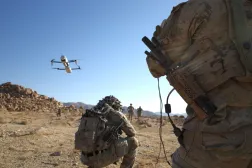
“LUCAS drones deployed by Centcom have an extensive range and are designed to operate autonomously. They can be launched with different mechanisms to include catapults, rocket-assisted takeoff, and mobile ground and vehicle systems,” command officials wrote in Wednesday’s press release.
Task Force Scorpion Strike’s initial unveiling notably comes one day after the Pentagon announced the establishment of its new Drone Dominance Program and an accompanying plan to purchase more than 200,000 industry-made UAS for the services by 2027.
Centcom has been testing and operating drones for decades. The combatant command carried out America’s military response to the 9/11 terrorist attacks, and other counterterrorism operations in the aftermath. It’s headquartered in Tampa, Florida, and oversees military operations in the Middle East region.
In September, Centcom created the Rapid Employment Joint Task Force (REJTF). Led by the command’s chief technology officer, this team and innovation hub aim to help strategically fast-track the military’s drone applications and other cutting-edge combat capabilities.
That new joint task force is coordinating innovation efforts among the service components across three categories: capability, software and tech diplomacy.
“TFSS’s efforts to build the one-way-attack drone squadron are led by personnel from Special Operations Command Central and align with REJTF’s capability focus area,” officials wrote in the press release.