CNO outlines vision for unmanned systems in Navy’s new ‘hedge strategy’
The Navy is betting on one of the only certainties in future warfare: it is unpredictable. And the service’s top officer offered new details this week on how tech will fit into that volatility.
Chief of Naval Operations Adm. Daryl Caudle officially announced Tuesday the Navy’s latest approach to investing in and then deploying capabilities for conflict called “hedge strategy,” a concept he previewed earlier this month.
Under this framework, unmanned systems and autonomous platforms will complement “tailored forces,” or customized units intended to tackle “situations that are too consequential to ignore but too unlikely to drive our overall fleet design,” he said.
Broadly, the strategy intends to put the Navy in a position where it can handle various types of warfare — from large-scale battles to low-intensity conflict — without over-investing in any one type of solution.
“Whether you build a Navy for high-consequence, low-probability or low-consequence, high-probability scenarios — in either case you’re left with an over- or under-described force that’s sub-optimized to address specific use cases which may never come to bear,” Caudle said at the Apex Defense conference in Washington, D.C.
The strategy intends to avoid “a brittle, single-purpose force that’s either over-built for the high-end fight and under-sized for day-to-day, or optimized for low-end crisis and then overmatched when it counts,” according to the CNO.
Caudle said expendable unmanned or autonomous systems, as well as low-cost drone interceptors, were examples of “tailored offsets” meant to help sailors fight in high-consequence, but lower-probability situations.
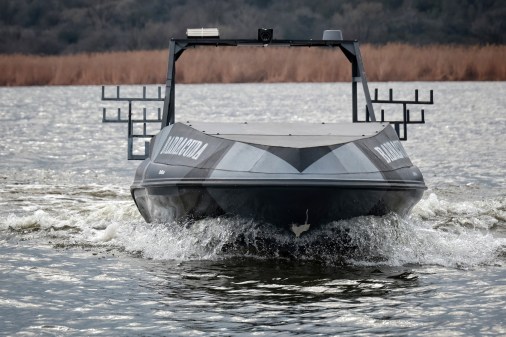
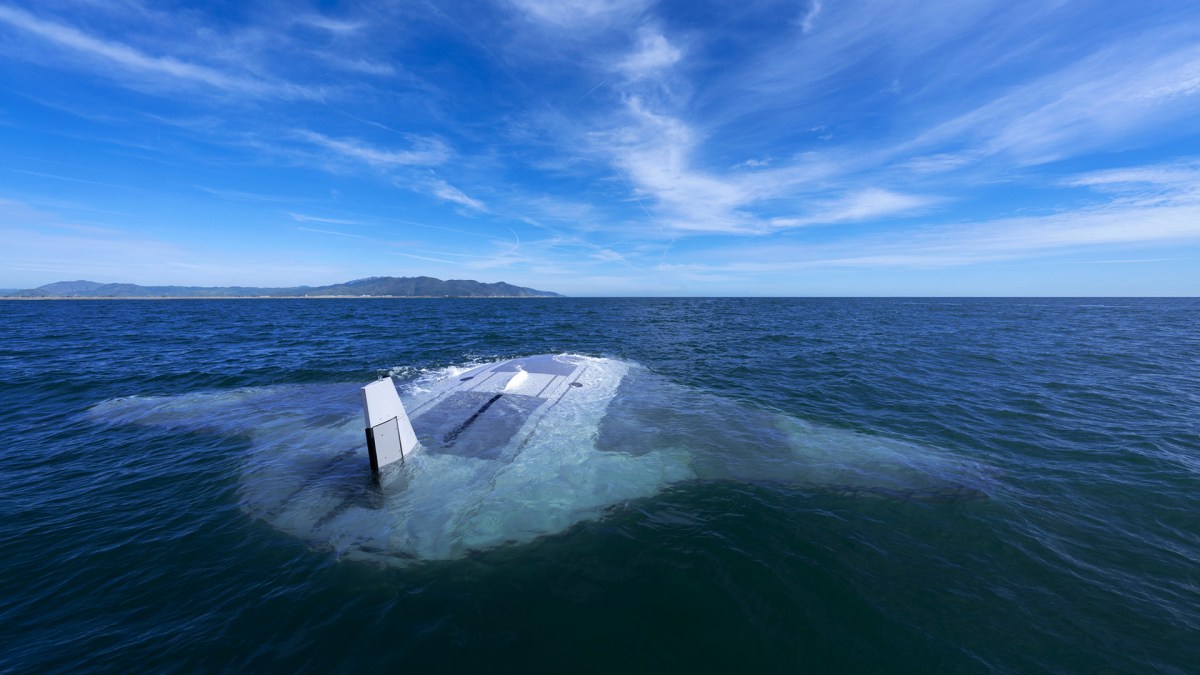
Those types of solutions could include “attritable and easily replenishable” uncrewed surface vessels, medium USVs designed for “scouting, screening, and striking,” and unmanned underwater vehicles for “area and water space denial” or counter-mine missions, he noted.
“Together, these tailored capabilities will amplify and complement the main battle force through lethal outputs that are scalable, deployable, adaptable, and cost-effective by their very nature,” he said.
While the Navy looks to mesh UUVs, USVs and drone interceptors alongside long-standing human-centered capabilities, it has been tasked with several major operations and projects under the second Trump administration.
Meanwhile, the service faces an overextended fleet, one simultaneously responding to Chinese “gray-zone” tactics in the Pacific and demands in the Middle East amid low fleet readiness and recruiters reeling from years of missed accession goals, wrote Bryan Clark of the Hudson Institute last month. Clark moderated Tuesday’s panel with Caudle, whom the CNO credited with having “strongly influenced” the hedge strategy.
Last year, the Navy amassed an armada off the coast of Venezuela as part of the Trump administration’s operation to capture the country’s president Nicolás Maduro, block sanctioned oil tankers and destroy alleged drug boats.
Caudle said historical tendencies, such as a reliance on carrier strike groups, have inhibited “this idea of tailored certifications.” Strike groups “can form tailored forces within their own composite units and solve a lot of these things, but we don’t have enough to keep the presence requirements in that model today.”
The Navy is also charged with building a so-called “Golden Fleet” with a new class of “battleships” named after President Donald Trump — a concept experts have said may never sail given immense costs and time to build.
“I fully acknowledge the need for a bigger fleet,” Caudle said. “You’ve no doubt seen that the president shares that same sentiment — and he is moving at flank speed with the secretary of the Navy to get the Golden Fleet designed, built, and into the fight.”
“But, the challenge becomes determining where to snap the chalk line — how much of each force element is truly enough?” he said. “This is what the hedge strategy aims to answer. It buys down risk in some areas, shifts risk to others, but in the end it unabashedly embraces risk to tip the scales in our advantage.”