Pentagon exploring AI to monitor military inmates’ phone calls
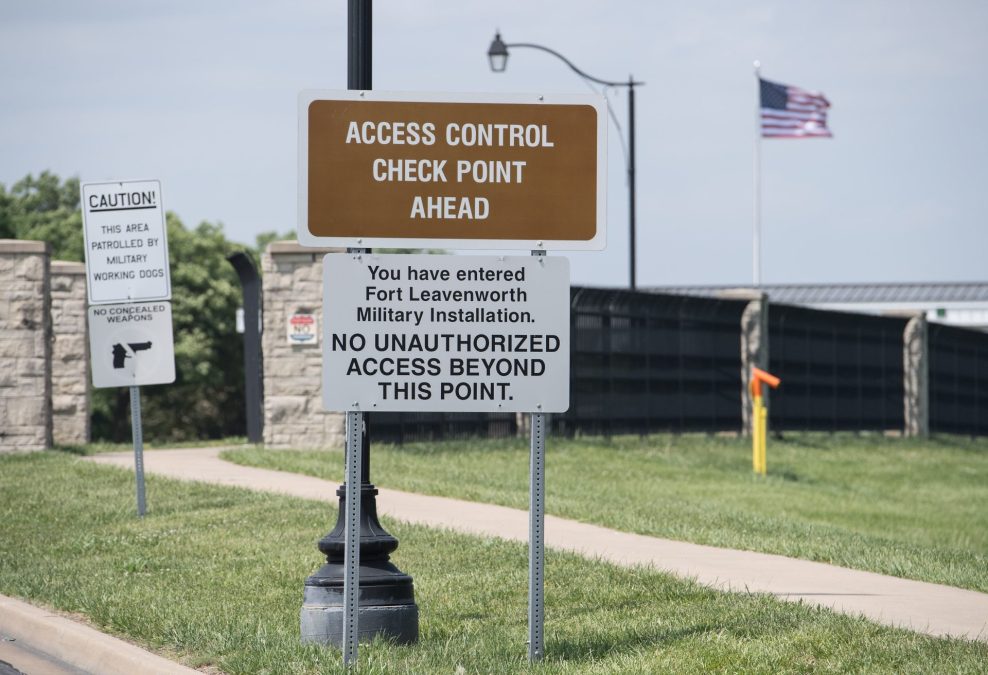
The Defense Department is eyeing artificial intelligence to expand its surveillance of incarcerated individuals’ communications in the Military Correctional Complex at Fort Leavenworth, Kansas.
Companies offering cloud-based, AI-enabled call and message monitoring assets that can flag potentially suspicious terms relayed by inmates in real time are invited to submit proposals to DOD by Aug. 13.
“Having the ability to utilize AI software and systems to assist in monitoring communications will increase staff and inmate safety as well as provide the ability to detect, deter, and investigate criminal and unauthorized activities,” officials wrote in the new contracting opportunity.
The MCC is a centralized jail system of correctional facilities across various security levels in northeast Kansas, where military prisoners convicted under the Uniform Code of Military Justice are held or serve out sentences. It includes the U.S. Disciplinary Barracks, which is the only maximum-security facility within the DOD.
According to the department’s request, the MCC currently “consists of both military and civilian staff members and more than 650 inmates.”
Personnel want AI capabilities to transcribe and track non-privileged communications via a web-based, user-friendly dashboard.
The technology must be certified for use on Amazon Web Services’ government cloud infrastructure and interface with the MCC’s existing ViaPath Phone system, which officials noted “provides real time security monitoring of inmate communications to identify suspicious language and disrupt illegal activity.”
The MCC is looking to access semantic AI that can interpret context and meaning of phrases, and agentic AI that can plan and make decisions based on prompts. Officials notably want the AI to determine and pinpoint when new slang terms are used in place of plain language to describe possible criminal activities or drug names.
Among other features, the AI capabilities should also allow for near-instant translations between Spanish and English and offer multi-language translation options.
“The product will monitor inmate communications in alignment with MCC defined priorities, generate [law enforcement assistance] reports with evidentiary or operational value, provide targeted monitoring during emergency situations, collaborate with MCC investigators, and be available during the standard work week to provide investigative support,” officials wrote.