BAE Systems delivers two AMPV 30s to Army built with internal funding in project the service didn’t formally request
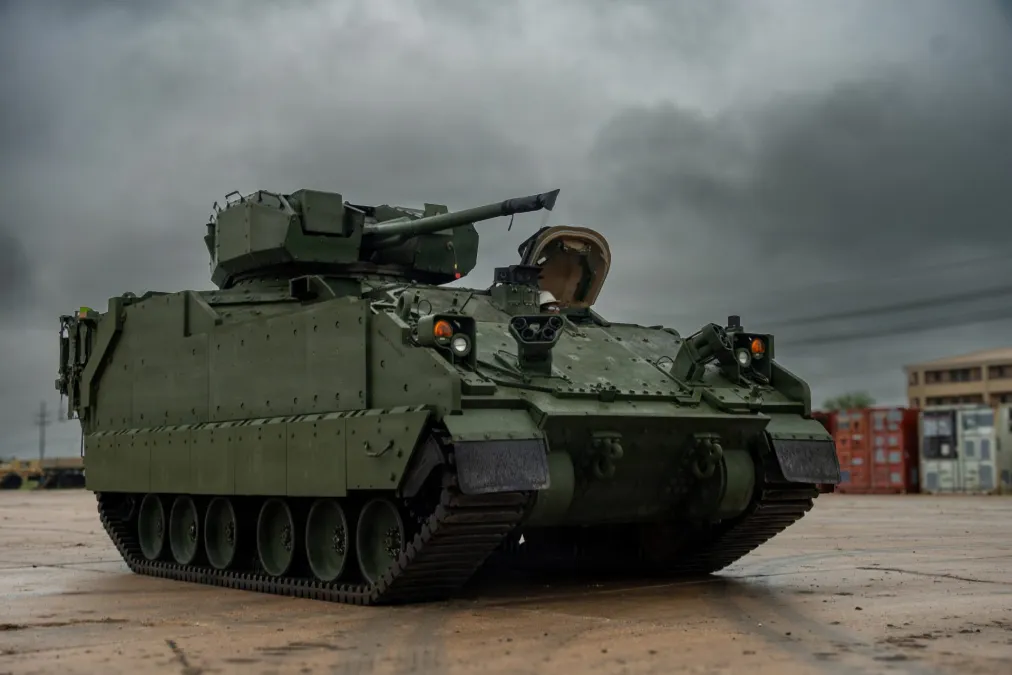
BAE Systems delivered two concept infantry fighting vehicles to the Army’s top armored division earlier this year, a self-funded project the company has since billed as an example of adapting existing platforms with new tech — in this case, without the service explicitly asking for it.
In April, the 1st Cavalry Division out of Fort Hood, Texas, received two Armored Multi-Purpose Vehicles (AMPV) equipped with a 30mm turret and counter-drone sensors. On Tuesday, BAE Systems disclosed that the vehicles were developed in six months with $17 million of internal funds that added the new technology onto the company’s existing AMPV platform.
A company spokesperson told DefenseScoop on Thursday that the project was self-initiated, and that the Army did not formally request or endorse the development of the vehicle, which is called the AMPV 30 in reference to its Kongsberg-designed medium caliber turret.
“There was no formal request or endorsement by the Army to develop the AMPV 30s,” said Darby Dame, the spokesperson. “We’re demonstrating how a proven combat vehicle platform can continue to evolve as the battlefield and technology change, without requiring the Army to start over every time a new capability emerges.”
A spokesperson for 1st Cavalry Division referred DefenseScoop to the Army’s fires portfolio acquisition executive office when asked about how the AMPV 30s have performed since their delivery and the arrangement between the service and company.
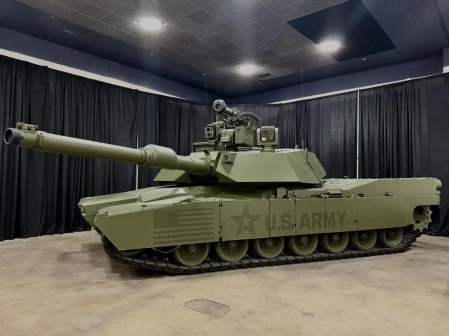
Spokespeople for the office did not respond by press time, though an initial post in April by 1st Cav called the AMPV 30 a “next-generation capability.” Part of an expansion of the Army’s “Transformation in Contact” initiative meant to help modernize the force, the division is also testing two other new vehicles: the M1E3 tank and the XM30, a replacement for the Bradley Fighting Vehicle.
In a press release earlier this week, BAE Systems said the AMPV 30s took part in “rigorous field evaluations,” including live fires.
Dame said the AMPV 30 includes on-board radar and EO/IR sensors to “detect and track” enemy drones. Once those sensors see an adversary’s unmanned aerial system, soldiers can manually engage the target with the 30mm turret or a secondary 7.62mm coaxial machine gun, she said.
The platform also uses Kongsberg’s Integrated Combat Solution (ICS) and Collaborate Fire Control (CFC) systems to share target information gathered by sensors between vehicles, according to Dame, so when a crew identifies a drone, the AMPV 30 automatically shares the data with other crews.
That counter-drone capability is not part of a formal requirement for the AMPV, according to Dame. While BAE Systems has done similar prototyping with other vehicles, the counter-drone asset “is unique to the AMPV 30s,” she said, adding that the basic chassis allows the company to collaborate with other defense companies.
The AMPV platform began development over a decade ago, having started full-rate production in 2023 in an effort to replace the Army’s Vietnam-era M113 vehicle.
On Sept. 14, the Pentagon announced BAE Systems had won a $818 million modification contract for the vehicle, putting the cumulative value of the contract at nearly $3.3 billion and at a completion date of early 2030.
In its release, the company said that the two concept vehicles were among the eight turreted AMPV prototypes the company has invested in over the last two years.
“AMPV 30 is a great example of what can happen when industry moves with urgency,” according to Dame. “We took a proven AMPV chassis, integrated additional capability, invested our own money and delivered two vehicles to the Army in about six months. Now Soldiers have something tangible to evaluate and provide feedback on.”