U.S. creates new Autonomous Warfare Command to fuse and enhance military drone ops
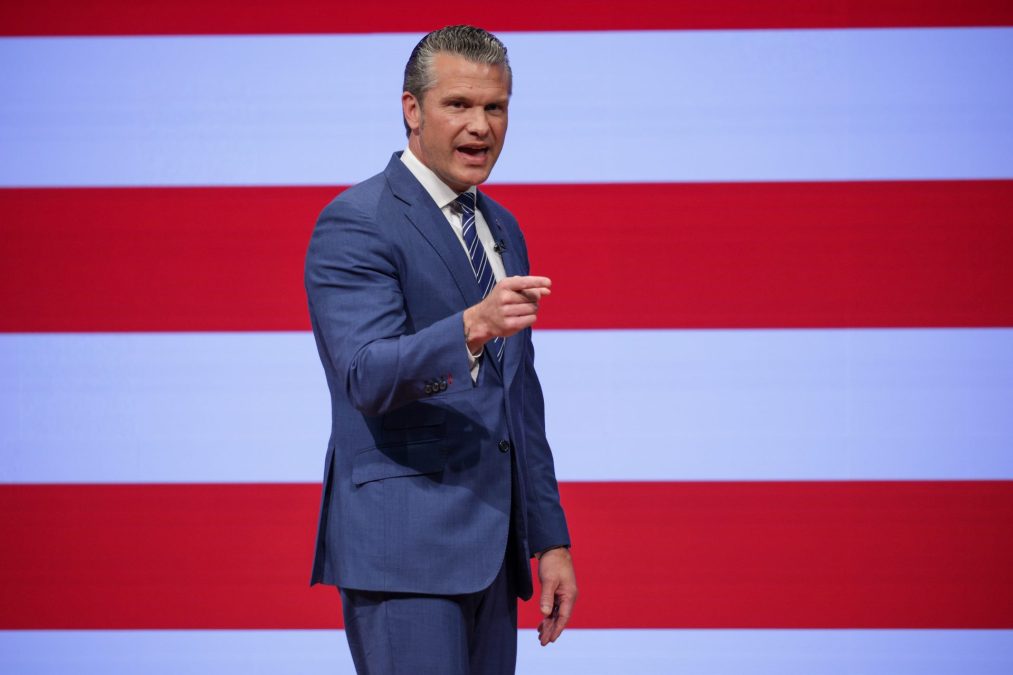
Defense Secretary Pete Hegseth announced Wednesday the launch of a new U.S. military command with “service-like authorities” to facilitate the rapid adoption of autonomous and robotic assets across the entire joint force.
The Autonomous Warfare Command emerges as Defense Department personnel have been confronting severe technical and structural bottlenecks as they hustle to buy and deploy affordable drones and associated unmanned capabilities en masse for modern combat operations.
“The autonomous and robotic revolution has enormous implications for equipment, doctrine, organization, and the assumptions that have governed warfare for decades,” Hegseth said.
He unveiled the new Autonomous Warfare Command, which he also called “AutoWarCom,” as part of a slew of announcements during his “State of the Force” address at Marine Corps Base Quantico in Virginia.
Drone swarms and other deadly robotic warfare tactics have been playing out in real-world conflicts around the Middle East and in the Russia-Ukraine war. Domestically, America’s government and military are also moving quickly to deploy technologies to better protect national infrastructure from a rise in risky, adversarial incursions.
Hegseth billed the new command as a response to major recent advancements in drone warfare and AI-enabled targeting.
“Ukraine’s lesson is not that one type of drone wins wars, but rather the need for a purpose-built system that maximizes the ability to adapt,” he told the audience. “We will fuse procurement with operations at scale, and then allow warfighters and engineers and entrepreneurs to learn, adapt, and rapidly iterate on their domain and their mission.”
As an interim step, the secretary set up “Project Agincourt” to clear the path for the Autonomous Warfare Command over the next year.
That team will prototype a new construct that Hegseth referred to as “warfighting acquisition, not just acquisition that happens at the Pentagon.” This model will link operators with entrepreneurs in fast adaptation cycles, he said, while distributing decisions and dollars closer to the joint force’s frontline units.
“We will soon have a four-star commander to raise the AutoWarCom flag [and] prepare the way,” Hegseth said.
He appointed Defense Innovation Unit Director Owen West and Navy SEAL Senior Chief Max Strasiser to lead Project Agincourt as it all comes into fruition. According to Hegseth, West will focus on “strategic risk, resources, and scale,” and Strasiser will prioritize “operational problem-solving and the realities of employment in combat.”
“Now, this is no theory — it’s no one-off, which is why also today we are phasing in new [military occupational specialty, or] MOS frameworks within each military department to support our shift to autonomy. We need institutional knowledge and career paths for a new generation of autonomous warfighters,” Hegseth said.
Among other announcements, the secretary also revealed the new Project Meridian “to creatively look to the future” of warfare and identify the domains that the U.S. military must conquer, and the technological capabilities it will need to quickly master.
The Pentagon’s Chief Technology Officer, Emil Michael, is leading the commissioning of this project, which will be co-directed by defense tech executives Elon Musk from SpaceXAI, Palmer Luckey from Anduril, as well as political commentator and former Republican Speaker of the House Newt Gingrich.
“We need to be looking forward into the future to achieve technological and military dominance on the battlefield for decades to come,” Hegseth told the audience at Quantico.