Trump, Navy leaders reveal plans for new battleships armed with nukes, lasers, railguns and hypersonic missiles. Analysts anticipate problems.
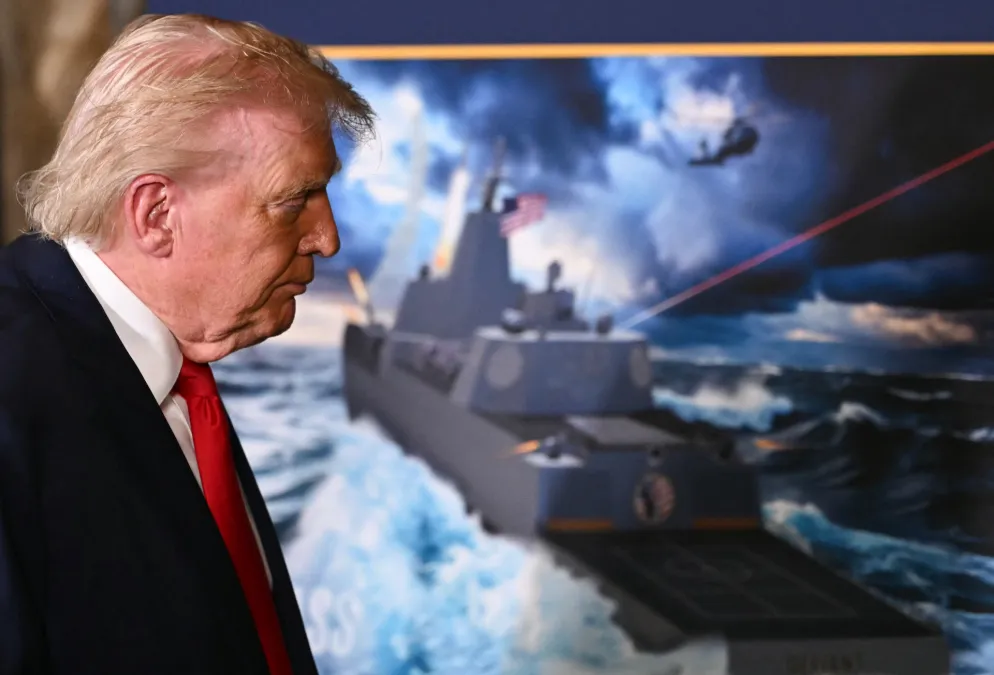
President Donald Trump and Navy leadership presented plans Monday evening for a new class of modern battleships that would be armed with a variety of high-tech weapons and aided by artificial intelligence.
Their ambitious vision for the platform and a so-called “Golden Fleet” could run into a variety of technological and budgetary challenges, analysts say.
During remarks at his Mar-a-Lago estate in Florida, accompanied by members of his national security team, Trump announced that he approved a plan for the Navy to begin the construction of two vessels that could start a path toward a much larger fleet.
“We envision that these two ships, we’re talking about [going up to] 10, but we’re going to start with two, and we’re going to quickly morph into 10. And ultimately, we think it’s going to be anywhere from 20 to 25 of these. But we’re starting with the first two immediately, and we’re going to then be very quickly involved with — I think we’re going to do another eight, and then we’re going to ultimately, and pretty quickly, have a total of about 20 to 25. We’ll make that determination,” he said.
The platforms are part of Trump’s vision for a so-called “Golden Fleet,” which would include a new small surface combatant known as FF(X), among other systems.
The United States stopped building new battleships during the Cold War, choosing instead to invest more in other platforms such as aircraft carriers, submarines, destroyers and systems that were more optimized for long-range strike and other missions. The U.S. Navy decommissioned the last of its remaining battleships in the 1990s.
During his remarks Monday, Trump suggested new battleships would bring prestige to the Navy on the world stage, harkening back to the battleships of previous eras, such as Teddy Roosevelt’s “Great White Fleet” and America’s World War II arsenal, calling those types of vessels “unmistakable symbols of national power.”
“They’ll help maintain American military supremacy, revive the American shipbuilding industry, and inspire fear in America’s enemies all over the world. We want respect. We’re going to have it,” Trump said.
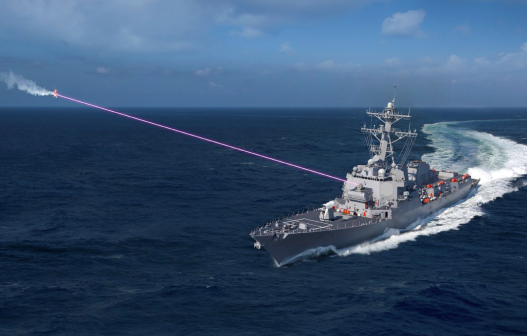
The “30-to-40,000-ton-plus” vessels, as he described them, would be equipped with guns, missiles and a variety of future high-tech weapons, including hypersonics, electromagnetic railguns, high-powered lasers and nuclear-armed cruise missiles.
“AI will be a big factor when it comes to these ships, they’ll be very AI-controlled,” Trump added.
The president indicated that he will be personally involved in the design of the platforms.
“The U.S. Navy will lead the design of these ships along with me, because I’m a very aesthetic person, alongside our partners in American industry,” Trump said. “But a lot of it’s already been done. We’ve been doing this for months.”
He suggested the new battleship would take about two-and-a-half years to build.
Navy Secretary John Phelan said the sea service now has a formal requirement for a new battleship, which he referred to as the USS Defiant, or “Trump-class” vessel.
He touted offensive firepower as a major selling point.
“This ship isn’t just to swat the arrows; it is going to reach out and kill the archers. And for the first time in generations, we’ll have a new leg in America’s nuclear deterrence, because the Trump-class battleship will carry the nuclear-armed, sea-launched cruise missile,” Phelan said.
They would also be expected to function as C2 nodes, he noted.
“Striking dominance isn’t all that the Trump-class battleship brings to the fight at sea. It has the size and capacity to serve as a flagship for our fleet commanders, so that they can command and control naval forces far out to sea,” he added. “This new battleship will command everything from warships to drones and everything in between.”
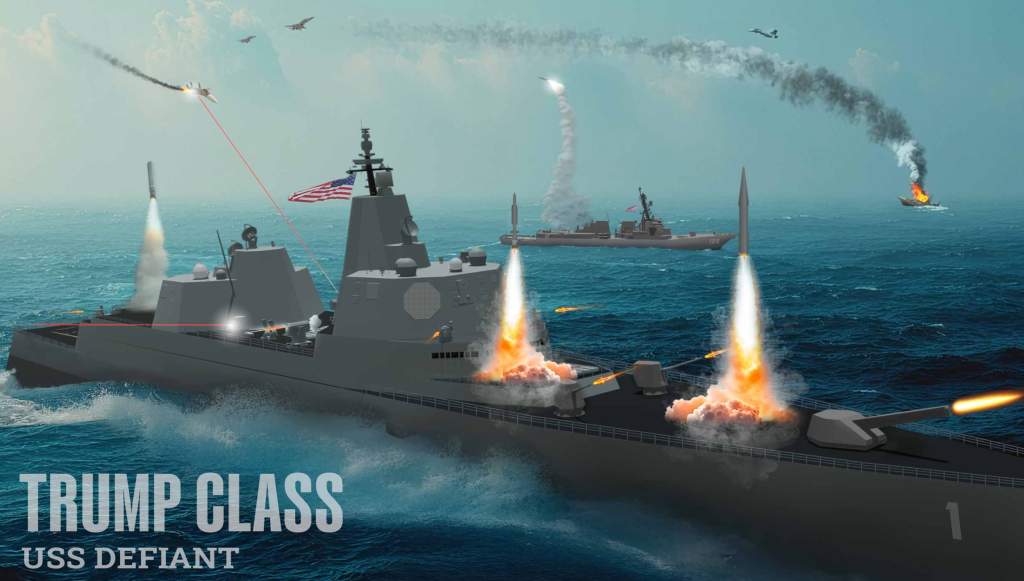
According to a Navy press release, the ship would be about triple the size of an Arleigh Burke-class destroyer.
“As we forge the future of our Navy’s Fleet, we need a larger surface combatant and the Trump class Battleships meet that requirement,” Adm. Daryl Caudle, chief of naval operations, said in a statement. “We will ensure continuous improvement, intellectually honest assessments about the requirement to effectively deter and win in the 2030s and beyond, and disciplined execution resulting in a Fleet unparalleled in lethality, adaptability and strength.”
The threat posed by aerial attacks has long been a concern for battleship survivability.
According to the Navy, the new platform will be capable of playing a “traditional” integrated air-and-missile defense role within a carrier strike group — as well as conducting a wide variety of other missions such as long-range strike, leading its own surface action group for surface and antisubmarine warfare, and “quarterbacking” fleet operations.
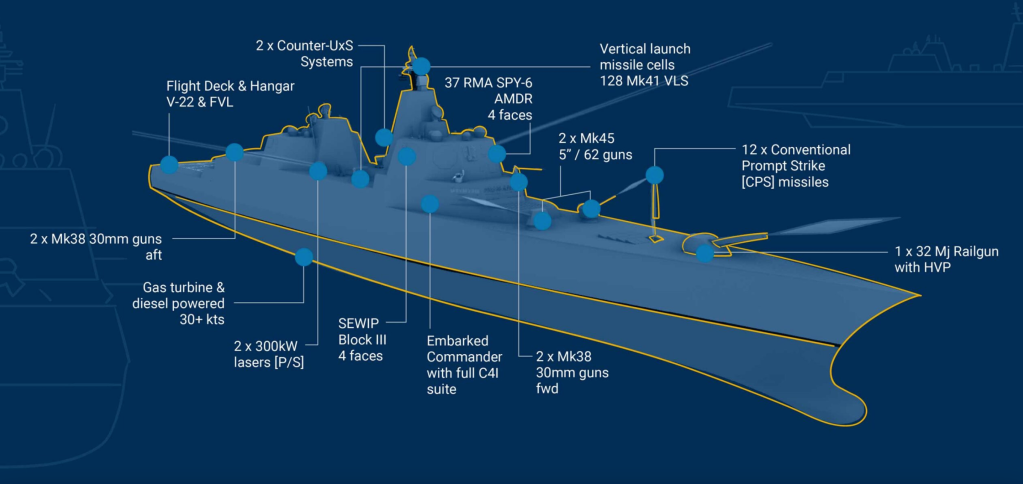
According to a rendering and information about technical specifications released by the Navy, the main battery of the new battleship would carry 12 Conventional Prompt Strike (CPS) hypersonic missiles, 128 cells for the Mk41 vertical launching system (VLS) for missiles, and the Surface Launch Cruise Missile-Nuclear (SLCM-N).
The secondary battery would include a 32 megajoule railgun with hypervelocity projectiles, two Mk45 5-inch guns with hypervelocity projectiles, and two 300-kilowatt or 600-kilowatt lasers.
A defensive battery would have two rolling airframe missile (RAM) launchers, four Mk38 30-millimeter guns; four Optical Dazzling Interdictor Navy (ODIN) lasers, and two counter-drone platforms.
The vessel would also be equipped with the 37 RMA SPY-6 radar air-and-missile defense radar, SEWIP Block 3 electronic warfare tool, and a command, control, communications, computers and intelligence (C4I) suite for embarked commanders.
Additionally, the ship would come with a flight deck and hangar for V-22 Osprey tilt-rotor aircraft and helicopters.
The envisioned platform would have a length of 840-880 feet; 105–115-foot beam; 24-30-foot draft; 35,000-plus-ton displacement; speed of 30-plus knots; and carry a crew of 650-850 personnel.
Some of the weapon systems that the battleship is expected to carry are still under development — such as CPS and high-power lasers — or were previously abandoned by the Navy, such as the electric railgun.
The new battleship would likely come with a hefty price tag.
Bryan Clark, a senior fellow at the Hudson Institute and director of its Center for Defense Concepts and Technology, estimated it would cost upwards of $10 billion per vessel, given that it’s projected to be about three-and-a-half times the size of an Arleigh Burke-class destroyer — which costs around $2.8 billion — and more complex.
Analysts say it would also take a long time to build.
“Here you’re talking about a brand-new ship that is not being produced and has not been designed yet. So normally, to build the first-in -lass ship like that, just the building of it usually would take, like, 10 years, because you’re starting from scratch, right? You have no supply chain. You have no people trained on how to build it. You haven’t got all the equipment that’s in place. So it’s at least a decade once it starts to get once it’s designed,” Clark told during DefenseScoop during an interview Tuesday.
“Building a Burke right now, takes about four years, five years, so once they get into serial production this ship might take five years, six years to build … once you have built the first couple and people kind of have worked out all the kinks in the production process,” he added.
A prime contractor like Ingalls should have the capacity to build such a platform once it’s ready to be constructed, Clark said.
The proposed battleship would likely be large enough to fit in all the next-generation weapons that Trump and the Navy envision, according to Clark. However, the integration effort could present challenges.
“The issue would be the complexity of pursuing them all simultaneously, like, for example, there’s not a railgun currently in service in the Navy. There’s experimental prototype railguns that have been built but none have been integrated onto a ship, and the Navy hasn’t worked out how to address things like barrel erosion and sustained rate of fire from a railgun. So there’s a bunch of technical issues that have not been worked out for railguns before you even get to the point of integrating onto the ship,” he said.
“Similarly, we’ve had lasers on ships, but they haven’t really been integrated with the ship, and they haven’t been high-power lasers like these. So that’s another new technology that has to get integrated onto the ship. And then these Conventional Prompt Strike missiles, they’re being built right now and developed by the Navy, but they’ve not been integrated onto a ship yet — they’ll get integrated onto the Zumwalt. So you’ve got multiple new technologies that have to go into this ship, and you end up with a potential problem like we have with Zumwalt, where there’s just too much new technology being pursued simultaneously, and the complexity of it means the ship ends up starting construction before the design is done, and we have a bunch of challenges in terms of getting the technology right, and we’re building the ship at the same time we’re designing it, so it creates cost and schedule overruns,” he added.
One way to mitigate those challenges would be to create margin in the ship’s design for integrating future technologies but not try to incorporate all of them right away, he noted.
Clark sees a need for the Navy to acquire a new, larger surface combatant to operate in contested environments.
Experts at the Hudson Institute have recently been doing operational analysis wargaming for the Navy, he noted.
“Our analysis showed that we need something about twice the size of a Burke, maybe, to get the missile magazine size and the ability to launch these long-range hypersonic weapons. So this is bigger than what we anticipated. But that said, the issue will be money, right? I think the intent is to use another reconciliation bill next year to pay for the initial tranche of these battleships … but the problem then will be it doesn’t even continue to get the money downstream to buy the next tranche or pay for the sustainment and upkeep and crewing of these ships, because that’ll be sizable if these ships are each going to have a crew of like 600 people. That’s three times the size of our Burke crew, and the surface fleet’s already undermanned. So how do you come up with those people? Well, it’ll be money to pay for people and also incentivize people to join the military and join the Navy,” Clark said.
He continued: “So there’s a bunch of downstream costs associated with these ships that a reconciliation bill will not address. So unless the Navy in the future starts building these ships instead of Burkes and just takes the people and the money and all that from the Burkes and transitions it over to this new class of ship … I can see a big crash coming where they get money to build these ships, they start building them, and then some future administration doesn’t follow through and we end up, like with the Zumwalt, with two or three of these ships that are kind of orphans because the Navy doesn’t have the money to continue building them or the money to man them and operate them as well as the rest of the fleet.”
Clark told DefenseScoop that “it’s not completely out of left field” that the Trump administration wants to build a larger surface combatant, based on what’s happening in the real world today. But he suggested the battleship proposed by Trump isn’t the optimal approach.
“I think it’s going to be too big and too expensive and too much of a challenge to integrate into the shielding plan, unless there’s a sustained increase in the Navy’s budget, which I just don’t see happening,” he said. “The other thing I think is a problem with this ship is that it’s trying to incorporate too many new technologies at once. … They could build this bigger ship and just integrate systems in over time, as opposed to trying to do it all at once. But the way that they’re currently characterizing the ship, I think it’s got … got several problems.”
Retired Rear Adm. Mark Montgomery, a senior fellow at the Foundation for Defense of Democracies (FDD), who had a 32-year career in the Navy as a surface warfare officer, said he’s “frustrated” with the Golden Fleet plan, including the battleship and the frigate.
The Navy would be better off investing in other types of platforms, he told DefenseScoop during an interview Tuesday.
“I agree with President Trump that we need to fix shipbuilding, we need to fix the Navy. The challenge of China is an air-maritime fight that you need the appropriate surface force for. I would say that literally, every decision they’re making is one that is not preparing us for that fight,” Montgomery said. “It’s the right intention and the wrong implementation. And these kinds of decisions are, even when you reverse them, they do years’ worth of damage.”
He noted that the new battleship would come a high price tag that could easily rise up to $10 billion per vessel.
“We do need lots of VLS launchers, but we need them distributed. We do need Aegis weapon systems with SPY radars, but we need them distributed,” he said. “In the end, you’re gonna be able to get at least three destroyers, DDGs, Arleigh Burkes, for the cost of one of these large surface combatants. You get a lot more VLS cells, a lot more radar and a lot more ability to fight the increasingly challenging Chinese threats.”
Montgomery would rather the Navy spend the battleship-building money on “unsexy” upgrades to existing platforms.
“We have a modernization program where you can take older Arleigh Burkes, get them new Aegis weapon systems and … military equipment, extend their lifespan 10 to 15 years. I could do that to another 10 to 15 ships,” he said. “That’s an amazing investment. But you know what? That’s not splashy, so no one’s gonna grab it.”
Not all the high-tech weapons that officials say will be installed on the new battleships will come to fruition, Montgomery predicted.
“I think Conventional Prompt Strike will happen, mostly because it’s a great weapon for the Virginia-class [submarine]. But you know, some of the other ones may not happen. I mean, 20 years of investment in the rail gun didn’t produce a maritime rail gun” that was fielded, he said.
Montgomery suggested the battleship program could suffer a similar fate as the Zumwalt-class destroyers.
“Somewhere in the vicinity of 20 [vessels] was the plan for the DDG 1000s, and we ended up with three. And I think they’re setting themselves up for the same experience,” he said.
Shipyards might not have enough capacity to build a lot of new battleships on top of the other vessels that the Navy is pursuing, he noted.
Introducing large battleships into the fleet would also create manpower issues.
“Large surface combatants, like DDGs, have been trying to drive down their manpower from the 350 when I commanded [USS] McCampbell … to under 300, to the best of our ability. So we’ve been driving down manpower requirements on surface combatants, and this flies in the face of it,” he told DefenseScoop.
The battleship concept is misguided on multiple levels, in Montgomery’s view.
“It doesn’t distribute our capability and our capacity in both sensors and weapons and command and control in a way that can properly counter the growing Chinese threat,” he said. “It’s strategically wrong, fiscally wrong and tactically wrong. The president is correct to want to address shipbuilding, but he’s got the wrong implementation plan.”